
Cross-Border Investment Tax Optimization: A Strategic Framework for Global Investors

Cross-Border Investment Tax Optimization: A Strategic Framework for Global Investors Investing across borders has become increasingly common for private investors, entrepreneurs, and internationally mobile families. While global diversification offers broader opportunity sets, it also introduces a layer of complexity that extends beyond markets and asset classes: taxation. Cross-border investment taxation is not simply a technical detail. It is a structural component of portfolio efficiency. When unmanaged, tax friction can significantly erode long-term returns, even in well-performing strategies. When addressed correctly, however, it becomes a powerful lever for optimizing outcomes while remaining fully compliant with applicable regulations. The Challenge of Cross-Border Investing International investors are often exposed to multiple tax jurisdictions simultaneously. This may include the country of residence, the country where assets are held, and the country where income is generated. Each layer can introduce withholding taxes, reporting obligations, and regulatory constraints. Without proper structuring, investors may face: Double taxation on dividends, interest, or capital gains Inefficient withholding tax rates Limited access to treaty benefits Increased administrative and compliance burden These factors can materially impact net performance, particularly over long investment horizons. The Role of Tax Treaties and Withholding Structures Double taxation treaties play a central role in cross-border tax optimization. When correctly applied, they allow investors to reduce or reclaim withholding taxes on income streams such as dividends and interest. However, treaty benefits are not automatic. Eligibility depends on several factors, including investor residency, investment vehicle structure, and the legal form of the underlying assets. Strategic planning is therefore essential to ensure that treaty advantages are effectively captured rather than lost through suboptimal structuring. Fund Domiciliation as a Strategic Tool Another critical element in international tax optimization is fund domiciliation. The jurisdiction in which a fund or investment vehicle is established influences both taxation and regulatory treatment. Appropriate domiciliation can help: Reduce withholding tax leakage Improve access to international tax treaties Enhance legal certainty and investor protection Simplify reporting and compliance processes Fund structure should always be aligned with the investor’s residency, investment objectives, and regulatory profile. There is no universal solution; optimization is inherently case-specific. Optimization Without Compromising Compliance Tax optimization is often misunderstood as aggressive tax avoidance. In professional wealth management, the opposite is true. Sustainable optimization is achieved by working within established legal frameworks, ensuring transparency and regulatory compliance at every stage. International investors must balance efficiency with substance. Proper documentation, reporting discipline, and regulatory awareness are essential to avoid unnecessary risk exposure, reputational damage, or future disputes with tax authorities. A Long-Term Perspective Cross-border tax optimization is not a one-off exercise. Changes in tax law, treaty interpretation, and regulatory standards require ongoing monitoring and periodic review of investment structures. For global investors, a coordinated approach that integrates tax planning, asset allocation, and jurisdictional awareness is key to preserving capital and enhancing long-term performance. When properly designed, cross-border investment structures allow investors to focus on strategy and growth, confident that tax efficiency and compliance are embedded into the investment process. Original LinkedIn post: https://www.linkedin.com/posts/incomecapital_investment-optimization-investing-activity-7422292422941978624
PRESS RELEASE – TEARLY RESULTS 2025
Income Capital Management Reports Strong 2025 Performance in a Year of Divergent Global Markets FOR IMMEDIATE RELEASE Date: January 27, 2026 Prague, Czech Republic — Income Capital Management closed 2025 with solid results across its diversified investment strategies, successfully navigating a year marked by sharp divergences between asset classes. The firm enters 2026 with a disciplined, multi-asset approach focused on delivering consistent value to its investors. Market Environment Global markets in 2025 were characterized by pronounced dispersion. Gold emerged as the top-performing major asset class, posting gains of +65.87% and reinforcing its role as a safe-haven asset. Major equity indices, including DAX, NASDAQ, FTSE 100, Euro Stoxx 50, S&P 500, and Dow Jones, recorded positive performances, while Bitcoin declined by -6.35%, reflecting increased volatility and speculative risk. Italy’s FTSE MIB underperformed relative to broader international benchmarks. Key Strategy Performance Income Capital Management’s Forex strategy delivered a standout performance, achieving an annual return of +34.98%. Active currency trading combined with strict risk management allowed the strategy to outperform major traditional benchmarks. The firm’s Real Estate strategy generated stable income-driven returns of +7.71%, supported by premium property assets and consistent cash flow, outperforming several weaker regional equity markets. Additional allocations to global growth and high-yield strategies contributed to overall portfolio diversification and balance. Management Commentary “2025 confirmed that active and diversified strategies are essential in fragmented market conditions,” said Paolo Volpicelli, CEO of Income Capital Management. “Our Forex strategy’s 34.98% return demonstrates how disciplined execution and controlled risk can translate into meaningful performance for our investors.” Nicola Pinchi, CTO of Income Capital Management, added: “By combining high-conviction Forex strategies with stable real estate income and physical gold exposure, we have built portfolios designed to perform across different market cycles rather than simply follow short-term trends.” Strategic Positioning for 2026 Income Capital Management’s multi-asset framework — encompassing Forex for growth, real estate for income, global growth and high-yield strategies for diversification, and physical gold for capital protection — is designed to provide resilience and flexibility in an evolving macroeconomic environment. As the firm enters 2026, this structure aims to balance opportunity and risk, supporting long-term portfolio stability in periods of heightened volatility. About Income Capital Management Income Capital Management is an independent asset management firm specializing in diversified investment solutions across Forex, real estate, global growth, high-yield strategies, and physical asset exposure. The firm focuses on active management, disciplined risk control, and long-term capital preservation and growth. For more information, please visit www.incomecapital.biz or contact the Income Capital Management team directly. LinkedIn press release: https://www.linkedin.com/posts/paolovolpicelli_press-release-tearly-results-2025-activity-7421816797093494784-NoVd
Portfolio Discipline, Diversification and Market Cycles: A Framework for Long-Term Investing

Portfolio Discipline, Diversification and Market Cycles: A Framework for Long-Term Investing Successful investing is rarely the result of a single tactical decision. Over time, consistent results tend to emerge from a disciplined framework that combines portfolio structure, diversification across asset classes, and an informed understanding of market cycles. Three elements in particular play a central role in this process: portfolio rebalancing, multi-asset diversification, and strategic positioning across fixed income markets. While often discussed separately, these components are deeply interconnected and should be approached as parts of a unified investment methodology. Portfolio Rebalancing as a Strategic Discipline Portfolio rebalancing is frequently misunderstood as a purely mechanical adjustment of weights. In reality, it represents a disciplined governance process designed to keep risk exposure aligned with long-term objectives. As markets evolve, assets that perform well naturally increase their weight within a portfolio, while others decline. Without periodic intervention, this drift can lead to unintended concentration risk and a gradual departure from the original investment strategy. A structured rebalancing process is based on predefined allocation ranges, review frequency, and tolerance thresholds. The goal is not to predict markets, but to maintain coherence between strategy and execution, removing emotional bias from decision-making and reinforcing long-term discipline. Diversification in Practice: Lessons from 2025 The year 2025 offered a clear illustration of why diversification remains essential. Asset classes moved in very different directions, creating outcomes that varied significantly depending on portfolio construction. Within a diversified framework, different instruments played complementary roles: Gold acted as a defensive anchor, delivering a return of +65.87%. Forex strategies provided high return potential through active management, closing the year at +34.98%. Real Estate investments contributed stability and income, with a performance of +7.71%. This dispersion of returns highlights an important principle: diversification is not about maximizing performance in every market environment, but about ensuring resilience across changing conditions. A portfolio built on multiple, uncorrelated sources of return is better positioned to absorb volatility and protect capital over time. Understanding Bond Market Cycles and Strategic Positioning Fixed income markets have undergone profound changes in recent years, shaped by inflation dynamics, monetary policy shifts, and evolving yield structures. As yields stabilize, strategic positioning becomes increasingly important for income-focused portfolios. Bond market cycles require investors to balance yield opportunities with duration risk, credit quality, and inflation sensitivity. Government bonds, corporate debt, and emerging market bonds each serve distinct roles depending on the phase of the cycle. Rather than chasing headline yields, effective bond allocation focuses on sustainability, diversification, and alignment with broader portfolio objectives. When integrated thoughtfully, fixed income can once again serve as a stabilizing element within multi-asset portfolios. A Unified Investment Framework Portfolio rebalancing, diversification, and cycle-aware asset allocation should not be treated as isolated concepts. Together, they form a coherent framework that emphasizes structure over speculation and process over prediction. In an increasingly complex global environment, this disciplined approach allows investors to navigate uncertainty while maintaining clarity, control, and long-term strategic alignment. Original LinkedIn posts: Portfolio Rebalancing Insight: https://www.linkedin.com/feed/update/urn:li:activity:7350399901672833024 Diversification and 2025 Portfolio Results: https://www.linkedin.com/posts/incomecapital_confidence-emergingmarkets-debtinvestment-activity-7416403617785577472 Bond Market Cycles and 2026 Outlook: https://www.linkedin.com/feed/update/urn:li:activity:7353302800539205634
Confidence, Emerging Markets and Debt Investment: Navigating Opportunity Through Structure

Confidence, Emerging Markets and Debt Investment: Navigating Opportunity Through Structure In a global financial environment shaped by uncertainty, confidence is not a sentiment — it is the result of structure, discipline, and informed decision-making. Emerging markets continue to attract investor attention, not because they are simple, but because they offer opportunities that are often uncorrelated with traditional developed markets. Within this context, debt investments play a strategic role, combining yield potential with structured risk management when approached correctly. Why Confidence Matters in Emerging Markets Emerging markets are frequently associated with volatility, political risk, and uneven growth cycles. While these factors are real, they also create inefficiencies — and inefficiencies are precisely where disciplined investors can find value. Confidence in this space does not come from speculation. It comes from: Careful jurisdiction and counterparty selection Clear legal and regulatory frameworks Defined risk parameters and exit strategies Continuous monitoring of macroeconomic and geopolitical dynamics When these elements are in place, emerging market exposure becomes a calculated allocation rather than a leap of faith. The Strategic Role of Debt Investment Debt investment represents a different approach compared to pure equity exposure. Instead of relying solely on growth narratives, debt strategies focus on contractual cash flows, capital structure positioning, and downside protection. In emerging markets, this approach can be particularly effective. Well-structured debt instruments may offer: Predictable income streams Priority positioning in the capital structure Lower volatility compared to equity investments Improved portfolio diversification The key lies in rigorous due diligence and conservative structuring — elements that transform complexity into opportunity. From Perceived Risk to Managed Exposure Risk in emerging markets is often misunderstood. The real risk is not volatility itself, but the absence of controls, transparency, and governance. By focusing on structured debt solutions, investors can access emerging market opportunities while maintaining alignment with capital preservation objectives. This approach shifts the narrative from speculative exposure to intentional allocation. Confidence as a Competitive Advantage In periods where global markets oscillate between optimism and fear, confidence becomes a differentiating factor. Not blind confidence, but informed confidence — built on data, structure, and experience. At INCOME CAPITAL MANAGEMENT, confidence is the outcome of method. Our investment philosophy emphasizes clarity over complexity and structure over narratives, particularly when operating in less conventional markets. A Measured Path Forward Emerging markets and debt investments are not designed for short-term speculation. They are components of a broader strategy aimed at diversification, income generation, and long-term resilience. By combining disciplined risk management with selective exposure, it is possible to navigate complexity without compromising on control. INCOME CAPITAL MANAGEMENT s.r.o. 🔗 Related LinkedIn post: Confidence, Emerging Markets and Debt Investment
October 11th: Shock and Repricing as Trade Tensions Trigger a Global Market Selloff
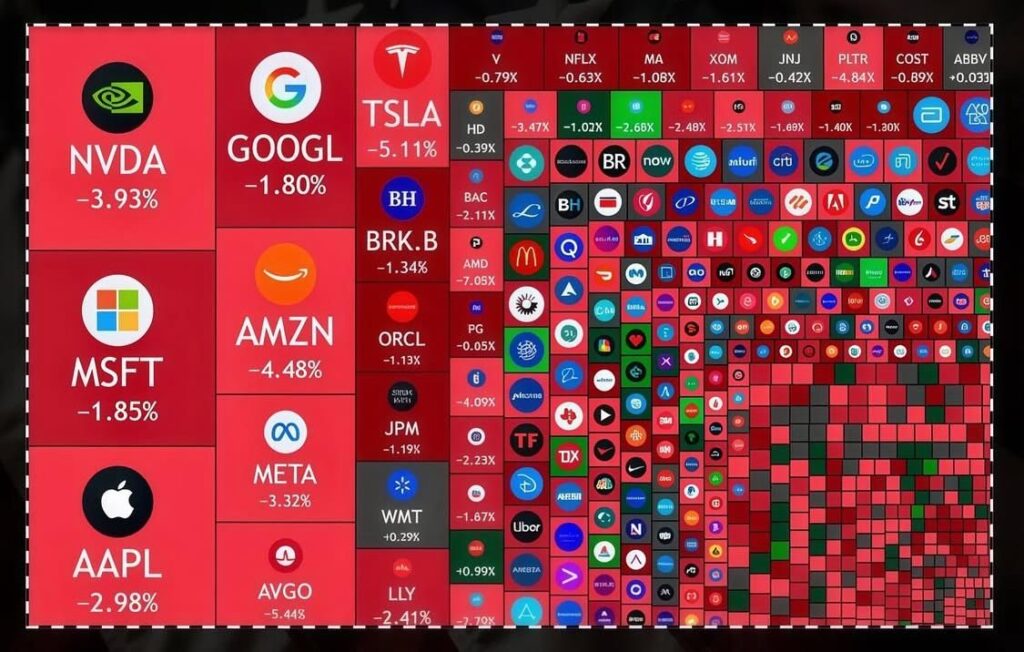
October 11th: Shock and Repricing as Trade Tensions Trigger a Global Market Selloff October 11th marked a sudden and violent repricing across global financial markets. Within minutes, risk assets reacted sharply to the announcement of new 100% U.S. tariffs on Chinese goods, reigniting trade-war fears and triggering a broad-based selloff across equities and cryptocurrencies. The scale and speed of the move highlighted how interconnected and fragile global markets remain when faced with abrupt geopolitical and policy shocks. A Rapid Loss of Market Capitalization The immediate reaction was severe: $1.6–$1.7 trillion wiped out from global equity markets Approximately $250 billion erased from the cryptocurrency market This “Black Friday” moment for markets unfolded within minutes, underscoring the sensitivity of investor sentiment to trade-related developments between the world’s two largest economies. Equity Markets Under Pressure U.S. equity indices recorded their steepest single-day declines in months: S&P 500: -2.7%, the sharpest drop since April Nasdaq Composite: -3.5%, driven by heavy selling in technology stocks Major technology companies led the downturn: Nvidia: -3.93% Amazon: -4.48% Tesla: -5.11% European and Asian markets mirrored the selloff, with indices across Switzerland, Italy, and other major markets closing deeply in negative territory. Crypto Markets: High Beta, High Impact Cryptocurrencies, traditionally sensitive to risk-off environments, experienced sharp declines as investors reduced exposure. The rapid contraction of approximately $250 billion in crypto market value reflected the sector’s vulnerability to macro and geopolitical shocks, particularly during periods of heightened uncertainty. Flight to Quality: Precious Metals Hold Firm In contrast to equities and crypto, gold and silver demonstrated resilience, reinforcing their role as defensive assets. Spot Gold: approximately $4,015–$4,018 per ounce Silver: around $50.6 per ounce This behavior is consistent with a classic flight-to-quality dynamic, as investors sought protection amid escalating volatility. FX Markets: Constructive Signals for EUR/USD Foreign exchange markets ended the week on a more constructive note for EUR/USD. Safe-haven flows and tariff-driven headlines created sharp intraday moves in the U.S. dollar, while demand for the euro improved into the Friday close, highlighting the complex interplay between trade policy and currency markets. Implications for Portfolio Strategy The events of October 11th serve as a clear reminder of the importance of portfolio diversification and robust risk management. The escalation of trade tensions between the United States and China introduces significant uncertainty for the fourth quarter and beyond. In such an environment, strategic asset allocation and disciplined exposure management become critical. Rather than attempting to predict headline-driven moves, resilient portfolios are built to absorb shocks while maintaining the flexibility to respond as conditions evolve. Final Considerations Market shocks of this magnitude are rarely isolated events. They often signal broader shifts in risk perception and investor behavior. For investors, the lesson remains consistent: diversification, disciplined risk management, and a clear strategic framework are essential tools for navigating today’s interconnected global economy. Original LinkedIn post: Read the original market update on LinkedIn INCOME CAPITAL MANAGEMENT
September 2025 Results: Resilience and Performance in a Volatile Market Environment

September 2025 Results: Resilience and Performance in a Volatile Market Environment “Wake me up when September ends…” sang Green Day. For many investors, September 2025 was indeed a month they would have preferred to skip. Global financial markets experienced exceptional turbulence, elevated uncertainty, and volatility at historically high levels. Gold continued its strong upward trajectory, while geopolitical and macroeconomic developments kept investor sentiment fragile throughout the month. Despite these challenging conditions, our strategies delivered solid positive performance, confirming that discipline, diversification, and a structured risk-based approach can transform uncertainty into opportunity. Market Context: A Month Defined by Volatility September unfolded against a backdrop of persistent geopolitical tension, macroeconomic realignment, and heightened sensitivity to policy signals. In such an environment, markets often reward resilience rather than speculation. Short-term reactions can amplify volatility, while structured strategies focused on risk control tend to demonstrate greater stability. Forex Fund Performance – Aggressive Level Even in this highly unstable context, the Forex Fund (Aggressive Level) closed the month with positive results: September 2025: +2.30% Year-to-date (January–September 2025): +28.16% Cumulative since inception (April 2024): +58.21% Since the beginning of August 2025, the strategy has been managed with a more cautious and prudent approach, reflecting the exceptionally high volatility observed across markets. This adjustment highlights the importance of flexibility within a disciplined framework, allowing portfolios to adapt while maintaining clear risk controls. Real Estate Fund Performance The Real Estate Fund also continued to deliver steady growth during September: September 2025: +0.45% Year-to-date (January–September 2025): +6.44% Cumulative since inception (April 2024): +12.64% While summer months typically represent a slowdown for the real estate sector, activity traditionally resumes with the arrival of autumn. Growth continues to be supported by sustained demand for tangible assets, particularly from investors seeking stability amid broader market uncertainty. Physical Gold Allocation Gold remained a central component of portfolio protection strategies throughout September. Purchased in September: 1.6 kg Total gold in custody: 11.6 kg Market value as of 30/09/2025: €1,228,440 (€105.90 per gram) The increase in demand is consistent with investors’ continued search for protection, reinforced by the strengthening of the spot gold price. In periods of elevated uncertainty, physical gold continues to fulfill its role as a strategic store of value. Transparency and Reporting Detailed performance reports are available at the following link: Access detailed reports → Active clients can find comprehensive data for all managed financial instruments in the private area, under the RESULTS section. Final Considerations September 2025 reinforces a key lesson: in times of heightened uncertainty, resilient strategies grounded in diversification and risk discipline make the difference. While markets remain unpredictable, structured investment approaches continue to demonstrate their ability not only to withstand volatility, but to convert it into sustainable performance. Original LinkedIn post: Read the original update on LinkedIn INCOME CAPITAL MANAGEMENT
The New Gold Rush: Performance, Protection, and the Role of Gold in Modern Portfolios

The New Gold Rush: Performance, Protection, and the Role of Gold in Modern Portfolios Between April and August 2025, gold once again demonstrated why it has served as a store of value for thousands of years. In a market environment characterized by uncertainty, geopolitical tension, and fluctuating monetary expectations, the precious metal delivered solid and measurable returns while many investors remained hesitant. Gold Performance: April–August 2025 From April 1st to August 8th, 2025, gold prices increased from $100.74 to $109.11 per ounce. Price increase: +8.31% Timeframe: 4 months This performance was achieved during a period in which financial markets were grappling with elevated volatility, geopolitical risks, and ongoing debates around inflation and monetary policy. To put this into perspective, an investment of $10,000 in gold at the beginning of April would have grown to approximately $10,831 by early August—reflecting tangible wealth creation over a relatively short period. More Than a Commodity Cycle Gold’s recent performance should not be viewed as a short-term anomaly or a speculative rally. Historically, gold has fulfilled a consistent role across economic cycles: preserving purchasing power when confidence in financial systems or paper currencies weakens. This role is once again evident as: Central banks continue to accumulate gold reserves at a sustained pace Institutional investors increase allocations to precious metals Gold reasserts its function as a portfolio stabilizer during uncertainty These dynamics reinforce gold’s position not merely as a commodity, but as a strategic asset within diversified portfolios. Opportunity Cost and Investor Hesitation One of the most common investor challenges during periods of market uncertainty is indecision. Waiting for a “perfect” entry point often results in missed opportunities. The +8.31% return achieved over the past four months represents real gains that were accessible to investors willing to act within a disciplined allocation framework. Opportunity cost, while less visible than market losses, can be equally damaging to long-term portfolio outcomes. Gold’s Strategic Role in Portfolio Construction Beyond recent performance, gold continues to play a fundamental role in investment strategy: Inflation hedge: preserving value as purchasing power erodes Diversification tool: reducing correlation with traditional financial assets Tangible asset: offering resilience during currency and systemic stress With ongoing geopolitical tensions, monetary uncertainty, and inflationary pressures, the structural case for gold remains intact. Looking Ahead The question for investors is not whether gold has historically proven its value—history has already answered that. The more relevant consideration is whether portfolios are adequately positioned to benefit from its stabilizing and protective characteristics. As recent months have shown, gold continues to perform its role quietly and consistently, often while broader markets remain distracted by short-term noise. LinkedIn Source This article is based on the original LinkedIn update published here: Read the original LinkedIn post → INCOME CAPITAL MANAGEMENT
August 2025 Results: Navigating Volatility Across Forex, Gold, and Real Estate
August 2025 Results: Navigating Volatility Across Forex, Gold, and Real Estate August 2025 once again confirmed the level of complexity affecting global and European financial markets. Seasonal flows contributed to lower average returns across several asset classes, while volatility increased sharply, making trading conditions particularly sensitive to economic signals and geopolitical developments. In this environment, investor behavior increasingly favored assets perceived as stable stores of value, reinforcing long-term structural trends already visible throughout the year. Market Context: Volatility and Seasonal Dynamics Historically, August is characterized by reduced liquidity and lower trading volumes. In 2025, however, these seasonal effects were accompanied by heightened volatility, amplifying market reactions to political, economic, and geopolitical news. This combination created an uneven landscape in which selective positioning and disciplined risk management became essential. Safe Havens and Defensive Assets During August, two asset classes stood out for their stabilizing role within portfolios: Gold continued to strengthen as an international safe-haven asset, benefiting from persistent geopolitical uncertainty and ongoing concerns around inflation and monetary policy. Real Estate showed a notable upswing, increasingly attracting investors seeking tangible assets and income stability amid market turbulence. These dynamics highlight the importance of diversification across both financial and real assets when volatility rises. Forex Fund Performance – August 2025 Against this challenging backdrop, the Forex Fund (Aggressive Strategy) delivered the following results: August 2025: +1.58% Year-to-date (January–August 2025): +25.86% Cumulative since inception (April 2024): +55.91% These figures reflect the ability of the strategy to remain responsive to rapidly changing conditions while maintaining a disciplined framework focused on risk control. Capital Protection and Agile Investment In periods of elevated volatility, our priority remains clear: capital protection. While market conditions may limit short-term opportunities, maintaining flexibility allows portfolios to remain prepared for new opportunities as soon as market dynamics normalize. This balance between prudence and agility is central to our investment philosophy and guides decision-making across all strategies. Transparency and Risk Awareness Detailed reporting remains a key component of our client communication. At the following links, investors can access in-depth documentation: Results: View detailed performance reports Financial Risks: Review the financial risk framework We believe that clear visibility on both performance and risk is essential, particularly during complex market phases. Final Considerations August 2025 highlights the importance of disciplined execution in an environment shaped by volatility, seasonal effects, and geopolitical uncertainty. By combining active risk management with diversified exposure across asset classes, portfolios can remain resilient while retaining the ability to capture opportunities when conditions improve. Original LinkedIn post: Read the original update on LinkedIn INCOME CAPITAL MANAGEMENT
July 2025: Extreme Volatility and Forex Fund Performance Under Unprecedented Market Stress

July 2025: Extreme Volatility and Forex Fund Performance Under Unprecedented Market Stress July 2025 proved to be one of the most challenging months in recent financial market history, particularly during its final two weeks. A period that is typically characterized by low volatility and reduced trading activity instead delivered extreme and unpredictable market movements, driven by a combination of political tension, speculative positioning, and fragile liquidity conditions. An Unusual Market Environment The month was dominated by escalating tensions over trade tariffs between Europe and the United States. These developments triggered a rapid sequence of events that destabilized the currency markets, particularly the EUR/USD pair. Initially, the European Central Bank intervened to artificially support the Euro, aiming to strengthen the European Commission’s position during ongoing negotiations. This was followed by a swift resurgence of the US Dollar as the dominant global currency. Crucially, these movements occurred against a backdrop of very low trading volumes, amplifying price swings and resulting in levels of volatility that, in certain moments, were unprecedented—even compared to the 2008 financial crisis. EUR/USD: Exceptional Price Swings The EUR/USD exchange rate illustrated the severity of market dislocation: Such rapid reversals within a compressed timeframe underscore the fragility of market sentiment and the risks associated with speculative flows during low-liquidity periods. Geopolitical Escalation and Risk Perception Market instability was further compounded by emerging geopolitical tensions, including the deployment of US submarines. While the prospect of nuclear escalation remains theoretical, even the suggestion of such risk materially affects investor behavior, volatility expectations, and capital allocation decisions. In environments like this, risk perception often outweighs fundamentals, creating conditions where price movements become disconnected from traditional valuation frameworks. Forex Fund Performance Overview Against this exceptionally turbulent backdrop, the Forex Fund (Aggressive Strategy) recorded the following results: While July closed negatively, the broader performance context remains solid, reflecting the strength of the strategy over longer horizons. Capital Protection as a Priority In periods of extreme and irregular volatility, prudence becomes essential. Our primary objective remains capital protection, with profit generation as a secondary goal. While speculative market movements are inherently unpredictable and beyond direct control, our focus is on maintaining vigilance and preserving the ability to act decisively when conditions normalize. This disciplined approach allows us to manage drawdowns while keeping portfolios positioned for recovery when market dynamics become more rational. Transparency and Reporting A detailed monthly return overview is available in the private area: View the full July 2025 performance report → We believe transparent reporting is essential, especially during challenging phases, enabling investors to evaluate performance within its proper market context. Final Considerations July 2025 serves as a reminder that extreme volatility can emerge even during periods traditionally considered stable. In such environments, discipline, risk management, and a long-term perspective remain the most effective tools for navigating uncertainty. INCOME CAPITAL MANAGEMENT
Long-Term Investing: Why Structure Matters More Than Timing

Long-Term Investing: Why Structure Matters More Than Timing One of the most persistent misconceptions in investing is the belief that success depends on perfect timing. In reality, long-term outcomes are shaped far more by structure, discipline, and consistency than by the ability to anticipate short-term market movements. As markets become increasingly volatile and information cycles accelerate, this distinction becomes even more important. The Limits of Market Timing Attempting to time markets introduces two structural risks: emotional decision-making and inconsistent execution. Even experienced investors struggle to consistently identify optimal entry and exit points, particularly in environments dominated by geopolitical uncertainty, macroeconomic shifts, and rapid sentiment changes. Over time, these attempts often result in increased transaction costs, missed opportunities, and fragmented portfolio positioning. Structure as the Anchor of Investment Strategy A structured investment approach focuses on what can be controlled rather than what must be predicted. This includes: Clear asset allocation aligned with objectives and risk tolerance Defined exposure limits across asset classes Disciplined rebalancing through market cycles Structure acts as an anchor during periods of uncertainty, preventing reactive decisions driven by short-term noise. Consistency Across Market Cycles Markets move through expansion, contraction, and transition phases. Strategies built on structure are designed to operate across these cycles rather than optimize for a single scenario. Consistency does not imply rigidity. It means maintaining a coherent framework while adapting positioning within predefined risk parameters. Risk Discipline and Capital Preservation Long-term investing is not only about capturing upside—it is equally about managing downside. Risk discipline ensures that drawdowns remain controlled, preserving the ability to remain invested and participate in future opportunities. Over extended horizons, avoiding significant losses often contributes more to performance than attempting to maximize gains. Final Considerations Structure does not eliminate uncertainty, but it provides a reliable framework for navigating it. In an environment where volatility is likely to persist, long-term investment success will continue to favor those who prioritize discipline, clarity, and consistency over short-term timing. Original LinkedIn post: Read the original discussion on LinkedIn INCOME CAPITAL MANAGEMENT

