Building Resilient Portfolios: Real Assets, Global Structures, and Disciplined Innovation

Building Resilient Portfolios: Real Assets, Global Structures, and Disciplined Innovation In a financial environment defined by volatility, regulatory fragmentation, and rapid technological change, long-term wealth creation increasingly depends on structure rather than speculation. At Income Capital Management, portfolio construction is guided by a multi-dimensional framework that combines real assets, cross-border efficiency, and measured innovation. This approach reflects a simple principle: diversification today is not just about asset classes, but about economic function, legal structure, and risk governance. Infrastructure Investing: Real Assets at the Core of Long-Term Wealth Infrastructure investments — from toll roads and logistics networks to renewable energy grids and utilities — represent some of the most tangible components of the global economy. These assets typically generate predictable cash flows, benefit from long-term contracts, and often provide a natural hedge against inflation. Income Capital Management accesses infrastructure primarily through institutional-grade investment vehicles, allowing clients to participate in assets traditionally reserved for large institutions. Unlike traditional equities, infrastructure returns are driven by usage, regulation, and economic necessity rather than market sentiment alone. Within a diversified portfolio, infrastructure plays a stabilizing role, complementing growth-oriented strategies while anchoring long-term capital in real economic activity. Cross-Border Investment and Tax Optimization: Structure Matters As portfolios become increasingly global, investment performance can no longer be evaluated independently from tax efficiency and regulatory structure. Cross-border investing introduces complexity — but also opportunity — when managed correctly. Income Capital Management supports international investors through careful fund domiciliation, treaty-aware structuring, and disciplined compliance frameworks. The objective is not aggressive tax avoidance, but the legitimate reduction of tax drag through alignment with international agreements and transparent reporting standards. A well-structured investment can materially improve net returns over time, particularly for long-term investors. In this sense, tax optimization becomes a strategic component of portfolio construction rather than an afterthought. Cryptocurrency and Digital Assets: Innovation with Discipline Digital assets and cryptocurrencies continue to attract attention due to their volatility and technological promise. While blockchain technology is reshaping financial infrastructure, cryptocurrencies themselves remain speculative instruments that require careful risk assessment. Income Capital Management approaches digital assets with a clear distinction between innovation and exposure. Rather than pursuing momentum-driven allocations, we evaluate blockchain-related opportunities through a rigorous risk–return lens, focusing on regulated environments, tokenized securities, and infrastructure-level innovation. This measured approach allows participation in technological evolution without compromising portfolio stability or risk discipline. An Integrated Framework for Modern Investors Real assets such as infrastructure provide stability and inflation protection. Cross-border structuring enhances efficiency and transparency. Selective exposure to digital innovation ensures portfolios remain forward-looking without becoming speculative. Together, these elements form a resilient investment framework designed to perform across market cycles, regulatory regimes, and economic conditions. In a world where complexity is unavoidable, clarity of structure becomes a competitive advantage. Conclusion Sustainable wealth is built through disciplined allocation, structural awareness, and prudent innovation. By combining real assets, global investment efficiency, and controlled exposure to emerging technologies, Income Capital Management aims to deliver portfolios that are not only diversified, but structurally resilient. This philosophy reflects our long-term commitment to transparency, risk management, and investor-centric asset management. Related LinkedIn posts: Infrastructure Investing: https://www.linkedin.com/posts/activity-7425274527376375808-skVv Cross-Border Investment Tax Optimization: https://www.linkedin.com/posts/incomecapital_investment-optimization-investing-activity-7422292422941978624-QmKw Cryptocurrency and Digital Assets: https://www.linkedin.com/posts/incomecapital_cryptocurrency-volatile-speculative-activity-7420389889122193408-RvO2
PRESS RELEASE – TEARLY RESULTS 2025
Income Capital Management Reports Strong 2025 Performance in a Year of Divergent Global Markets FOR IMMEDIATE RELEASE Date: January 27, 2026 Prague, Czech Republic — Income Capital Management closed 2025 with solid results across its diversified investment strategies, successfully navigating a year marked by sharp divergences between asset classes. The firm enters 2026 with a disciplined, multi-asset approach focused on delivering consistent value to its investors. Market Environment Global markets in 2025 were characterized by pronounced dispersion. Gold emerged as the top-performing major asset class, posting gains of +65.87% and reinforcing its role as a safe-haven asset. Major equity indices, including DAX, NASDAQ, FTSE 100, Euro Stoxx 50, S&P 500, and Dow Jones, recorded positive performances, while Bitcoin declined by -6.35%, reflecting increased volatility and speculative risk. Italy’s FTSE MIB underperformed relative to broader international benchmarks. Key Strategy Performance Income Capital Management’s Forex strategy delivered a standout performance, achieving an annual return of +34.98%. Active currency trading combined with strict risk management allowed the strategy to outperform major traditional benchmarks. The firm’s Real Estate strategy generated stable income-driven returns of +7.71%, supported by premium property assets and consistent cash flow, outperforming several weaker regional equity markets. Additional allocations to global growth and high-yield strategies contributed to overall portfolio diversification and balance. Management Commentary “2025 confirmed that active and diversified strategies are essential in fragmented market conditions,” said Paolo Volpicelli, CEO of Income Capital Management. “Our Forex strategy’s 34.98% return demonstrates how disciplined execution and controlled risk can translate into meaningful performance for our investors.” Nicola Pinchi, CTO of Income Capital Management, added: “By combining high-conviction Forex strategies with stable real estate income and physical gold exposure, we have built portfolios designed to perform across different market cycles rather than simply follow short-term trends.” Strategic Positioning for 2026 Income Capital Management’s multi-asset framework — encompassing Forex for growth, real estate for income, global growth and high-yield strategies for diversification, and physical gold for capital protection — is designed to provide resilience and flexibility in an evolving macroeconomic environment. As the firm enters 2026, this structure aims to balance opportunity and risk, supporting long-term portfolio stability in periods of heightened volatility. About Income Capital Management Income Capital Management is an independent asset management firm specializing in diversified investment solutions across Forex, real estate, global growth, high-yield strategies, and physical asset exposure. The firm focuses on active management, disciplined risk control, and long-term capital preservation and growth. For more information, please visit www.incomecapital.biz or contact the Income Capital Management team directly. LinkedIn press release: https://www.linkedin.com/posts/paolovolpicelli_press-release-tearly-results-2025-activity-7421816797093494784-NoVd
Confidence, Emerging Markets and Debt Investment: Navigating Opportunity Through Structure

Confidence, Emerging Markets and Debt Investment: Navigating Opportunity Through Structure In a global financial environment shaped by uncertainty, confidence is not a sentiment — it is the result of structure, discipline, and informed decision-making. Emerging markets continue to attract investor attention, not because they are simple, but because they offer opportunities that are often uncorrelated with traditional developed markets. Within this context, debt investments play a strategic role, combining yield potential with structured risk management when approached correctly. Why Confidence Matters in Emerging Markets Emerging markets are frequently associated with volatility, political risk, and uneven growth cycles. While these factors are real, they also create inefficiencies — and inefficiencies are precisely where disciplined investors can find value. Confidence in this space does not come from speculation. It comes from: Careful jurisdiction and counterparty selection Clear legal and regulatory frameworks Defined risk parameters and exit strategies Continuous monitoring of macroeconomic and geopolitical dynamics When these elements are in place, emerging market exposure becomes a calculated allocation rather than a leap of faith. The Strategic Role of Debt Investment Debt investment represents a different approach compared to pure equity exposure. Instead of relying solely on growth narratives, debt strategies focus on contractual cash flows, capital structure positioning, and downside protection. In emerging markets, this approach can be particularly effective. Well-structured debt instruments may offer: Predictable income streams Priority positioning in the capital structure Lower volatility compared to equity investments Improved portfolio diversification The key lies in rigorous due diligence and conservative structuring — elements that transform complexity into opportunity. From Perceived Risk to Managed Exposure Risk in emerging markets is often misunderstood. The real risk is not volatility itself, but the absence of controls, transparency, and governance. By focusing on structured debt solutions, investors can access emerging market opportunities while maintaining alignment with capital preservation objectives. This approach shifts the narrative from speculative exposure to intentional allocation. Confidence as a Competitive Advantage In periods where global markets oscillate between optimism and fear, confidence becomes a differentiating factor. Not blind confidence, but informed confidence — built on data, structure, and experience. At INCOME CAPITAL MANAGEMENT, confidence is the outcome of method. Our investment philosophy emphasizes clarity over complexity and structure over narratives, particularly when operating in less conventional markets. A Measured Path Forward Emerging markets and debt investments are not designed for short-term speculation. They are components of a broader strategy aimed at diversification, income generation, and long-term resilience. By combining disciplined risk management with selective exposure, it is possible to navigate complexity without compromising on control. INCOME CAPITAL MANAGEMENT s.r.o. 🔗 Related LinkedIn post: Confidence, Emerging Markets and Debt Investment
October 11th: Shock and Repricing as Trade Tensions Trigger a Global Market Selloff
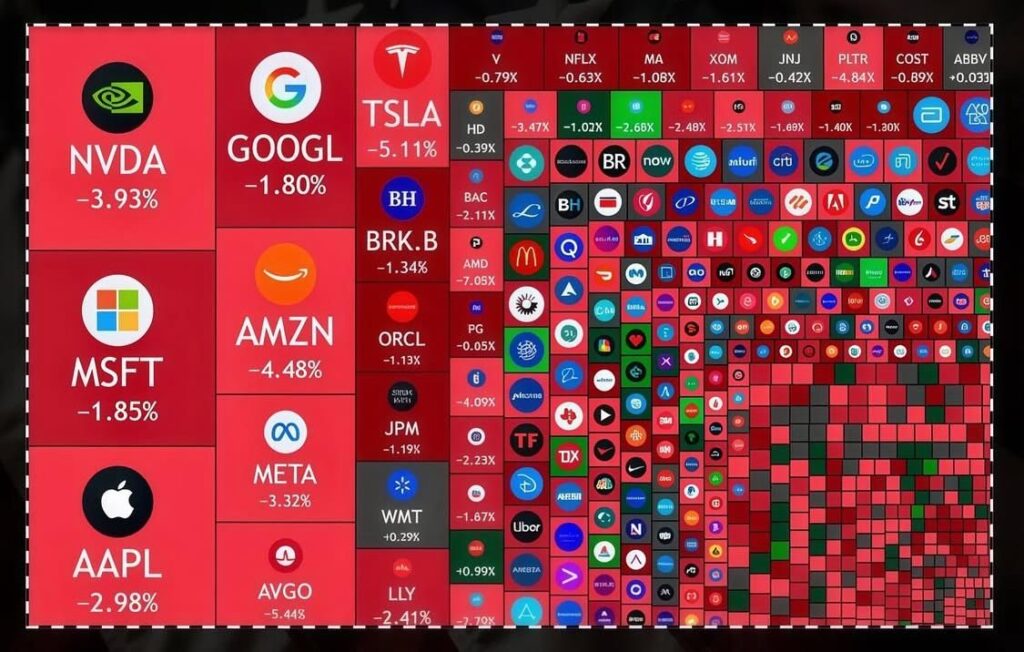
October 11th: Shock and Repricing as Trade Tensions Trigger a Global Market Selloff October 11th marked a sudden and violent repricing across global financial markets. Within minutes, risk assets reacted sharply to the announcement of new 100% U.S. tariffs on Chinese goods, reigniting trade-war fears and triggering a broad-based selloff across equities and cryptocurrencies. The scale and speed of the move highlighted how interconnected and fragile global markets remain when faced with abrupt geopolitical and policy shocks. A Rapid Loss of Market Capitalization The immediate reaction was severe: $1.6–$1.7 trillion wiped out from global equity markets Approximately $250 billion erased from the cryptocurrency market This “Black Friday” moment for markets unfolded within minutes, underscoring the sensitivity of investor sentiment to trade-related developments between the world’s two largest economies. Equity Markets Under Pressure U.S. equity indices recorded their steepest single-day declines in months: S&P 500: -2.7%, the sharpest drop since April Nasdaq Composite: -3.5%, driven by heavy selling in technology stocks Major technology companies led the downturn: Nvidia: -3.93% Amazon: -4.48% Tesla: -5.11% European and Asian markets mirrored the selloff, with indices across Switzerland, Italy, and other major markets closing deeply in negative territory. Crypto Markets: High Beta, High Impact Cryptocurrencies, traditionally sensitive to risk-off environments, experienced sharp declines as investors reduced exposure. The rapid contraction of approximately $250 billion in crypto market value reflected the sector’s vulnerability to macro and geopolitical shocks, particularly during periods of heightened uncertainty. Flight to Quality: Precious Metals Hold Firm In contrast to equities and crypto, gold and silver demonstrated resilience, reinforcing their role as defensive assets. Spot Gold: approximately $4,015–$4,018 per ounce Silver: around $50.6 per ounce This behavior is consistent with a classic flight-to-quality dynamic, as investors sought protection amid escalating volatility. FX Markets: Constructive Signals for EUR/USD Foreign exchange markets ended the week on a more constructive note for EUR/USD. Safe-haven flows and tariff-driven headlines created sharp intraday moves in the U.S. dollar, while demand for the euro improved into the Friday close, highlighting the complex interplay between trade policy and currency markets. Implications for Portfolio Strategy The events of October 11th serve as a clear reminder of the importance of portfolio diversification and robust risk management. The escalation of trade tensions between the United States and China introduces significant uncertainty for the fourth quarter and beyond. In such an environment, strategic asset allocation and disciplined exposure management become critical. Rather than attempting to predict headline-driven moves, resilient portfolios are built to absorb shocks while maintaining the flexibility to respond as conditions evolve. Final Considerations Market shocks of this magnitude are rarely isolated events. They often signal broader shifts in risk perception and investor behavior. For investors, the lesson remains consistent: diversification, disciplined risk management, and a clear strategic framework are essential tools for navigating today’s interconnected global economy. Original LinkedIn post: Read the original market update on LinkedIn INCOME CAPITAL MANAGEMENT
September 2025 Results: Resilience and Performance in a Volatile Market Environment

September 2025 Results: Resilience and Performance in a Volatile Market Environment “Wake me up when September ends…” sang Green Day. For many investors, September 2025 was indeed a month they would have preferred to skip. Global financial markets experienced exceptional turbulence, elevated uncertainty, and volatility at historically high levels. Gold continued its strong upward trajectory, while geopolitical and macroeconomic developments kept investor sentiment fragile throughout the month. Despite these challenging conditions, our strategies delivered solid positive performance, confirming that discipline, diversification, and a structured risk-based approach can transform uncertainty into opportunity. Market Context: A Month Defined by Volatility September unfolded against a backdrop of persistent geopolitical tension, macroeconomic realignment, and heightened sensitivity to policy signals. In such an environment, markets often reward resilience rather than speculation. Short-term reactions can amplify volatility, while structured strategies focused on risk control tend to demonstrate greater stability. Forex Fund Performance – Aggressive Level Even in this highly unstable context, the Forex Fund (Aggressive Level) closed the month with positive results: September 2025: +2.30% Year-to-date (January–September 2025): +28.16% Cumulative since inception (April 2024): +58.21% Since the beginning of August 2025, the strategy has been managed with a more cautious and prudent approach, reflecting the exceptionally high volatility observed across markets. This adjustment highlights the importance of flexibility within a disciplined framework, allowing portfolios to adapt while maintaining clear risk controls. Real Estate Fund Performance The Real Estate Fund also continued to deliver steady growth during September: September 2025: +0.45% Year-to-date (January–September 2025): +6.44% Cumulative since inception (April 2024): +12.64% While summer months typically represent a slowdown for the real estate sector, activity traditionally resumes with the arrival of autumn. Growth continues to be supported by sustained demand for tangible assets, particularly from investors seeking stability amid broader market uncertainty. Physical Gold Allocation Gold remained a central component of portfolio protection strategies throughout September. Purchased in September: 1.6 kg Total gold in custody: 11.6 kg Market value as of 30/09/2025: €1,228,440 (€105.90 per gram) The increase in demand is consistent with investors’ continued search for protection, reinforced by the strengthening of the spot gold price. In periods of elevated uncertainty, physical gold continues to fulfill its role as a strategic store of value. Transparency and Reporting Detailed performance reports are available at the following link: Access detailed reports → Active clients can find comprehensive data for all managed financial instruments in the private area, under the RESULTS section. Final Considerations September 2025 reinforces a key lesson: in times of heightened uncertainty, resilient strategies grounded in diversification and risk discipline make the difference. While markets remain unpredictable, structured investment approaches continue to demonstrate their ability not only to withstand volatility, but to convert it into sustainable performance. Original LinkedIn post: Read the original update on LinkedIn INCOME CAPITAL MANAGEMENT
The New Gold Rush: Performance, Protection, and the Role of Gold in Modern Portfolios

The New Gold Rush: Performance, Protection, and the Role of Gold in Modern Portfolios Between April and August 2025, gold once again demonstrated why it has served as a store of value for thousands of years. In a market environment characterized by uncertainty, geopolitical tension, and fluctuating monetary expectations, the precious metal delivered solid and measurable returns while many investors remained hesitant. Gold Performance: April–August 2025 From April 1st to August 8th, 2025, gold prices increased from $100.74 to $109.11 per ounce. Price increase: +8.31% Timeframe: 4 months This performance was achieved during a period in which financial markets were grappling with elevated volatility, geopolitical risks, and ongoing debates around inflation and monetary policy. To put this into perspective, an investment of $10,000 in gold at the beginning of April would have grown to approximately $10,831 by early August—reflecting tangible wealth creation over a relatively short period. More Than a Commodity Cycle Gold’s recent performance should not be viewed as a short-term anomaly or a speculative rally. Historically, gold has fulfilled a consistent role across economic cycles: preserving purchasing power when confidence in financial systems or paper currencies weakens. This role is once again evident as: Central banks continue to accumulate gold reserves at a sustained pace Institutional investors increase allocations to precious metals Gold reasserts its function as a portfolio stabilizer during uncertainty These dynamics reinforce gold’s position not merely as a commodity, but as a strategic asset within diversified portfolios. Opportunity Cost and Investor Hesitation One of the most common investor challenges during periods of market uncertainty is indecision. Waiting for a “perfect” entry point often results in missed opportunities. The +8.31% return achieved over the past four months represents real gains that were accessible to investors willing to act within a disciplined allocation framework. Opportunity cost, while less visible than market losses, can be equally damaging to long-term portfolio outcomes. Gold’s Strategic Role in Portfolio Construction Beyond recent performance, gold continues to play a fundamental role in investment strategy: Inflation hedge: preserving value as purchasing power erodes Diversification tool: reducing correlation with traditional financial assets Tangible asset: offering resilience during currency and systemic stress With ongoing geopolitical tensions, monetary uncertainty, and inflationary pressures, the structural case for gold remains intact. Looking Ahead The question for investors is not whether gold has historically proven its value—history has already answered that. The more relevant consideration is whether portfolios are adequately positioned to benefit from its stabilizing and protective characteristics. As recent months have shown, gold continues to perform its role quietly and consistently, often while broader markets remain distracted by short-term noise. LinkedIn Source This article is based on the original LinkedIn update published here: Read the original LinkedIn post → INCOME CAPITAL MANAGEMENT
Investment Returns: €10,000 Then vs Now — A 10-Year Comparison
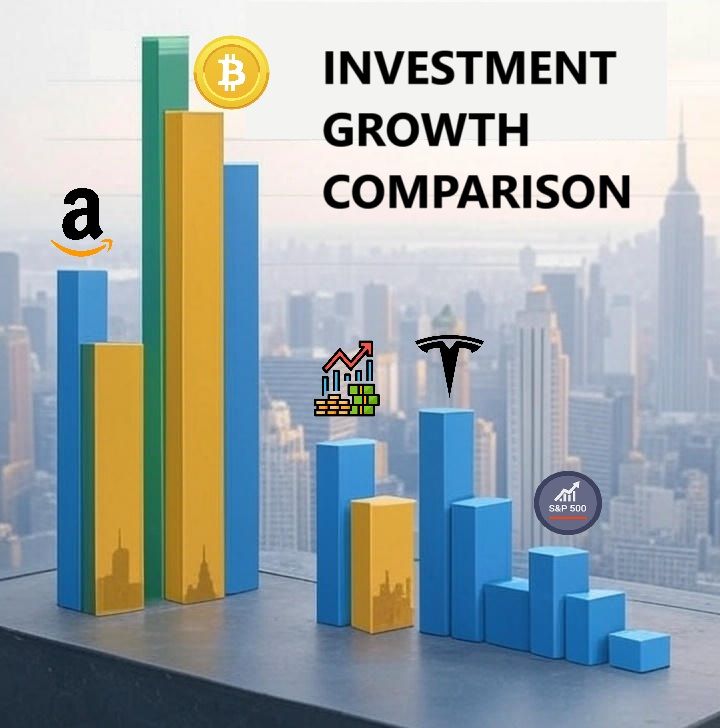
Investment Returns: €10,000 Then vs Now — A 10-Year Comparison Time is one of the most powerful variables in investing. Looking back over the past decade, the difference between asset classes becomes striking when performance is measured over a full market cycle rather than short-term movements. This analysis addresses a simple but fundamental question: What would €10,000 invested ten years ago be worth today? The comparison below highlights how different assets have behaved over time, illustrating the impact of growth, volatility, and risk management. Stock Market Indices Equity markets delivered solid long-term growth, with notable differences between regions. NASDAQ Composite: approximately +261% over 10 years S&P 500: approximately +170% over 10 years FTSE 100 (London): approximately +45% over 10 years FTSE MIB (Milan): approximately +50% over 10 years The data confirms the structural outperformance of U.S. markets, largely driven by technology and innovation-led growth. Individual Stocks Selecting individual equities amplified returns significantly, while also increasing volatility and concentration risk. Amazon: approximately +1,561% over 10 years Apple: approximately +1,193% over 10 years Microsoft: approximately +1,334% over 10 years Alphabet (Google): approximately +872% over 10 years Tesla: approximately +13,895% over 10 years These outcomes highlight the power of innovation — and the importance of managing downside risk when exposure is concentrated. Bitcoin Bitcoin represents the most extreme example of asymmetric risk and return. Bitcoin: approximately +39,800% over 10 years Such performance came with extreme volatility, sharp drawdowns, and regulatory uncertainty — factors that require careful sizing within a diversified portfolio. Gold Gold continued to serve as a long-term store of value and defensive asset. Gold: approximately +126% total return over 10 years While returns were lower than equities, gold provided stability during periods of inflation and market stress. Real Estate (Value Appreciation) Property markets delivered mixed results depending on geography and local fundamentals. New York: approximately +35% over 10 years London: approximately +40% over 10 years Milan: approximately +25% over 10 years Dubai: approximately +90% over 10 years Dubai stands out for its strong appreciation, supported by international capital flows and favorable economic policies. The Income Capital Forex Fund Perspective Based on historical assumptions, a €10,000 investment in the Income Capital Forex Fund over the same ten-year horizon would have generated approximately +500%. This performance would place the strategy: Above traditional equity indices Well ahead of gold and most real estate markets Below high-volatility assets such as Bitcoin The differentiating factor remains a disciplined framework combining active management, structured risk control, and consistent execution. Key Takeaways High Risk, High Reward: Crypto and select equities delivered exceptional returns, but with extreme volatility. Technology Leadership: Innovation-driven companies reshaped long-term equity performance. Stability vs Growth: Gold and real estate offered resilience rather than explosive growth. Diversification Matters: Balanced portfolios reduce volatility while preserving long-term opportunity. Final Consideration Investment success is not about chasing the best-performing asset, but about constructing a portfolio that aligns risk, time horizon, and objectives. Consistency, diversification, and discipline remain the foundations of long-term capital growth. Original LinkedIn post: View the discussion on LinkedIn

