Why Process Beats Prediction in Investing

Why Process Beats Prediction in Investing Every week, markets produce a fresh set of forecasts: where rates are heading, which currency will strengthen, what the next quarter holds. Most of those forecasts will be quietly wrong, replaced by new ones before anyone checks. Professional investors noticed this a long time ago, and they drew a conclusion that still separates them from the crowd: since prediction cannot be relied upon, the reliable thing has to be built elsewhere. It gets built in the investment process, the set of rules that defines how decisions are made, how risk is controlled, and how a portfolio adapts when conditions change. Prediction changes every week. Process remains. This article explains what that actually means in practice. The prediction trap The appeal of prediction is obvious: if you knew what markets would do, everything else would be easy. The problem is equally obvious once stated. Markets price in available information almost immediately, the variables that move them interact in ways no model fully captures, and the events that matter most are precisely the ones nobody forecast. This is not a temporary limitation waiting for better analytics. It is a structural feature of markets. The trap is not in making forecasts, which every investor implicitly does. The trap is in building a portfolio that only works if the forecast is right. A position sized for a confident prediction, without a defined response for the scenario where the prediction fails, is not a strategy. It is a bet with a story attached. An investment process starts from the opposite premise: the future is uncertain, and the portfolio has to work across several futures at once. That single shift changes every downstream decision. The evidence, for once, is unambiguous This is not a philosophical preference. Few questions in finance have been measured as thoroughly as whether professional forecasting ability translates into results, and the answer is consistently uncomfortable for the prediction camp. The most systematic measurement comes from the SPIVA scorecards published by S&P Dow Jones Indices, which have compared actively managed funds against their benchmarks for a quarter of a century. Over the 15-year period ending in 2024, roughly nine out of ten active US large-cap equity funds underperformed the S&P 500, and there was not a single US equity category in which a majority of active managers beat their benchmark. These are professionals with research teams, information advantages, and every incentive to be right, and as a group their market views subtracted value after costs. The persistence data is, if anything, harsher. Funds that do outperform in one period rarely keep doing so in the next, which is exactly the pattern you would expect if short-term outperformance were dominated by luck rather than repeatable forecasting skill. Decades of academic work on expert judgment point the same way: confident long-range predictions about markets and economies perform barely better than chance, while the forecasters’ confidence remains untouched by their record. None of this means markets cannot be analyzed or that all active management is futile. It means something more specific: returns that depend on being right about the future are built on the least reliable input available. Whatever edge a professional operation has, it has to live somewhere else, in structure, in risk control, in execution, in discipline. In process. What an investment process actually contains Process is one of those words that gets used vaguely, so it is worth being concrete. A real investment process answers, in writing and in advance, at least four questions. How are decisions made? Entries, exits, and position sizes follow defined criteria rather than conviction of the moment. Speed without structure produces inconsistent outcomes; a plan does not remove uncertainty, but it removes the emotional improvisation that uncertainty otherwise triggers. How is risk controlled? Exposure limits, concentration limits, and drawdown thresholds exist before the positions do, with defined responses when they are reached. We described this architecture in detail in our article on the structure behind a professional forex fund, and the logic applies to any strategy. How does the portfolio adapt? Conditions change, and a process specifies how change is detected and what adjustment follows: scheduled reviews, defined triggers, deliberate procedure. Adaptation on a schedule is a strength; adaptation under pressure is usually damage. How is the process itself reviewed? Even good rules age. A serious process includes a procedure for changing the process, calmly and with evidence, never in the middle of a drawdown. None of this is exciting, and that is rather the point. Excitement in portfolio management is a cost, not a feature. Drawdowns: where process proves itself If you want to know whether an investment process is real, look at how it treats losses. Returns attract attention, but drawdowns determine survival, and the distinction matters more than most performance discussions acknowledge. A strategy that compounds well over a decade is rarely the one with the most spectacular months. It is the one whose losing periods stayed shallow enough that recovery never required heroics and never forced a deviation from the rules. Deep drawdowns do their damage twice: once in capital, and again in behavior, because they push investors toward exactly the improvised decisions the process was built to prevent. Risk management is, in practice, drawdown management. The path matters more than the peak. This is also where prediction-driven investing fails most visibly. The forecaster who is right four times and then badly wrong once can end up behind the process-driven investor who was never spectacularly right about anything. Compounding rewards the absence of disasters more than the presence of brilliance. Risk is about outcomes, not fluctuations Underneath the process view sits a different definition of risk. Day-to-day volatility is what gets measured, because it is easy to measure. But risk, properly understood, is uncertainty that affects your ability to reach long-term goals: the possibility of losses too deep to recover from, of illiquidity at the wrong moment, of a portfolio that forces bad decisions under stress. The
Discipline Beats Intelligence: The Behavioral Side of Managing Money

Discipline Beats Intelligence: The Behavioral Side of Managing Money Intelligence helps you understand markets. Discipline helps you survive them. Most investment mistakes do not come from lack of knowledge. The information needed to avoid the classic errors, from overconcentration to performance chasing to panic selling, has been publicly available for decades, and the people who make these mistakes are frequently the ones best equipped to explain why they are mistakes. The gap is behavioral rather than analytical: it is the distance between what an investor knows and what an investor consistently does. Investment discipline is what closes that gap. Where returns are actually lost Long-term results are rarely destroyed by one catastrophic call. They erode through repeated small errors: adding to a position because it just performed well, cutting one because a headline was frightening, drifting from the strategy in month eight because month seven was uncomfortable. Each individual deviation looks minor. Compounded across years, the sequence of small inconsistencies routinely costs more than any single bad investment. This is why consistency is itself a strategy. A merely good process applied without exception tends to beat a brilliant process applied selectively, because the brilliant process applied selectively has stopped being a process at all. It has become a series of moods with a framework attached. Overconfidence: the quietest risk in the portfolio Among behavioral risks, overconfidence deserves special attention because it grows silently and feeds on success. It makes good investors too aggressive, too concentrated, and too dismissive of warning signs, and it becomes strongest exactly when recent results seem to justify it. The market environment that most rewards a strategy is also the one that most inflates its manager’s confidence, which is how risk quietly concentrates at the top of a cycle. Overconfidence cannot be removed by self-awareness alone; nobody feels overconfident from the inside. It has to be countered structurally: objective data instead of narrative, scenario checks that ask what happens if the thesis is wrong, and scheduled portfolio reviews that happen on the calendar rather than when someone feels the need. Confidence is useful only when it is supported by evidence. Without that support, it is a blind spot with good posture. What clients should actually expect from advice The same logic extends to the relationship between a manager and a client. Good financial advice creates clarity, not excitement. When a client leaves a conversation calmer, more focused and more aware of the trade-offs involved, the advice has probably done its job. Urgency, by contrast, is a sales instrument. Markets full of noise reward the professionals who sell it briefly, and the clients who ignore it permanently. A strong client relationship in finance rests on three things. Honesty: saying what the risk really is, including when the honest answer is unwelcome. Consistency: being available and dependable across market conditions, not only in good quarters. Relevance: advice matched to the client’s actual life, meaning cash flow needs, time horizon and obligations, rather than to a generic model portfolio. Trust in this business comes from many clear meetings, not from one good one. Cash flow deserves particular emphasis, because it is where portfolio theory meets daily life. A strategy that looks optimal on paper but cannot support the client’s income needs, reinvestment goals and unexpected expenses will eventually be abandoned at the worst possible moment, and an abandoned strategy returns whatever the panic exit produced. When money has a defined purpose, decisions become cleaner and risk becomes genuinely easier to manage, because the question of how much risk the client can afford finally has a concrete answer. Process as the bridge between knowing and doing The common solution to every problem in this article is the same: move decisions out of the moment and into the process. Rules for position sizing decided before the position exists. Review dates set before performance makes them comfortable or uncomfortable. Risk limits defined when nobody is afraid, so they are available when everybody is. Discipline, framed this way, is less a personality trait than an engineering choice: the deliberate construction of an environment in which the right behavior is the default and the wrong behavior requires effort. Intelligent investors who build that environment keep their intelligence usable under stress. Intelligent investors who rely on willpower discover, at the worst moment, that willpower is the first casualty of a drawdown. The structural side of that environment, from stressed correlations to explicit risk budgets, is covered in our article on correlation risk and diversification. This article expands on a recent LinkedIn post by Paolo Volpicelli on why discipline outperforms intelligence in markets. This article is provided for informational and educational purposes only. It does not constitute investment advice, an offer, or a solicitation to invest in any product or service. Income Capital Management s.r.o. is registered under §15 of the Czech Act on Investment Companies and Investment Funds (ZISIF). Past performance is not indicative of future results.
Long Term Investing in 2026: Why Simplicity, Diversification and Risk Discipline Matter More Than Ever

Long Term Investing in 2026: Why Discipline and Simplicity Matter More Than Ever One of the easiest mistakes investors can make is believing that good investing should feel exciting all the time. Financial markets today move inside a constant flow of information where every inflation release, political statement, central bank meeting or geopolitical tension immediately becomes urgent news. The speed of information creates the impression that portfolios constantly need to be adjusted and that successful investing depends on reacting faster than everyone else. In reality, long term investing usually works very differently. Most of the time, strong results do not come from dramatic decisions. They come from consistency, discipline and the ability to remain rational while markets become emotional. That sounds simple in theory, but in practice it becomes surprisingly difficult when volatility increases and uncertainty dominates headlines for weeks or months. This has been particularly visible throughout 2026. Inflation concerns, changing interest rate expectations, geopolitical instability and uneven global growth have created an environment where many investors feel permanently uncomfortable. Markets continue moving between optimism and caution, often reacting aggressively even to relatively small economic surprises. In this type of environment, investors naturally begin asking themselves difficult questions. Should exposure be reduced. Should more cash be held. Is diversification still working. Are markets becoming too risky. Is this temporary volatility or the beginning of a larger structural shift. These are legitimate concerns. But they also highlight an important reality about investing. The biggest challenge is often not the market itself. The biggest challenge is how investors behave while markets become uncertain. Why Investors Often Overreact to Macro Data Modern markets react instantly to economic information. Inflation numbers, employment data, GDP revisions and central bank comments are immediately reflected across bonds, currencies and equities. The problem is that investors sometimes interpret every data release as if it completely changes the long term outlook. Good macro analysis does not work that way. A single inflation report rarely tells the full story. A single weak economic number does not automatically signal recession. Strong markets are not built on isolated data points. They are built on trends, consistency and broader economic conditions. One of the most dangerous habits in investing is emotional interpretation of short term information. Investors see a negative headline and immediately feel pressure to act. The reality is that markets frequently overreact before finding balance again once more context becomes available. This is why serious macro analysis focuses less on isolated numbers and more on direction. The real objective is understanding whether the broader environment is improving, deteriorating or simply moving through temporary noise. When investors lose that perspective, portfolios become reactive instead of strategic. Diversification Is More Important Than Most Investors Realize Diversification is one of the most repeated concepts in finance, but it is also one of the least understood. Many people think diversification simply means owning more positions. In reality, owning many assets that all react the same way during stress is not true diversification. It only creates the illusion of safety. Real diversification comes from combining exposures that behave differently under changing market conditions. Currencies react differently to inflation and rates compared to equities. Real assets respond differently to liquidity conditions compared to credit markets. Gold behaves differently during geopolitical uncertainty than growth-oriented sectors. The objective is not to own more things. The objective is to avoid depending too heavily on one single outcome. This is particularly important during periods like 2026 where markets continue shifting rapidly between different macro narratives. Some weeks inflation dominates attention. Other weeks investors focus on growth concerns, geopolitical risk or liquidity expectations. A concentrated portfolio becomes vulnerable very quickly when the dominant narrative changes unexpectedly. A diversified portfolio does not eliminate volatility completely. That would be impossible. What it does is create resilience. It reduces fragility and gives investors more flexibility to navigate uncertainty without making emotional decisions every time conditions change. Why Simplicity Often Leads to Better Decisions One of the more interesting patterns in wealth management is that investors often associate complexity with sophistication. There is a tendency to believe that a complicated portfolio must automatically be more advanced or more intelligent. In practice, complexity often creates confusion rather than quality. Portfolios overloaded with unnecessary structures, excessive overlapping exposures or products that investors do not fully understand usually become difficult to manage emotionally during volatile periods. This matters much more than people realize. When markets become unstable, investors naturally search for clarity. If a portfolio feels confusing, every market movement starts generating anxiety. Investors become more vulnerable to impulsive decisions because they are no longer fully confident about what they own or why they own it. The strongest portfolios are often surprisingly simple. Not simplistic, but simple. Every exposure has a purpose. Every asset class plays a role. The investor understands how different components behave and why they are present inside the allocation. That clarity becomes extremely valuable during stressful environments because it supports discipline when emotions begin dominating the market narrative. Risk Management Is About Preparation, Not Prediction Many investors think risk management means predicting market crashes before they happen. In reality, prediction is only a very small part of effective portfolio management. Good risk management is mostly about preparation. Market stress rarely appears all at once. It usually develops gradually through smaller signals that become visible beneath the surface before volatility fully explodes. Credit conditions begin tightening. Market breadth weakens. Liquidity becomes less abundant. Leadership narrows. Prices start disconnecting from fundamentals. These signals matter because they help investors understand whether fragility inside the market is increasing. The objective is not to predict every correction perfectly. Nobody can do that consistently. The objective is to avoid being completely surprised when conditions deteriorate meaningfully. This approach changes the way portfolios are managed. Instead of reacting emotionally after volatility becomes obvious to everyone, disciplined investors gradually adjust exposure when evidence starts accumulating. Sometimes that means reducing concentration. Sometimes it means increasing liquidity. Sometimes it simply means becoming more
Political Risk Investing: How to Build a Disciplined Portfolio Strategy in an Uncertain World

Political Risk Investing: How Discipline Helps Investors Navigate Uncertainty Political risk is one of the most visible and emotionally charged forces in financial markets. Elections, policy changes, geopolitical tensions and unexpected government decisions can quickly dominate headlines and create the feeling that investors should react immediately. But not every political event deserves a portfolio adjustment. This is one of the most important lessons in political risk investing. The real issue is not whether something political has happened. Something is always happening. The real question is whether that event changes the economic conditions that matter for investors. At Income Capital Management, we believe political risk should be analysed through a disciplined framework rather than through emotion. Headlines can create anxiety, but portfolios should not be managed by anxiety. They should be managed through process, clarity and long term thinking. What Political Risk Really Means for Investors Political risk is often misunderstood because investors tend to focus on the event itself. An election result, a geopolitical escalation, a new regulation or a government announcement can all feel important in the moment. However, markets are not affected by events simply because they are visible. Markets are affected when events change expectations around growth, inflation, liquidity or capital flows. This distinction is essential. A political event may generate volatility for a few days without changing the long term direction of asset prices. Another event, less dramatic in the media, may change taxation, regulation, trade relationships or investor confidence in a way that has more durable consequences. Good political risk investing is not about reacting faster than everyone else. It is about understanding what actually matters. The Three Questions We Ask When we evaluate political risk, we do not start from the headline. We start from three practical questions. Does this event affect economic growth? Does it affect inflation? Does it affect capital flows? If the answer to these questions is no, the event may still create short term market noise, but it is less likely to justify a structural change in portfolio strategy. If the answer is yes, then the event deserves deeper analysis. Growth: The First Layer of Analysis Economic growth remains one of the key drivers of long term investment performance. Political decisions can influence growth through public spending, taxation, regulation, trade policy and business confidence. For example, a government that introduces investment incentives may support corporate activity. A policy shift that increases uncertainty for businesses may reduce capital expenditure. Trade restrictions can affect supply chains and corporate margins. The important point is not whether the policy is popular or unpopular. The important point is whether it changes the growth outlook in a meaningful way. If growth expectations change, asset allocation may need to be reviewed. Equities, credit, real estate and currencies may all respond differently depending on the direction and persistence of the change. Inflation: The Second Layer Inflation is often where political risk becomes more persistent. Energy policy, fiscal expansion, tariffs, public subsidies and trade restrictions can all influence inflation dynamics. This matters because inflation affects central bank decisions, and central bank decisions affect liquidity, rates, bonds, currencies and equity valuations. A temporary political shock may not change much. But a political decision that increases inflation pressure can have a much deeper effect. When inflation expectations move, portfolios often need to be reassessed. Duration risk, currency exposure, real assets and liquidity positioning all become more relevant. Capital Flows: The Signal Investors Should Not Ignore The third lens is capital flows. Markets ultimately move because capital moves. Investors allocate money where they see credibility, stability, opportunity and acceptable risk. When political uncertainty increases, capital may move away from a region, a currency or an asset class. This is why capital flows are often more useful than commentary. Opinions can be loud. Capital movement is more concrete. If investors begin reducing exposure to a market because political credibility is weakening, that matters. If a currency starts reflecting persistent capital outflows, that matters. If bond spreads widen because investors are demanding higher compensation for risk, that matters. Political risk becomes relevant when it begins to change where capital wants to go. Why Investors Often Overreact Most investors do not make mistakes because they lack information. They make mistakes because they react to information under pressure. A drawdown feels uncomfortable. A negative headline feels urgent. A geopolitical event creates fear. Someone else’s portfolio seems to be doing better. Suddenly, changing strategy feels like the responsible thing to do. Sometimes it is. Often it is not. Before changing strategy, the right question is simple: has your life changed, or only the market mood? If your objectives, time horizon, liquidity needs and risk capacity remain the same, a drastic change may do more harm than good. This does not mean portfolios should never change. They should. But changes should be based on structural reasons, not emotional triggers. Clarity, Discipline and Partnership In uncertain markets, investors need a framework they can trust. At Income Capital Management, we summarise our approach through three commitments: clarity, discipline and partnership. Clarity means investors should understand what they own and why they own it. A portfolio should not feel like a black box. Every allocation should have a purpose. Discipline means investment decisions should follow a documented process, not emotion. The market will always create pressure. A process helps prevent that pressure from becoming impulsive action. Partnership means the relationship with investors is not transactional. Wealth management is a journey that requires communication, context and trust over time. These principles guide how we think about Forex, Real Estate, Gold, Global Growth, High Yield and non-discretionary advisory. Different strategies have different roles, but the framework remains the same. Strategy Should Follow Life, Not Fear One of the most common reasons investors change strategy is discomfort. A market correction creates discomfort. A bad headline creates discomfort. A period of underperformance creates discomfort. But discomfort is not always a signal that something is wrong. Sometimes it is simply part of investing. The real
Investment Research Process: From Data to Better Decisions

Investment Research Process: From Data to Better Decisions Successful investing is rarely the result of instinct alone. Consistent results are more often built through discipline, evidence and a repeatable investment research process. In modern markets, information is everywhere. Prices move constantly, news flows never stop and opinions compete for attention every minute. The challenge is no longer access to data. The challenge is knowing how to use it. A professional investment research process creates structure in an environment that often feels chaotic. It helps investors distinguish between meaningful signals and temporary noise. Step One Begins with Relevant Data Good research starts by collecting the right inputs. These may include macroeconomic indicators, inflation trends, central bank policy, earnings expectations, valuations, sector rotation, liquidity conditions and sentiment measures. No single indicator explains markets on its own. Strong analysis comes from combining multiple sources into a coherent framework. Filtering Noise Matters Markets generate endless commentary. Many headlines create urgency without relevance. Reacting to every short term story often damages long term outcomes. A disciplined investment research process filters distractions and focuses on variables with proven relevance over time. This reduces emotional decisions and protects investors from chasing narratives that quickly disappear. Testing Assumptions Before Acting Every investment thesis should be challenged before capital is committed. What if inflation remains higher for longer. What if growth slows unexpectedly. What if credit conditions tighten. What if geopolitical events change sentiment rapidly. Scenario analysis improves resilience because it forces investors to think beyond the most comfortable outcome. Turning Research into Portfolio Action Research only becomes valuable when translated into decisions. This may mean adjusting allocations, reducing concentration, increasing liquidity or identifying attractive opportunities. For clients, this means every recommendation should have three foundations. A clear rationale, supporting evidence and an honest understanding of risk. Why Process Beats Prediction No research model can predict every market movement. That is not the objective. The real objective is to improve decision quality over time. Investors who rely on process rather than impulse usually make fewer costly mistakes. Conclusion A disciplined investment research process transforms raw information into practical judgment. It does not eliminate uncertainty, but it helps investors navigate uncertainty with more confidence, more consistency and better long term results. LinkedIn Post: Read original post
How We Work with Entrepreneurs and Business Owners

How We Work with Entrepreneurs and Business Owners Entrepreneurs and business owners represent a unique category of investors. Their approach to finance is fundamentally different from that of traditional clients. While many investors focus on market performance, benchmarks, and portfolio allocation models, entrepreneurs tend to think in terms of cash flow, operational risk, growth potential, and opportunity cost. This difference is not just philosophical—it has direct implications for how wealth should be structured, protected, and grown. At Income Capital Management, we do not apply a standard investment model to entrepreneurs. Instead, we adapt our strategies to reflect the realities they face every day: concentrated risk, irregular income, and long-term ambitions that extend beyond a single business cycle. Understanding the Entrepreneurial Mindset Entrepreneurs are used to making decisions under uncertainty. They build businesses, allocate resources, and manage risks in environments where outcomes are not guaranteed. Unlike traditional investors, they are not detached from risk—they live inside it. Their capital is often directly linked to the success of their business. Their income can fluctuate significantly. Their time horizon is shaped by business growth, exit strategies, or reinvestment cycles. Because of this, applying generic investment frameworks is ineffective. Wealth management for entrepreneurs must start with understanding their context. The Problem of Concentrated Risk One of the most common challenges faced by business owners is concentration risk. A significant portion of their wealth is typically tied to a single asset: their company. While this concentration may be the source of their success, it also represents a structural vulnerability. If the business faces operational difficulties, market disruptions, or economic downturns, both income and capital can be impacted simultaneously. This is why diversification outside the business is not optional—it is essential. Separating Personal Wealth from Business Exposure A key step in building a resilient financial structure is separating personal wealth from business risk. This separation allows entrepreneurs to: Protect part of their capital from business volatility Create independent income streams Reduce overall financial risk In practice, this means allocating capital into diversified investment strategies that are not directly correlated with the business itself. This could include exposure to financial markets, real assets, and alternative investments. Managing Irregular Income Unlike salaried professionals, entrepreneurs rarely benefit from predictable income. Revenue can vary significantly depending on business performance, market conditions, or reinvestment decisions. This irregularity creates additional complexity in financial planning. Liquidity management becomes a critical component of the overall strategy. We work with clients to ensure that sufficient liquidity is always available to: Cover personal and family needs Support business opportunities when required Avoid forced liquidation of investments This balance between invested capital and available liquidity is essential for maintaining flexibility. Designing Long-Term Investment Strategies Entrepreneurs are naturally oriented toward long-term value creation. They build businesses over years, sometimes decades. Their investment strategy should reflect the same horizon. At Income Capital Management, we design portfolios that: Survive multiple economic cycles Provide diversification across asset classes Balance growth, income and protection This typically involves combining different investment engines such as: Global growth strategies for capital appreciation Real estate investments for income stability Forex strategies for diversification Gold or real assets for protection Each component plays a specific role within the broader portfolio structure. The Portfolio as a Stabiliser For entrepreneurs, the business is often the engine of wealth creation. However, relying entirely on this engine creates vulnerability. The investment portfolio should act as a stabiliser. Its role is not to replicate the business, but to complement it. This means providing: Stability during periods of business volatility Diversification across different economic drivers Liquidity when needed A well-structured portfolio reduces dependence on a single source of wealth. Adapting to Business Cycles Every business operates within cycles. Periods of growth are followed by consolidation, and sometimes by downturns. Investment strategies must be designed to adapt to these cycles. During expansion phases, entrepreneurs may choose to allocate more capital to their business. During uncertain periods, preserving liquidity and protecting capital may become the priority. Our advisory process is built to adjust dynamically to these changing conditions. A Client-Centric Approach No two entrepreneurs are the same. Each client has different objectives, risk tolerance, and financial structures. For this reason, we do not apply predefined solutions. We build tailored strategies based on: The structure of the business The level of risk concentration The liquidity needs The long-term objectives This ensures that the investment strategy is aligned with the client’s overall financial reality. Beyond Investment: Strategic Advisory Working with entrepreneurs often goes beyond portfolio construction. It involves strategic discussions around: Timing of liquidity events Capital allocation between business and investments Risk management across different assets In this context, the role of the advisor is not limited to recommending investments. It becomes a strategic partnership. Conclusion Entrepreneurs build value through their businesses. However, long-term wealth requires a broader perspective. Separating personal wealth from business risk, managing liquidity, and building diversified portfolios are essential steps in this process. At Income Capital Management, we help entrepreneurs translate their business success into structured and resilient financial strategies. Because in the long run, it is not just about building a company. It is about building sustainable wealth beyond it. LinkedIn Post: View original post
Why Cash Is a Strategy, Not a Failure

Why Cash Is a Strategy, Not a Failure In financial markets, there is a widespread belief that capital must always be fully invested. Cash, in this narrative, is often perceived as idle, inefficient, or even a sign of indecision. Investors are frequently told that money sitting on the sidelines is “not working,” and that every available euro or dollar should be deployed into the market to maximize returns. This perspective, however, reflects a simplified understanding of portfolio management. In reality, cash is not inactivity. It is strategy. When used correctly, cash becomes one of the most powerful and flexible tools available to investors. It provides optionality, stability, and control—qualities that are often undervalued during bullish markets but become essential during periods of uncertainty. The Misconception About Cash The misconception around cash stems from the way performance is typically measured. Returns are often evaluated relative to fully invested benchmarks. When markets are rising, holding cash can feel like underperformance. This creates psychological pressure. Investors begin to associate cash with missed opportunities rather than with risk management. However, this view ignores the broader objective of investing: not just maximizing returns, but preserving capital and managing risk over time. Cash plays a different role compared to equities, bonds, or real assets. It is not designed to generate high returns. It is designed to provide stability and flexibility within the overall portfolio. Liquidity as a Strategic Asset Liquidity is one of the most valuable characteristics in financial markets. Cash provides immediate access to capital without the need to liquidate other assets. This creates several advantages: Flexibility: the ability to adjust portfolio allocation quickly Optionality: the capacity to act when opportunities arise Protection: the avoidance of forced selling during downturns In stable market conditions, these benefits may seem secondary. In volatile environments, they become critical. Avoiding Forced Decisions One of the greatest risks in investing is not volatility itself, but the inability to manage it properly. Investors without sufficient liquidity may be forced to make decisions under pressure. This often results in selling assets during unfavorable conditions, locking in losses and disrupting long-term strategies. Cash eliminates this constraint. It allows investors to remain patient, to avoid reacting impulsively, and to maintain control over their decisions. In this sense, cash is not just a financial asset—it is a psychological stabilizer. Optionality and Opportunity Markets are not linear. Periods of stability are often followed by sudden dislocations, corrections, or shifts in sentiment. These moments, while uncomfortable, often create the best investment opportunities. However, only investors with available capital can take advantage of them. Cash provides this optionality. It allows investors to deploy capital when valuations become attractive, rather than being fully exposed at all times. In this way, liquidity becomes a source of strategic advantage. The Timing Advantage of Cash While it is impossible to perfectly time markets, having cash enables better timing decisions. Investors with liquidity can: Enter positions gradually rather than all at once Take advantage of market corrections Rebalance portfolios efficiently This does not mean attempting to predict short-term movements. It means being prepared to act when conditions change. How Much Cash Is Enough? There is no universal answer to how much cash a portfolio should hold. The appropriate allocation depends on multiple factors: Market conditions and volatility levels Investor risk tolerance Time horizon and investment objectives Structure of the overall portfolio For example, in highly volatile environments, a higher level of liquidity may be justified. In more stable conditions, cash allocation may be reduced. The key is intentional allocation. Cash should not be the result of indecision. It should be a deliberate component of the investment strategy. Cash in a Multi-Asset Portfolio Within a diversified portfolio, each asset class has a specific role. Equities provide growth Real estate generates income Gold offers protection Forex strategies add diversification Cash provides liquidity and flexibility When combined effectively, these elements create a balanced structure capable of navigating different market environments. Cash, in this context, acts as a stabilizer. It reduces overall volatility and enhances the portfolio’s ability to adapt. The Psychological Dimension of Cash Investing is not purely analytical. It is also behavioral. Emotions play a significant role in decision-making, particularly during periods of market stress. Holding an appropriate level of cash can reduce anxiety and improve discipline. Investors who feel secure in their liquidity position are less likely to panic during downturns and more likely to follow their long-term strategy. This behavioral advantage is often underestimated, yet it can have a significant impact on outcomes. Cash and Strategic Patience One of the most important qualities in investing is patience. Markets reward disciplined investors over time, but only those who are able to remain consistent through different cycles. Cash supports this patience. It allows investors to wait for the right opportunities rather than feeling compelled to act constantly. In a world driven by constant information and rapid decision-making, this ability to pause is a competitive advantage. Conclusion Cash should not be viewed as an absence of strategy or a sign of hesitation. It is a deliberate choice within a broader investment framework. By providing liquidity, optionality, and protection, cash enhances the resilience of a portfolio and supports more effective decision-making. In complex and unpredictable markets, these qualities are not secondary. They are essential. Understanding the role of cash transforms it from a perceived weakness into a strategic strength. LinkedIn Post: Read the original post
Global Growth Fund: Turning Trends into Long-Term Value

Global Growth Fund: Turning Trends into Long-Term Value Growth investing today is often misunderstood. Many associate it with chasing fast-moving trends, speculative sectors, or short-term momentum. In reality, sustainable growth investing requires discipline, patience, and a structured approach. At Income Capital Management, our Global Growth strategy is not about following hype. It is about identifying structural trends and translating them into long-term value creation. Beyond Hype: What Growth Really Means Markets are constantly influenced by innovation, disruption, and global competition. However, not all growth is sustainable. We focus on companies that demonstrate: Strong balance sheets Clear and scalable business models Long-term competitive advantages Resilience across economic cycles This approach filters out noise and isolates real value. The Role of Secular Trends Secular trends are long-term structural changes that reshape industries. Examples include digitalization, energy transition, and global demographic shifts. Investing in these trends requires patience. The objective is not to capture short-term spikes, but to participate in long-term transformations. Discipline in Valuation Growth without valuation discipline leads to risk. Many investors overpay for growth, assuming that momentum will continue indefinitely. Our approach integrates valuation analysis to ensure that growth potential is supported by realistic pricing. Integration Within a Multi-Asset Strategy The Global Growth Fund is not standalone. It is part of a broader portfolio including: Forex strategies Real estate investments Physical gold High yield instruments This diversification allows clients to capture growth while maintaining stability. Conclusion Growth investing is not about speed. It is about direction. With the right framework, innovation becomes opportunity, and long-term value becomes achievable. LinkedIn Post: View original post
24 Months Journey: Building an Independent Asset Management Platform
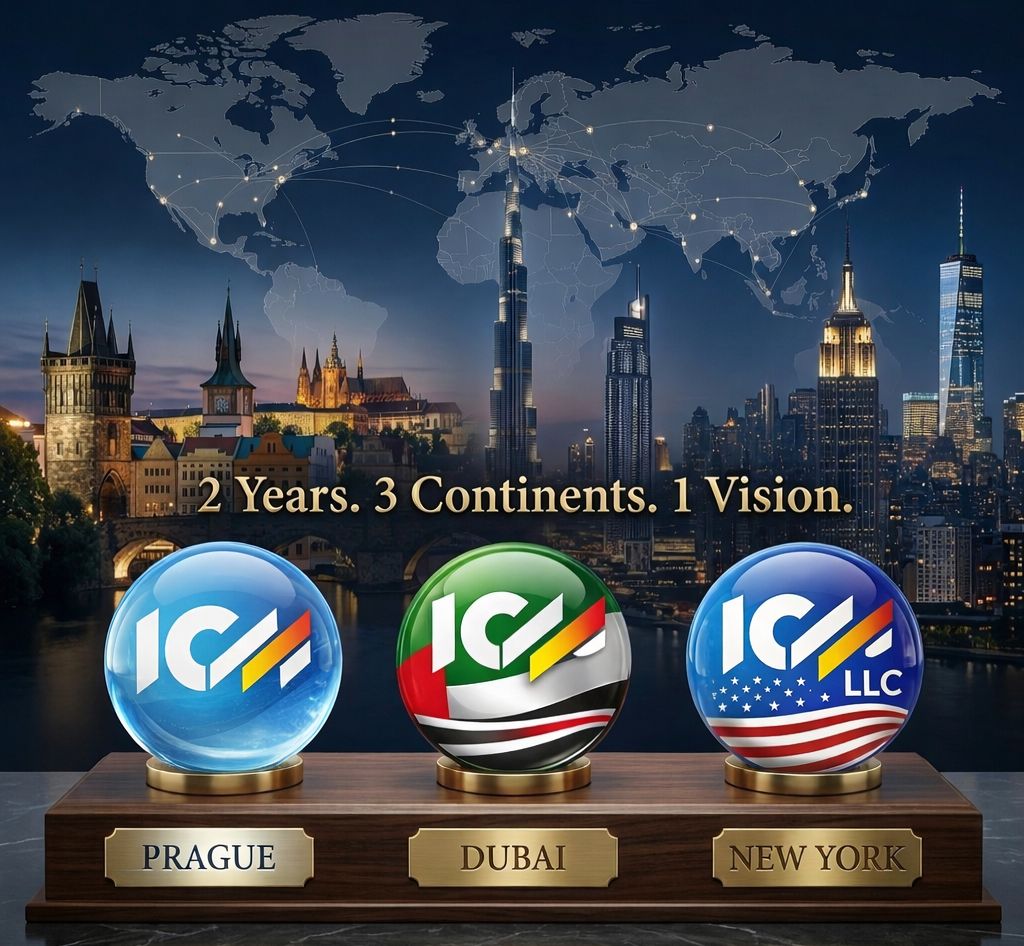
24 Months Journey: Building an Independent Asset Management Platform In the world of finance, two years can feel like a very short period of time. Markets move quickly, opportunities evolve, and competition is constant. Yet, when a project is built with clarity, discipline and long-term vision, even a relatively short timeframe can represent a meaningful transformation. Two years ago, Income Capital Management was not a structured platform, not an international footprint, and not a growing client base across multiple jurisdictions. It was an idea. A simple but ambitious idea: to build an independent asset management platform focused on performance, discipline and long-term relationships. Today, on April 1st, that idea marks its second anniversary. From Concept to Platform Every investment firm starts with a vision. However, vision alone is not sufficient. Execution, adaptability and consistency are what transform a concept into a functioning platform. In the early stages, the challenge is not only technical or financial. It is structural. Building an asset management firm requires: Defining a clear investment philosophy Designing disciplined portfolio strategies Establishing operational processes Building trust with early clients Navigating regulatory environments Each of these elements must evolve simultaneously. Progress in one area without alignment in others creates instability. Over the past 24 months, the focus has been on building this structure step by step, ensuring that growth is supported by solid foundations. A Growing Client Base One of the most significant milestones in this journey has been the expansion of the client base. In just two years, Income Capital Management has reached more than 450 clients across different segments of the investment landscape: High Net Worth Individuals (HNWI) Family Offices Institutional investors Each of these client categories brings different expectations, constraints and objectives. HNWI clients often seek a balance between growth and capital protection, combined with clarity and accessibility. Family Offices typically require a more structured approach, focusing on wealth preservation, intergenerational planning and diversification. Institutional investors demand rigorous processes, transparency, and consistency in execution. Serving such a diverse client base requires flexibility, but also discipline. Strategies must be adaptable without losing coherence. International Presence: Prague and Dubai Geographical expansion has been another key element of growth. Establishing a presence in both Prague and Dubai reflects a strategic decision to operate across different financial ecosystems. Each location offers unique advantages: Prague provides access to European markets and regulatory frameworks Dubai offers connectivity to Middle Eastern and international investors Operating in multiple regions also introduces complexity. Different jurisdictions imply different regulatory requirements, client expectations and operational challenges. However, this complexity is also a source of strength. It enables diversification not only at the portfolio level, but also at the business level. From Local to Global The evolution from a local initiative to an international platform is not simply a matter of opening new offices. It involves: Adapting communication to global audiences Structuring investment solutions for cross-border clients Managing multi-currency exposure Aligning strategies with different economic environments This transition requires both operational capability and strategic clarity. Growth without structure creates fragility. Structure without growth creates stagnation. The objective has always been to balance both. The Next Step: New York After building a presence in Europe and the Middle East, the next natural step is expansion into the United States. The launch of Income Capital Management LLC in New York represents a significant milestone in this journey. The United States is one of the most competitive and sophisticated financial markets in the world. Entering this market requires not only ambition, but also readiness. The objective is clear: to expand business development and strengthen the firm’s international positioning. This expansion is not simply geographical. It is strategic. It reflects the intention to operate within a truly global investment framework. Not a Finish Line, but a Transition Milestones can be misleading. They may appear as points of arrival, but in reality they are often points of transition. The second anniversary of Income Capital Management is not a conclusion. It is a moment to evaluate progress, refine strategy and prepare for the next phase of growth. In asset management, sustainability matters more than speed. Rapid growth without discipline can create vulnerabilities. Controlled growth, supported by consistent processes, creates long-term resilience. What Has Driven This Journey Looking back at the past 24 months, several principles have consistently guided the development of the platform: Independence: maintaining objectivity in investment decisions Discipline: applying structured processes across strategies Client focus: prioritizing long-term relationships over short-term gains Adaptability: adjusting to changing market conditions These principles are not theoretical. They are operational. They influence how portfolios are constructed, how risks are managed, and how decisions are communicated. Delivering Consistent Value In financial markets, performance is often measured in short-term results. However, long-term value creation requires consistency. Clients do not only evaluate returns. They evaluate: Stability Transparency Risk management Communication Delivering consistent value means balancing these elements over time. It means avoiding unnecessary risk while still capturing opportunities. It means building trust not through promises, but through execution. Looking Forward The next phase of growth will likely bring new challenges. Markets will continue to evolve. Regulatory environments will change. Client expectations will increase. However, the core objective remains unchanged: to build a resilient, disciplined and globally relevant asset management platform. Growth will continue. Scaling will continue. But focus will remain on what truly matters: delivering value to clients over the long term. Conclusion Every journey in finance is built over time. The first 24 months of Income Capital Management represent the foundation of a broader vision. From a simple idea to an international platform, the process has been defined by execution, discipline and continuous development. The next chapters are still to be written. And the journey continues. LinkedIn Post: Read the original post on LinkedIn
Non-Discretionary Advisory: You Decide, We Empower

Non-Discretionary Advisory: You Decide, We Empower In the modern landscape of wealth management, investors are increasingly faced with a fundamental choice: delegate decisions entirely to a manager, or maintain control while navigating complex financial markets independently. Between these two extremes lies a model that is often underestimated but highly effective for sophisticated investors: non-discretionary advisory. At Income Capital Management, this approach is built around a simple but powerful principle: we provide the expertise, you retain the decision-making power. The Evolution of Investment Advisory Traditional wealth management models have historically been divided into two categories. On one side, discretionary management allows portfolio managers to make decisions on behalf of clients. This model offers convenience but often reduces transparency and client involvement. On the other side, self-directed investing gives clients full control, but requires significant time, knowledge and emotional discipline. Non-discretionary advisory represents a third path. It combines professional expertise with client control, creating a collaborative framework where decisions are informed, structured and aligned with long-term objectives. How the Non-Discretionary Model Works In a non-discretionary advisory model, the roles are clearly defined. The advisor provides research, analysis and strategic recommendations The client evaluates and approves each decision This structure ensures that every investment aligns with the client’s objectives, risk tolerance and personal preferences. Rather than delegating responsibility entirely, clients remain actively involved in shaping their financial journey. From Complexity to Clarity Financial markets today are more complex than ever. Investors must navigate multiple asset classes, global economic dynamics, currency exposure, regulatory environments and evolving risk factors. Without a structured framework, this complexity can lead to confusion, hesitation or reactive decision-making. The role of the advisor in a non-discretionary model is to simplify this complexity. At Income Capital Management, we provide: In-depth research across asset classes Scenario analysis based on macroeconomic conditions Clear investment recommendations Risk assessment and portfolio impact analysis This allows clients to make decisions with clarity rather than uncertainty. Maintaining Control Without Losing Depth One of the key advantages of non-discretionary advisory is that it preserves client independence without sacrificing analytical depth. Clients benefit from the same level of research and strategic thinking used in professional portfolio management, while retaining full authority over their capital. This is particularly valuable for: Entrepreneurs accustomed to making strategic decisions Professionals seeking transparency and control Family offices managing multi-generational wealth For these clients, investing is not just about returns. It is about alignment with broader financial and personal objectives. A Strategic Partnership, Not a Black Box Many traditional investment solutions operate as “black boxes.” Clients allocate capital, but have limited visibility into how decisions are made or how strategies evolve. Non-discretionary advisory takes a different approach. It creates a strategic partnership between advisor and client. Decisions are discussed, explained and evaluated collaboratively. This transparency builds trust and strengthens the investment process. Clients understand not only what is being done, but why it is being done. The Role of Scenario Analysis A central component of our advisory process is scenario analysis. Rather than relying on a single forecast, we evaluate how different market conditions could impact portfolio performance. This includes scenarios such as: Interest rate changes Economic slowdowns Geopolitical events Currency fluctuations By presenting these scenarios to clients, we provide a structured framework for decision-making. Clients are not reacting to uncertainty. They are prepared for it. Decision Support, Not Decision Replacement The objective of non-discretionary advisory is not to replace the client’s judgment. It is to support it. We provide the tools, data and insights necessary for informed decisions, but the final choice always remains with the client. This approach encourages responsibility, awareness and long-term thinking. It transforms investing from a passive experience into an active, informed process. Global Clients, Local Understanding Our advisory model is designed for international clients operating across multiple jurisdictions, including Europe, the United States and the UAE. These clients often face additional layers of complexity: Multiple currencies Different tax environments Cross-border investment structures Diverse regulatory frameworks Non-discretionary advisory allows us to tailor strategies to these specific contexts while maintaining a consistent global framework. The Psychological Advantage of Empowerment One of the most underestimated benefits of this model is psychological. Investors who are actively involved in decision-making tend to feel more confident and less reactive during market volatility. They understand the rationale behind their portfolio structure and are therefore more likely to maintain discipline during challenging periods. Empowered clients make better decisions. And over time, they build stronger financial outcomes. Transparency as a Competitive Advantage In an industry often characterized by complexity and opacity, transparency becomes a key differentiator. Non-discretionary advisory ensures that: All recommendations are clearly explained All risks are explicitly identified All decisions are documented and understood This level of transparency strengthens trust and improves long-term client relationships. Conclusion Non-discretionary advisory is not simply an alternative investment model. It is a philosophy. It reflects the belief that clients should remain at the center of their financial decisions, supported by professional expertise rather than replaced by it. In a world of increasing complexity, this approach offers clarity, structure and empowerment. You decide. We empower. And together, we build stronger investment journeys. LinkedIn Post: Read the original post on LinkedIn

