The Power of Saying No in Investing: Why Discipline Protects Long-Term Wealth

The Power of Saying “No” in Investing When people think about successful investing, they often imagine bold decisions, brilliant stock picks, or extraordinary market timing. The narrative surrounding financial success frequently celebrates the investments that delivered exceptional returns. Yet one of the most powerful forces behind long-term wealth creation is rarely discussed. Great investing is not only about what you buy. It is equally about what you refuse. In professional portfolio management, some of the most valuable decisions are invisible. They are the investments that never enter the portfolio, the opportunities that appear attractive but are ultimately declined, and the trends that are deliberately ignored. Over the years working with international investors and families managing significant capital, many of the best outcomes for clients came from opportunities we chose not to pursue. Products with hidden risks. Strategies that promised returns that seemed too good to be sustainable. Complex financial structures that did not align with the investor’s long-term goals. Learning when to say “no” is one of the most important disciplines in investing. The Illusion of Opportunity Financial markets continuously produce new opportunities. Every year brings innovative investment products, emerging asset classes, and new market narratives. Some of these innovations genuinely improve portfolio construction and open valuable avenues for diversification. However, many others are designed primarily to attract attention rather than to generate sustainable value for investors. Financial marketing often emphasizes potential returns while minimizing discussion of risk. Promotional materials may highlight exceptional past performance, complex strategies, or technological sophistication. For investors navigating this landscape, distinguishing genuine opportunity from excessive risk becomes increasingly difficult. This is where disciplined decision-making becomes essential. Why Saying “No” Is Hard Rejecting an investment opportunity is rarely easy. Humans are naturally drawn toward potential gains. When presented with an attractive investment narrative, the fear of missing out can influence decision-making. This psychological pressure is amplified in environments where markets appear to be moving rapidly and others seem to be profiting. Social influence also plays a role. When a particular asset class or investment strategy becomes popular, declining participation can feel counterintuitive. However, successful investors understand that popularity and suitability are not the same. An investment may generate strong returns for some participants while being completely inappropriate for others. Experience as a Filter The ability to say “no” requires experience. Professional investors learn to evaluate opportunities through multiple lenses: risk exposure, structural complexity, liquidity conditions, and alignment with long-term portfolio objectives. Experience allows investors to recognize patterns that may not be immediately obvious. For example, products that promise unusually high returns often rely on leverage, illiquid assets, or hidden risk structures. Similarly, strategies built around complex derivatives or opaque financial engineering may introduce risks that are difficult for clients to fully understand. In these situations, declining participation is not a missed opportunity. It is responsible risk management. The Role of Independence Another critical factor in disciplined investment selection is independence. Advisors and portfolio managers must be free to evaluate opportunities objectively rather than being influenced by product distribution incentives or short-term performance pressures. Independent advice allows investment professionals to prioritize the long-term interests of clients rather than the immediate appeal of a new product or market trend. This independence creates an environment where saying “no” becomes a strategic decision rather than a commercial constraint. Protecting the Investor Journey At Income Capital Management, the central philosophy guiding portfolio construction is simple: we do not chase trends, we protect journeys. Each investor has a unique financial story. Their capital represents years of work, entrepreneurial success, or generational wealth that must be preserved and grown responsibly. Investment strategies should support this journey rather than expose it to unnecessary volatility. This means carefully evaluating whether each potential investment contributes to long-term objectives such as wealth preservation, income generation, or sustainable growth. If an opportunity does not align with these objectives, declining it becomes the most responsible decision. The Importance of Risk Awareness Risk awareness is at the core of disciplined investing. Every investment carries some level of risk, but not all risks are equally transparent. Some risks are obvious, such as market volatility, while others remain hidden within complex financial structures. Professional portfolio management involves identifying these hidden risks before they become problems. This may include evaluating liquidity constraints, understanding counterparty exposure, or analyzing how an investment behaves during economic downturns. When these risks outweigh the potential benefits, declining the opportunity protects the portfolio from unnecessary exposure. The Long-Term Mindset One of the defining characteristics of successful investors is a long-term mindset. Markets fluctuate constantly. Short-term trends appear and disappear with remarkable speed. However, wealth creation typically occurs over decades rather than days. This perspective allows disciplined investors to remain patient. They understand that not every opportunity needs to be captured. Instead, the focus remains on selecting investments that support long-term stability and growth. By prioritizing long-term objectives, investors avoid the temptation to chase short-lived market excitement. Building a Portfolio Through Selectivity Constructing a resilient portfolio involves careful selectivity. Each asset must serve a clear purpose within the overall structure. Some investments provide growth potential, others generate income, and some act as protection during periods of market stress. For example, diversified portfolios may include components such as: Global equity exposure for long-term growth Real estate investments providing stable income Currency strategies offering diversification Physical assets such as gold acting as protection By carefully selecting assets that complement one another, portfolios become more balanced and resilient. Declining unsuitable opportunities ensures that this structure remains intact. Investor Protection as a Guiding Principle Ultimately, the discipline of saying “no” is rooted in investor protection. Financial markets will always offer new opportunities, and some of them will indeed prove successful. However, protecting capital requires recognizing that not every opportunity deserves participation. Professional ethics demand that advisors prioritize the well-being of clients above the excitement of market trends. This responsibility requires patience, independence, and the willingness to reject investments that do not meet strict criteria. When Uncertainty Is a Signal Investors occasionally find themselves
Love Your Investments: Building Lasting Relationships with Your Portfolio

Love Your Investments: Building Lasting Relationships with Your Portfolio Valentine’s Day is often associated with romantic symbolism — flowers, promises, and grand gestures. In finance, the word “love” may seem misplaced. Yet the concept of lasting commitment, patience, and mutual understanding has surprising relevance in the world of long-term investing. Portfolios, like relationships, thrive not because of intensity, but because of consistency. The Myth of Instant Attraction in Investing Many investment decisions begin with excitement. A new fund, a promising sector, an emerging market opportunity — each carries the appeal of novelty. Just as in relationships, initial enthusiasm can create a powerful emotional pull. However, history repeatedly shows that sustainable wealth is not built on short-term excitement. It is built on structured commitment. Markets reward patience more reliably than impulsiveness. A portfolio that constantly changes direction in pursuit of the next opportunity rarely develops depth or resilience. Commitment as Strategic Discipline Commitment in investing does not mean blind loyalty to underperforming assets. It means adhering to a structured allocation framework through market cycles. At Income Capital Management, disciplined commitment manifests in: Defined asset allocation ranges. Regular review processes. Transparent communication during volatility. Measured rebalancing rather than emotional repositioning. This approach mirrors a long-term partnership. Both sides understand that fluctuations occur, but structure provides stability. Trust Between Advisor and Client In relationships, trust is cumulative. It develops through transparency and shared expectations. The same principle governs advisor-client dynamics. Clients who understand the purpose of each allocation — Forex, Real Estate, Physical Gold, Global Growth, High Yield — are less vulnerable to fear-driven decisions. Trust reduces reactive behavior. It creates psychological resilience. Regular Engagement Prevents Drift Relationships deteriorate when communication fades. Portfolios suffer similarly when left unattended. Periodic portfolio reviews serve multiple purposes: Reaffirming long-term goals. Adjusting for life changes. Rebalancing allocations to maintain strategic alignment. Reassessing risk tolerance. Without engagement, portfolios drift from original objectives — not because markets fail, but because circumstances evolve. Understanding Volatility as Emotional Testing Volatility is the emotional test of every investor. Market drawdowns feel personal. Headlines amplify uncertainty. Yet volatility is not betrayal. It is a structural feature of capital markets. When investors internalize this reality, they stop perceiving temporary underperformance as failure. Instead, they evaluate whether the original thesis remains intact. Mutual Responsibility Successful advisory relationships are collaborative. Advisors provide structure, analysis, and risk frameworks. Clients provide clarity regarding goals, time horizon, and liquidity needs. When both roles are respected, outcomes improve. Long-Term Wealth Is Emotional Stability Beyond financial metrics, disciplined portfolio relationships cultivate psychological stability. Investors who trust their framework experience less anxiety during market turbulence. Emotional stability enhances decision quality. Love the Process, Not the Outcome Focusing exclusively on short-term performance is analogous to evaluating a relationship solely on daily mood fluctuations. Long-term investing requires appreciation of process — risk management, diversification, scenario analysis — rather than obsession with quarterly returns. The Role of Patience Compounding requires time. Time requires patience. Patience requires conviction. Conviction arises from understanding. When investors fully understand their portfolio structure, patience becomes rational rather than forced. Conclusion: Stability Through Commitment Lasting wealth is built through sustained engagement, structured discipline, and trusted partnership. Just as enduring relationships are grounded in respect and shared values, enduring portfolios are grounded in clarity, risk awareness, and long-term alignment. In investing, as in life, love is not intensity. It is commitment sustained over time. LinkedIn Post: https://www.linkedin.com/posts/incomecapital_portfolio-commitment-investments-activity-7427985167228579840-Pg5d
POSITIVE RESULTS DESPITE MARKET WEAKNESS
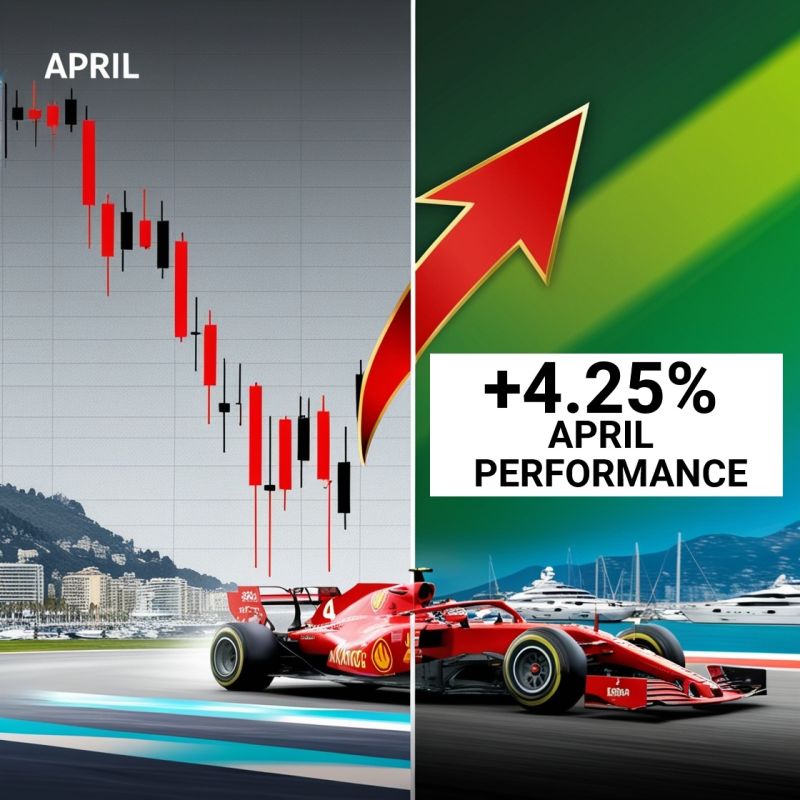
Positive Results Despite Market Weakness April 2025 unfolded in a challenging market environment, characterized by a broad-based correction across global financial markets. Equity indices faced renewed pressure, with the S&P 500 closing lower for the first time since October, while European and emerging markets also showed visible signs of weakness. In a context marked by uncertainty, tightening financial conditions, and cautious investor sentiment, disciplined portfolio construction and robust risk management once again proved essential. Forex Fund Performance – April 2025 Despite the adverse macroeconomic backdrop, the Forex Fund delivered a solid monthly result: April 2025 performance: +4.25% This performance confirms the effectiveness of the strategic framework implemented since the launch of the fund and highlights the importance of adaptability during volatile market phases. Key Drivers Behind the Performance The April result reflects a combination of structural discipline and tactical flexibility embedded in the investment process: Active selection of resilient instruments and market segments, prioritizing liquidity and risk-adjusted returns Dynamic exposure management, adapting positioning as market conditions evolved Continuous focus on risk management, aimed at preserving capital during periods of heightened volatility Rather than relying on short-term directional bets, the strategy emphasized consistency, adaptability, and disciplined execution. Strategy Over Market Noise Periods like April reinforce a fundamental investment principle: sustainable results are driven by structure, discipline, and execution—not by reactive decision-making. In complex and unstable environments, maintaining a clear framework and a flexible approach often makes the difference between protecting capital and amplifying risk. Client Experience – Monaco Grand Prix 2025 April was also a meaningful month beyond portfolio performance. Following the April 8th webinar, selected clients confirmed their participation in the Formula 1 Monaco Grand Prix, scheduled for May 24–25, 2025. This exclusive event represents an opportunity to share a unique experience together, strengthening long-term relationships built on trust, transparency, and shared vision. Photos and highlights from the event will be shared in our upcoming newsletter. Conclusion April 2025 once again demonstrated that well-structured strategies, disciplined risk control, and adaptability remain essential pillars for navigating uncertain financial markets. We are pleased to share both performance results and meaningful moments with clients who continue to place long-term trust in our investment approach. Related LinkedIn Post For a concise market update and additional context, you can view the original LinkedIn post here:Positive Results Despite Market Weakness – LinkedIn

