How We Work with Entrepreneurs and Business Owners

How We Work with Entrepreneurs and Business Owners Entrepreneurs and business owners represent a unique category of investors. Their approach to finance is fundamentally different from that of traditional clients. While many investors focus on market performance, benchmarks, and portfolio allocation models, entrepreneurs tend to think in terms of cash flow, operational risk, growth potential, and opportunity cost. This difference is not just philosophical—it has direct implications for how wealth should be structured, protected, and grown. At Income Capital Management, we do not apply a standard investment model to entrepreneurs. Instead, we adapt our strategies to reflect the realities they face every day: concentrated risk, irregular income, and long-term ambitions that extend beyond a single business cycle. Understanding the Entrepreneurial Mindset Entrepreneurs are used to making decisions under uncertainty. They build businesses, allocate resources, and manage risks in environments where outcomes are not guaranteed. Unlike traditional investors, they are not detached from risk—they live inside it. Their capital is often directly linked to the success of their business. Their income can fluctuate significantly. Their time horizon is shaped by business growth, exit strategies, or reinvestment cycles. Because of this, applying generic investment frameworks is ineffective. Wealth management for entrepreneurs must start with understanding their context. The Problem of Concentrated Risk One of the most common challenges faced by business owners is concentration risk. A significant portion of their wealth is typically tied to a single asset: their company. While this concentration may be the source of their success, it also represents a structural vulnerability. If the business faces operational difficulties, market disruptions, or economic downturns, both income and capital can be impacted simultaneously. This is why diversification outside the business is not optional—it is essential. Separating Personal Wealth from Business Exposure A key step in building a resilient financial structure is separating personal wealth from business risk. This separation allows entrepreneurs to: Protect part of their capital from business volatility Create independent income streams Reduce overall financial risk In practice, this means allocating capital into diversified investment strategies that are not directly correlated with the business itself. This could include exposure to financial markets, real assets, and alternative investments. Managing Irregular Income Unlike salaried professionals, entrepreneurs rarely benefit from predictable income. Revenue can vary significantly depending on business performance, market conditions, or reinvestment decisions. This irregularity creates additional complexity in financial planning. Liquidity management becomes a critical component of the overall strategy. We work with clients to ensure that sufficient liquidity is always available to: Cover personal and family needs Support business opportunities when required Avoid forced liquidation of investments This balance between invested capital and available liquidity is essential for maintaining flexibility. Designing Long-Term Investment Strategies Entrepreneurs are naturally oriented toward long-term value creation. They build businesses over years, sometimes decades. Their investment strategy should reflect the same horizon. At Income Capital Management, we design portfolios that: Survive multiple economic cycles Provide diversification across asset classes Balance growth, income and protection This typically involves combining different investment engines such as: Global growth strategies for capital appreciation Real estate investments for income stability Forex strategies for diversification Gold or real assets for protection Each component plays a specific role within the broader portfolio structure. The Portfolio as a Stabiliser For entrepreneurs, the business is often the engine of wealth creation. However, relying entirely on this engine creates vulnerability. The investment portfolio should act as a stabiliser. Its role is not to replicate the business, but to complement it. This means providing: Stability during periods of business volatility Diversification across different economic drivers Liquidity when needed A well-structured portfolio reduces dependence on a single source of wealth. Adapting to Business Cycles Every business operates within cycles. Periods of growth are followed by consolidation, and sometimes by downturns. Investment strategies must be designed to adapt to these cycles. During expansion phases, entrepreneurs may choose to allocate more capital to their business. During uncertain periods, preserving liquidity and protecting capital may become the priority. Our advisory process is built to adjust dynamically to these changing conditions. A Client-Centric Approach No two entrepreneurs are the same. Each client has different objectives, risk tolerance, and financial structures. For this reason, we do not apply predefined solutions. We build tailored strategies based on: The structure of the business The level of risk concentration The liquidity needs The long-term objectives This ensures that the investment strategy is aligned with the client’s overall financial reality. Beyond Investment: Strategic Advisory Working with entrepreneurs often goes beyond portfolio construction. It involves strategic discussions around: Timing of liquidity events Capital allocation between business and investments Risk management across different assets In this context, the role of the advisor is not limited to recommending investments. It becomes a strategic partnership. Conclusion Entrepreneurs build value through their businesses. However, long-term wealth requires a broader perspective. Separating personal wealth from business risk, managing liquidity, and building diversified portfolios are essential steps in this process. At Income Capital Management, we help entrepreneurs translate their business success into structured and resilient financial strategies. Because in the long run, it is not just about building a company. It is about building sustainable wealth beyond it. LinkedIn Post: View original post
Why Cash Is a Strategy, Not a Failure

Why Cash Is a Strategy, Not a Failure In financial markets, there is a widespread belief that capital must always be fully invested. Cash, in this narrative, is often perceived as idle, inefficient, or even a sign of indecision. Investors are frequently told that money sitting on the sidelines is “not working,” and that every available euro or dollar should be deployed into the market to maximize returns. This perspective, however, reflects a simplified understanding of portfolio management. In reality, cash is not inactivity. It is strategy. When used correctly, cash becomes one of the most powerful and flexible tools available to investors. It provides optionality, stability, and control—qualities that are often undervalued during bullish markets but become essential during periods of uncertainty. The Misconception About Cash The misconception around cash stems from the way performance is typically measured. Returns are often evaluated relative to fully invested benchmarks. When markets are rising, holding cash can feel like underperformance. This creates psychological pressure. Investors begin to associate cash with missed opportunities rather than with risk management. However, this view ignores the broader objective of investing: not just maximizing returns, but preserving capital and managing risk over time. Cash plays a different role compared to equities, bonds, or real assets. It is not designed to generate high returns. It is designed to provide stability and flexibility within the overall portfolio. Liquidity as a Strategic Asset Liquidity is one of the most valuable characteristics in financial markets. Cash provides immediate access to capital without the need to liquidate other assets. This creates several advantages: Flexibility: the ability to adjust portfolio allocation quickly Optionality: the capacity to act when opportunities arise Protection: the avoidance of forced selling during downturns In stable market conditions, these benefits may seem secondary. In volatile environments, they become critical. Avoiding Forced Decisions One of the greatest risks in investing is not volatility itself, but the inability to manage it properly. Investors without sufficient liquidity may be forced to make decisions under pressure. This often results in selling assets during unfavorable conditions, locking in losses and disrupting long-term strategies. Cash eliminates this constraint. It allows investors to remain patient, to avoid reacting impulsively, and to maintain control over their decisions. In this sense, cash is not just a financial asset—it is a psychological stabilizer. Optionality and Opportunity Markets are not linear. Periods of stability are often followed by sudden dislocations, corrections, or shifts in sentiment. These moments, while uncomfortable, often create the best investment opportunities. However, only investors with available capital can take advantage of them. Cash provides this optionality. It allows investors to deploy capital when valuations become attractive, rather than being fully exposed at all times. In this way, liquidity becomes a source of strategic advantage. The Timing Advantage of Cash While it is impossible to perfectly time markets, having cash enables better timing decisions. Investors with liquidity can: Enter positions gradually rather than all at once Take advantage of market corrections Rebalance portfolios efficiently This does not mean attempting to predict short-term movements. It means being prepared to act when conditions change. How Much Cash Is Enough? There is no universal answer to how much cash a portfolio should hold. The appropriate allocation depends on multiple factors: Market conditions and volatility levels Investor risk tolerance Time horizon and investment objectives Structure of the overall portfolio For example, in highly volatile environments, a higher level of liquidity may be justified. In more stable conditions, cash allocation may be reduced. The key is intentional allocation. Cash should not be the result of indecision. It should be a deliberate component of the investment strategy. Cash in a Multi-Asset Portfolio Within a diversified portfolio, each asset class has a specific role. Equities provide growth Real estate generates income Gold offers protection Forex strategies add diversification Cash provides liquidity and flexibility When combined effectively, these elements create a balanced structure capable of navigating different market environments. Cash, in this context, acts as a stabilizer. It reduces overall volatility and enhances the portfolio’s ability to adapt. The Psychological Dimension of Cash Investing is not purely analytical. It is also behavioral. Emotions play a significant role in decision-making, particularly during periods of market stress. Holding an appropriate level of cash can reduce anxiety and improve discipline. Investors who feel secure in their liquidity position are less likely to panic during downturns and more likely to follow their long-term strategy. This behavioral advantage is often underestimated, yet it can have a significant impact on outcomes. Cash and Strategic Patience One of the most important qualities in investing is patience. Markets reward disciplined investors over time, but only those who are able to remain consistent through different cycles. Cash supports this patience. It allows investors to wait for the right opportunities rather than feeling compelled to act constantly. In a world driven by constant information and rapid decision-making, this ability to pause is a competitive advantage. Conclusion Cash should not be viewed as an absence of strategy or a sign of hesitation. It is a deliberate choice within a broader investment framework. By providing liquidity, optionality, and protection, cash enhances the resilience of a portfolio and supports more effective decision-making. In complex and unpredictable markets, these qualities are not secondary. They are essential. Understanding the role of cash transforms it from a perceived weakness into a strategic strength. LinkedIn Post: Read the original post
Global Growth Fund: Turning Trends into Long-Term Value

Global Growth Fund: Turning Trends into Long-Term Value Growth investing today is often misunderstood. Many associate it with chasing fast-moving trends, speculative sectors, or short-term momentum. In reality, sustainable growth investing requires discipline, patience, and a structured approach. At Income Capital Management, our Global Growth strategy is not about following hype. It is about identifying structural trends and translating them into long-term value creation. Beyond Hype: What Growth Really Means Markets are constantly influenced by innovation, disruption, and global competition. However, not all growth is sustainable. We focus on companies that demonstrate: Strong balance sheets Clear and scalable business models Long-term competitive advantages Resilience across economic cycles This approach filters out noise and isolates real value. The Role of Secular Trends Secular trends are long-term structural changes that reshape industries. Examples include digitalization, energy transition, and global demographic shifts. Investing in these trends requires patience. The objective is not to capture short-term spikes, but to participate in long-term transformations. Discipline in Valuation Growth without valuation discipline leads to risk. Many investors overpay for growth, assuming that momentum will continue indefinitely. Our approach integrates valuation analysis to ensure that growth potential is supported by realistic pricing. Integration Within a Multi-Asset Strategy The Global Growth Fund is not standalone. It is part of a broader portfolio including: Forex strategies Real estate investments Physical gold High yield instruments This diversification allows clients to capture growth while maintaining stability. Conclusion Growth investing is not about speed. It is about direction. With the right framework, innovation becomes opportunity, and long-term value becomes achievable. LinkedIn Post: View original post
How I Use Scenarios to Stress-Test Client Portfolios

How I Use Scenarios to Stress-Test Client Portfolios One of the most common assumptions in investing is that the future can be predicted. Investors often rely on forecasts, expert opinions, and market expectations to guide their decisions. However, financial markets are inherently uncertain. Economic cycles shift, geopolitical tensions emerge unexpectedly, and policy decisions can rapidly alter the investment landscape. For this reason, professional portfolio management does not rely on prediction. It relies on preparation. At Income Capital Management, we approach portfolio construction with a clear principle: we do not try to guess the future, we prepare for multiple possible futures. Why Prediction Is Not Enough Traditional investment approaches often depend heavily on forecasts. Analysts predict interest rates, economic growth, inflation trends, and market direction. While these forecasts can provide useful context, they are inherently limited. Markets are influenced by variables that cannot be fully anticipated. Unexpected events—such as geopolitical conflicts, sudden policy shifts, or financial crises—can disrupt even the most well-reasoned predictions. Relying exclusively on a single expected scenario creates vulnerability. If that scenario does not materialize, portfolios can become exposed to significant losses. This is why scenario analysis plays a critical role in modern investment strategy. From Prediction to Preparation Scenario analysis shifts the focus from forecasting a single outcome to evaluating multiple potential environments. Instead of asking, “What will happen?”, the question becomes: “What happens to the portfolio if different things happen?” This approach transforms uncertainty from a threat into a manageable variable. By understanding how a portfolio behaves under different conditions, investors gain clarity, confidence, and control over their financial decisions. The Core Scenarios We Analyze In our portfolio stress-testing process, we model several macroeconomic environments that historically have had a significant impact on financial markets. These scenarios include: Sudden interest rate increases Economic recession or slowdown Inflation shocks Geopolitical instability Liquidity tightening in global markets Each of these environments affects asset classes in different ways. Understanding these relationships is essential for building resilient portfolios. Interest Rate Shock Scenario Interest rates are one of the most powerful drivers of financial markets. A sudden increase in rates can impact equities, bonds, currencies, and real assets simultaneously. In this scenario, we evaluate: Sensitivity of bond and credit exposure Impact on equity valuations Currency adjustments in Forex strategies Real estate financing conditions By modeling these effects, we can identify vulnerabilities and adjust allocations accordingly. Recession Scenario Economic slowdowns or recessions affect corporate earnings, employment levels, and investor sentiment. In a recession scenario, we assess: Equity market drawdown exposure Credit risk in high-yield instruments Liquidity availability Defensive asset allocation effectiveness The goal is to ensure that portfolios maintain stability even in periods of economic contraction. Geopolitical Shock Scenario Geopolitical events—such as conflicts, trade disruptions, or political instability—can introduce sudden volatility into global markets. These events often impact: Currency markets (Forex) Commodity prices Safe-haven assets such as gold Global equity sentiment Scenario analysis allows us to evaluate how portfolios respond to these shocks and whether hedging strategies are sufficient. Inflation and Liquidity Scenarios Inflation dynamics and liquidity conditions are closely linked to central bank policy decisions. These variables influence asset pricing across the entire financial system. We test portfolios against scenarios such as: Persistently high inflation Rapid disinflation Liquidity tightening Expansionary monetary policy Each of these conditions requires different portfolio positioning. Asset Class Behavior Under Stress A key benefit of scenario analysis is understanding how different asset classes behave under stress conditions. For example: Forex strategies may benefit from currency volatility Real estate may provide stability but face financing pressure Equities may experience drawdowns during risk-off periods Gold often acts as a hedge during uncertainty By combining these assets within a diversified framework, portfolios can balance risk and return across different environments. From Analysis to Action Scenario analysis is not just an academic exercise. It directly informs portfolio decisions. Based on the results of stress testing, we may: Rebalance asset allocation Reduce exposure to vulnerable sectors Increase defensive positioning Adjust currency exposure Enhance diversification across asset classes These adjustments are made proactively, rather than reactively. Building Portfolio Resilience Resilience is the ability of a portfolio to withstand shocks while maintaining long-term growth potential. A resilient portfolio does not aim to avoid all volatility. Instead, it is designed to absorb shocks without compromising its long-term trajectory. Scenario analysis plays a central role in achieving this objective. The Psychological Advantage of Stress Testing Beyond technical benefits, scenario analysis provides an important psychological advantage for investors. When clients understand how their portfolio is expected to behave under stress, they are less likely to react emotionally during market turbulence. Confidence comes from preparation. Instead of reacting impulsively to market events, investors can rely on a structured framework that has already considered potential risks. Preparing for Multiple Futures The future will never unfold exactly as expected. Markets will continue to surprise, and new risks will emerge over time. However, by preparing for multiple scenarios, investors can reduce uncertainty and improve decision-making. This approach allows portfolios to remain flexible while maintaining strategic direction. Conclusion Successful investing is not about predicting the future with certainty. It is about building portfolios that can adapt to different outcomes. Scenario analysis transforms uncertainty into a structured process, allowing investors to evaluate risks, adjust exposure, and maintain confidence in their strategy. When you understand how your portfolio behaves under stress, you are better equipped to stay the course—or to adjust with purpose. And in complex financial markets, that clarity makes all the difference. LinkedIn Post:Read the original discussion on LinkedIn
Non-Discretionary Advisory: You Decide, We Empower

Non-Discretionary Advisory: You Decide, We Empower In the modern landscape of wealth management, investors are increasingly faced with a fundamental choice: delegate decisions entirely to a manager, or maintain control while navigating complex financial markets independently. Between these two extremes lies a model that is often underestimated but highly effective for sophisticated investors: non-discretionary advisory. At Income Capital Management, this approach is built around a simple but powerful principle: we provide the expertise, you retain the decision-making power. The Evolution of Investment Advisory Traditional wealth management models have historically been divided into two categories. On one side, discretionary management allows portfolio managers to make decisions on behalf of clients. This model offers convenience but often reduces transparency and client involvement. On the other side, self-directed investing gives clients full control, but requires significant time, knowledge and emotional discipline. Non-discretionary advisory represents a third path. It combines professional expertise with client control, creating a collaborative framework where decisions are informed, structured and aligned with long-term objectives. How the Non-Discretionary Model Works In a non-discretionary advisory model, the roles are clearly defined. The advisor provides research, analysis and strategic recommendations The client evaluates and approves each decision This structure ensures that every investment aligns with the client’s objectives, risk tolerance and personal preferences. Rather than delegating responsibility entirely, clients remain actively involved in shaping their financial journey. From Complexity to Clarity Financial markets today are more complex than ever. Investors must navigate multiple asset classes, global economic dynamics, currency exposure, regulatory environments and evolving risk factors. Without a structured framework, this complexity can lead to confusion, hesitation or reactive decision-making. The role of the advisor in a non-discretionary model is to simplify this complexity. At Income Capital Management, we provide: In-depth research across asset classes Scenario analysis based on macroeconomic conditions Clear investment recommendations Risk assessment and portfolio impact analysis This allows clients to make decisions with clarity rather than uncertainty. Maintaining Control Without Losing Depth One of the key advantages of non-discretionary advisory is that it preserves client independence without sacrificing analytical depth. Clients benefit from the same level of research and strategic thinking used in professional portfolio management, while retaining full authority over their capital. This is particularly valuable for: Entrepreneurs accustomed to making strategic decisions Professionals seeking transparency and control Family offices managing multi-generational wealth For these clients, investing is not just about returns. It is about alignment with broader financial and personal objectives. A Strategic Partnership, Not a Black Box Many traditional investment solutions operate as “black boxes.” Clients allocate capital, but have limited visibility into how decisions are made or how strategies evolve. Non-discretionary advisory takes a different approach. It creates a strategic partnership between advisor and client. Decisions are discussed, explained and evaluated collaboratively. This transparency builds trust and strengthens the investment process. Clients understand not only what is being done, but why it is being done. The Role of Scenario Analysis A central component of our advisory process is scenario analysis. Rather than relying on a single forecast, we evaluate how different market conditions could impact portfolio performance. This includes scenarios such as: Interest rate changes Economic slowdowns Geopolitical events Currency fluctuations By presenting these scenarios to clients, we provide a structured framework for decision-making. Clients are not reacting to uncertainty. They are prepared for it. Decision Support, Not Decision Replacement The objective of non-discretionary advisory is not to replace the client’s judgment. It is to support it. We provide the tools, data and insights necessary for informed decisions, but the final choice always remains with the client. This approach encourages responsibility, awareness and long-term thinking. It transforms investing from a passive experience into an active, informed process. Global Clients, Local Understanding Our advisory model is designed for international clients operating across multiple jurisdictions, including Europe, the United States and the UAE. These clients often face additional layers of complexity: Multiple currencies Different tax environments Cross-border investment structures Diverse regulatory frameworks Non-discretionary advisory allows us to tailor strategies to these specific contexts while maintaining a consistent global framework. The Psychological Advantage of Empowerment One of the most underestimated benefits of this model is psychological. Investors who are actively involved in decision-making tend to feel more confident and less reactive during market volatility. They understand the rationale behind their portfolio structure and are therefore more likely to maintain discipline during challenging periods. Empowered clients make better decisions. And over time, they build stronger financial outcomes. Transparency as a Competitive Advantage In an industry often characterized by complexity and opacity, transparency becomes a key differentiator. Non-discretionary advisory ensures that: All recommendations are clearly explained All risks are explicitly identified All decisions are documented and understood This level of transparency strengthens trust and improves long-term client relationships. Conclusion Non-discretionary advisory is not simply an alternative investment model. It is a philosophy. It reflects the belief that clients should remain at the center of their financial decisions, supported by professional expertise rather than replaced by it. In a world of increasing complexity, this approach offers clarity, structure and empowerment. You decide. We empower. And together, we build stronger investment journeys. LinkedIn Post: Read the original post on LinkedIn
How to Turn Market Noise into Actionable Investment Signals
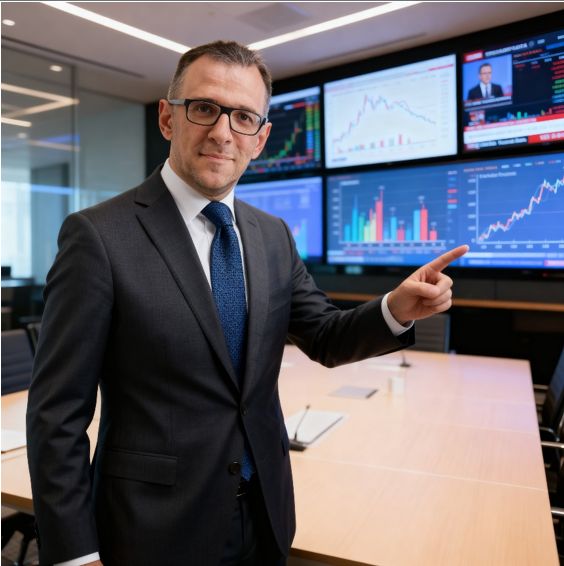
How I Turn Market Noise into Actionable Signals Modern investors live in an era of unprecedented information abundance. Financial news travels instantly across global networks, analysts publish opinions around the clock, and social media constantly amplifies market commentary. Every day, investors are exposed to thousands of headlines, forecasts, predictions, and so-called “hot takes” about financial markets. At first glance, this may appear beneficial. After all, access to information has historically been considered an advantage in investing. However, the reality is more complex. The modern challenge is not the scarcity of information, but the overwhelming volume of it. For many investors, the constant flow of financial news becomes more confusing than helpful. Contradictory opinions appear within minutes of each other. One analyst predicts a recession while another forecasts rapid economic expansion. Headlines highlight market volatility while long-term data may tell a completely different story. In this environment, the real skill in investing is not simply collecting information. It is the ability to filter it. Transforming noise into clear, actionable signals is one of the most important tasks of professional portfolio management. The Problem with Financial News Overload Information overload affects both individual investors and institutional professionals. Markets react instantly to breaking news, central bank speeches, geopolitical developments, economic indicators, and corporate earnings announcements. Yet most of these events are short-term signals that can distract from long-term strategy. When investors attempt to react to every piece of news, they often end up making impulsive decisions that undermine disciplined portfolio construction. Markets move quickly, and reacting emotionally to daily headlines can result in unnecessary trading, increased transaction costs, and poor timing. This is why professional investors must build structured frameworks for interpreting information. The objective is not to follow every news cycle. The objective is to identify which signals genuinely matter. From Noise to Strategy The process of turning market noise into actionable investment signals begins with filtering. Not every headline deserves equal attention. Professional investment analysis relies on structured frameworks that prioritize data over opinion. At Income Capital Management, the decision-making process combines multiple layers of analysis. Each layer helps transform fragmented information into a coherent strategy. These layers include: Macroeconomic indicators Sector and market trends Quantitative models ESG and structural data Risk management metrics By integrating these perspectives, investors can move beyond short-term market commentary and focus instead on meaningful signals. Macroeconomic Indicators as Strategic Anchors Macroeconomic data forms the foundation of long-term investment decisions. Indicators such as inflation rates, interest rate expectations, employment data, and economic growth projections provide essential context for market movements. For example, central bank policies often drive major asset class performance. When inflation rises above central bank targets, monetary authorities typically tighten policy by raising interest rates. Higher interest rates can influence currency valuations, credit spreads, and equity market dynamics. Similarly, economic slowdown signals can affect corporate earnings expectations and investor risk appetite. Understanding these macroeconomic dynamics allows investors to interpret financial news within a broader framework. Rather than reacting to isolated headlines, macro indicators help investors identify structural trends shaping market behavior. Sector Trends and Structural Shifts Beyond macroeconomic indicators, sector-level trends play an important role in identifying investment opportunities. Global economies continuously evolve as technology, demographics, and policy changes reshape industries. For instance, renewable energy investments have gained momentum due to climate policies and technological advances. Meanwhile, artificial intelligence and digital infrastructure have created new opportunities within technology and data sectors. By tracking sector-level developments, investors can position portfolios to benefit from structural economic changes rather than temporary market sentiment. This strategic perspective helps investors capture long-term growth opportunities while maintaining diversification. The Role of Quantitative Models Quantitative analysis adds another layer of discipline to investment decision-making. Data-driven models help remove emotional bias and provide objective signals for portfolio adjustments. Quantitative frameworks can analyze market volatility, momentum trends, correlation structures, and statistical relationships between asset classes. For example, in Forex trading strategies, quantitative models may evaluate currency momentum, macroeconomic differentials, and volatility patterns. These models help determine when to rebalance positions, adjust exposure, or reduce risk. While quantitative models do not eliminate uncertainty, they provide structured guidance that improves consistency in portfolio management. Integrating ESG Data into Investment Analysis Environmental, social, and governance (ESG) data has become increasingly relevant in global investment strategies. ESG indicators provide insights into corporate governance quality, environmental sustainability practices, and long-term operational resilience. For institutional investors and wealth managers, ESG data can help identify companies and sectors that are better positioned for regulatory changes and evolving market expectations. Integrating ESG considerations into investment analysis allows portfolios to incorporate broader structural trends beyond traditional financial metrics. This perspective enhances risk assessment and supports long-term portfolio sustainability. Risk Management as a Central Discipline Transforming information into signals is only useful if it leads to effective risk management. Professional portfolio construction always prioritizes capital preservation alongside growth opportunities. Markets inevitably experience periods of volatility. Economic cycles fluctuate, geopolitical tensions arise, and unexpected events can influence asset prices. Risk management frameworks help ensure that portfolios remain resilient across different scenarios. This may involve diversification across asset classes such as currencies, real estate investments, credit instruments, equities, and physical assets like gold. By maintaining balanced exposure, portfolios can withstand short-term disruptions while remaining positioned for long-term growth. Applying Signals Across Multiple Asset Classes Once filtered signals are identified, the next step involves translating them into portfolio actions. These actions may include: Rebalancing asset allocations Reducing exposure to overvalued sectors Increasing allocation to defensive assets Capturing opportunities in currency markets Adjusting credit or real asset exposure Each portfolio decision must align with the investor’s long-term objectives and risk tolerance. Short-term signals should support, not override, strategic portfolio design. Helping Investors Navigate Information Overload Many investors feel overwhelmed by the constant flow of financial news. This is understandable. The modern information environment rewards speed and attention-grabbing headlines rather than thoughtful analysis. However, successful investing rarely depends on reacting to every piece of news. Instead, it requires patience, discipline, and structured interpretation of information. With the
What Clients Really Ask About Investing: Trust, Clarity and Financial Decisions

What Clients Really Ask About Investing After many years working with international investors, entrepreneurs, and families managing significant financial assets, one observation becomes very clear: the questions clients ask are rarely about financial products themselves. Most people assume that conversations with investment professionals revolve around technical topics such as portfolio allocation, specific funds, derivatives, or market forecasts. In reality, the questions that truly matter are much deeper and more personal. Clients are not primarily concerned with the mechanics of a Forex strategy, the duration of a bond portfolio, or the precise structure of a real estate fund. Instead, their questions revolve around three fundamental themes: trust, clarity, and outcomes. Behind every portfolio discussion lies a much more important conversation about financial security, life goals, and long-term peace of mind. After working with investors across Europe, the United States, and the Middle East through Income Capital Management, certain questions appear again and again. They reflect universal concerns that transcend markets, asset classes, and economic cycles. The Real Questions Behind Investment Decisions When clients begin a conversation about investing, they rarely start with technical language. Instead, they ask questions like: “Will I be able to retire comfortably?” “Can I protect my family if markets turn?” “Am I making the right financial choices today?” These questions may appear simple, but they carry enormous weight. They reflect the responsibility investors feel toward their families, their future lifestyle, and the legacy they hope to build. Investing, at its core, is not about beating an index or chasing the highest possible returns. It is about designing a financial strategy that allows individuals to live the lives they want while maintaining confidence that their capital is being managed responsibly. This is why the role of a financial advisor is far broader than simply selecting investments. It involves translating complexity into clarity. Trust: The Foundation of Every Investment Relationship Trust is the single most important element in wealth management. Markets fluctuate, strategies evolve, and economic environments change. However, trust between an investor and their advisor must remain constant. Without it, even the most sophisticated portfolio structure becomes meaningless. Investors trust advisors with more than just capital. They entrust them with years of hard work, entrepreneurial success, family inheritance, and future financial stability. This responsibility requires transparency, discipline, and intellectual honesty. At Income Capital Management, building trust means maintaining clear communication about both opportunities and risks. It means avoiding unrealistic promises and focusing instead on structured, long-term strategies. Clients should always understand not only what they are investing in, but why. Clarity in a Complex Financial World The modern financial landscape is more complex than ever. Investors are confronted daily with an overwhelming flow of information: market commentary, social media speculation, economic predictions, and endless financial products promising superior returns. While access to information has increased dramatically, true clarity has become more difficult to achieve. Many investors feel overwhelmed by financial jargon and technical terminology. They encounter discussions about derivatives, volatility structures, algorithmic strategies, or macroeconomic hedging mechanisms that seem unnecessarily complicated. In many cases, complexity is mistaken for sophistication. However, successful investing does not require confusion. It requires understanding. The role of a professional advisor is therefore to simplify financial decision-making without oversimplifying the underlying risks. Clarity means explaining how each component of a portfolio contributes to an investor’s long-term goals. Translating Financial Tools into Real Decisions At Income Capital Management, we work with a diversified framework that includes several asset classes and strategies: Forex investment strategies Real estate income opportunities High yield and global growth allocations Physical gold holdings Non-discretionary advisory portfolio structures Each of these tools serves a specific purpose within a broader portfolio architecture. Forex strategies can provide return potential through disciplined trading models and systematic execution. Real estate investments often provide stability and recurring income, acting as a foundation within the portfolio. High yield and global growth strategies introduce exposure to broader economic expansion and credit opportunities. Physical gold adds an element of tangible asset protection and often performs differently from traditional financial markets during periods of macroeconomic stress. However, none of these strategies are meaningful if they remain abstract financial concepts. The real objective is to translate them into clear, practical decisions that investors understand and feel comfortable implementing. The Emotional Dimension of Investing Financial markets are often described in mathematical or economic terms. Yet the emotional dimension of investing is equally important. Fear, uncertainty, and overconfidence can influence investor behavior far more than data or analysis. During periods of market volatility, even experienced investors can feel tempted to abandon long-term strategies in favor of reactive decisions. This is why disciplined portfolio construction is essential. A well-structured portfolio does not attempt to predict every market movement. Instead, it prepares for a wide range of possible outcomes. Investors who understand the role of each asset class within their portfolio are less likely to make emotional decisions during periods of stress. Confidence in the strategy reduces the temptation to react impulsively. Outcomes Matter More Than Products Ultimately, investors do not measure success based on how sophisticated their portfolios appear. They measure success through outcomes. Can the portfolio support long-term financial independence? Does it provide sufficient protection during economic downturns? Is it structured to generate consistent growth while controlling risk? These questions are far more meaningful than discussions about specific financial instruments. For this reason, the conversation with clients always returns to the same central theme: aligning investment strategy with life objectives. The Role of the Advisor: Partner, Not Provider The relationship between an investor and an advisor should not resemble a simple commercial transaction. An advisor should not act merely as a provider of financial products. Instead, the advisor should serve as a long-term partner in financial decision-making. This partnership involves ongoing dialogue, periodic portfolio review, and continuous adaptation to changing economic conditions. Markets evolve, regulations change, and personal circumstances develop over time. A portfolio strategy must evolve accordingly. By maintaining a disciplined advisory approach, investors gain the benefit of professional insight without surrendering
Cryptocurrency and Digital Assets: Income Capital Management’s Measured Approach

Cryptocurrency and Digital Assets: Income Capital Management’s Measured Approach Cryptocurrencies and digital assets continue to attract global attention, oscillating between innovation-driven enthusiasm and periods of extreme volatility. While the sector remains highly speculative, the underlying blockchain technology is undeniably reshaping financial infrastructure, asset ownership models, and transaction efficiency. At Income Capital Management, we approach cryptocurrencies and digital assets with a clear distinction between technological innovation and investable opportunity. Our philosophy is not driven by hype or short-term price movements, but by a disciplined risk–return framework designed to protect capital while selectively capturing long-term value. Volatility and Speculation: Understanding the Risk Profile Digital assets are characterized by sharp price fluctuations, regulatory uncertainty, and evolving market structures. These factors make cryptocurrencies unsuitable as core holdings for many portfolios, particularly when risk tolerance and capital preservation are primary objectives. For this reason, Income Capital Management avoids excessive or unstructured exposure to cryptocurrencies. Instead, we analyze digital assets within the broader context of portfolio construction, assessing their impact on volatility, correlation, liquidity, and drawdown risk. Blockchain Beyond Cryptocurrencies While cryptocurrencies themselves remain speculative, blockchain technology represents a structural innovation with tangible applications. Tokenized securities, decentralized settlement systems, and distributed ledger infrastructure are already influencing how financial markets operate. Our focus extends beyond individual digital currencies to the ecosystem that supports them. This includes evaluating opportunities linked to blockchain infrastructure, regulated tokenization frameworks, and institutional-grade digital asset solutions where transparency, governance, and compliance are clearly defined. A Selective and Disciplined Allocation Income Capital Management integrates digital assets only where they enhance diversification without compromising portfolio stability. Any exposure is carefully sized, continuously monitored, and aligned with each client’s risk profile and long-term objectives. This measured approach allows us to remain engaged with innovation while maintaining strict control over downside risk. Innovation is valuable only when it is supported by structure, discipline, and clear investment rationale. Innovation with Responsibility The future of finance will undoubtedly include digital assets and blockchain-based solutions. However, sustainable wealth creation requires more than technological enthusiasm. It demands robust risk management, regulatory awareness, and a long-term perspective. At Income Capital Management, we believe that innovation and prudence are not opposites — they are complementary pillars of responsible asset management. LinkedIn post: https://www.linkedin.com/feed/update/urn:li:activity:7420389889122193408
Cross-Border Investment Tax Optimization: A Strategic Framework for Global Investors

Cross-Border Investment Tax Optimization: A Strategic Framework for Global Investors Investing across borders has become increasingly common for private investors, entrepreneurs, and internationally mobile families. While global diversification offers broader opportunity sets, it also introduces a layer of complexity that extends beyond markets and asset classes: taxation. Cross-border investment taxation is not simply a technical detail. It is a structural component of portfolio efficiency. When unmanaged, tax friction can significantly erode long-term returns, even in well-performing strategies. When addressed correctly, however, it becomes a powerful lever for optimizing outcomes while remaining fully compliant with applicable regulations. The Challenge of Cross-Border Investing International investors are often exposed to multiple tax jurisdictions simultaneously. This may include the country of residence, the country where assets are held, and the country where income is generated. Each layer can introduce withholding taxes, reporting obligations, and regulatory constraints. Without proper structuring, investors may face: Double taxation on dividends, interest, or capital gains Inefficient withholding tax rates Limited access to treaty benefits Increased administrative and compliance burden These factors can materially impact net performance, particularly over long investment horizons. The Role of Tax Treaties and Withholding Structures Double taxation treaties play a central role in cross-border tax optimization. When correctly applied, they allow investors to reduce or reclaim withholding taxes on income streams such as dividends and interest. However, treaty benefits are not automatic. Eligibility depends on several factors, including investor residency, investment vehicle structure, and the legal form of the underlying assets. Strategic planning is therefore essential to ensure that treaty advantages are effectively captured rather than lost through suboptimal structuring. Fund Domiciliation as a Strategic Tool Another critical element in international tax optimization is fund domiciliation. The jurisdiction in which a fund or investment vehicle is established influences both taxation and regulatory treatment. Appropriate domiciliation can help: Reduce withholding tax leakage Improve access to international tax treaties Enhance legal certainty and investor protection Simplify reporting and compliance processes Fund structure should always be aligned with the investor’s residency, investment objectives, and regulatory profile. There is no universal solution; optimization is inherently case-specific. Optimization Without Compromising Compliance Tax optimization is often misunderstood as aggressive tax avoidance. In professional wealth management, the opposite is true. Sustainable optimization is achieved by working within established legal frameworks, ensuring transparency and regulatory compliance at every stage. International investors must balance efficiency with substance. Proper documentation, reporting discipline, and regulatory awareness are essential to avoid unnecessary risk exposure, reputational damage, or future disputes with tax authorities. A Long-Term Perspective Cross-border tax optimization is not a one-off exercise. Changes in tax law, treaty interpretation, and regulatory standards require ongoing monitoring and periodic review of investment structures. For global investors, a coordinated approach that integrates tax planning, asset allocation, and jurisdictional awareness is key to preserving capital and enhancing long-term performance. When properly designed, cross-border investment structures allow investors to focus on strategy and growth, confident that tax efficiency and compliance are embedded into the investment process. Original LinkedIn post: https://www.linkedin.com/posts/incomecapital_investment-optimization-investing-activity-7422292422941978624
Portfolio Discipline, Diversification and Market Cycles: A Framework for Long-Term Investing

Portfolio Discipline, Diversification and Market Cycles: A Framework for Long-Term Investing Successful investing is rarely the result of a single tactical decision. Over time, consistent results tend to emerge from a disciplined framework that combines portfolio structure, diversification across asset classes, and an informed understanding of market cycles. Three elements in particular play a central role in this process: portfolio rebalancing, multi-asset diversification, and strategic positioning across fixed income markets. While often discussed separately, these components are deeply interconnected and should be approached as parts of a unified investment methodology. Portfolio Rebalancing as a Strategic Discipline Portfolio rebalancing is frequently misunderstood as a purely mechanical adjustment of weights. In reality, it represents a disciplined governance process designed to keep risk exposure aligned with long-term objectives. As markets evolve, assets that perform well naturally increase their weight within a portfolio, while others decline. Without periodic intervention, this drift can lead to unintended concentration risk and a gradual departure from the original investment strategy. A structured rebalancing process is based on predefined allocation ranges, review frequency, and tolerance thresholds. The goal is not to predict markets, but to maintain coherence between strategy and execution, removing emotional bias from decision-making and reinforcing long-term discipline. Diversification in Practice: Lessons from 2025 The year 2025 offered a clear illustration of why diversification remains essential. Asset classes moved in very different directions, creating outcomes that varied significantly depending on portfolio construction. Within a diversified framework, different instruments played complementary roles: Gold acted as a defensive anchor, delivering a return of +65.87%. Forex strategies provided high return potential through active management, closing the year at +34.98%. Real Estate investments contributed stability and income, with a performance of +7.71%. This dispersion of returns highlights an important principle: diversification is not about maximizing performance in every market environment, but about ensuring resilience across changing conditions. A portfolio built on multiple, uncorrelated sources of return is better positioned to absorb volatility and protect capital over time. Understanding Bond Market Cycles and Strategic Positioning Fixed income markets have undergone profound changes in recent years, shaped by inflation dynamics, monetary policy shifts, and evolving yield structures. As yields stabilize, strategic positioning becomes increasingly important for income-focused portfolios. Bond market cycles require investors to balance yield opportunities with duration risk, credit quality, and inflation sensitivity. Government bonds, corporate debt, and emerging market bonds each serve distinct roles depending on the phase of the cycle. Rather than chasing headline yields, effective bond allocation focuses on sustainability, diversification, and alignment with broader portfolio objectives. When integrated thoughtfully, fixed income can once again serve as a stabilizing element within multi-asset portfolios. A Unified Investment Framework Portfolio rebalancing, diversification, and cycle-aware asset allocation should not be treated as isolated concepts. Together, they form a coherent framework that emphasizes structure over speculation and process over prediction. In an increasingly complex global environment, this disciplined approach allows investors to navigate uncertainty while maintaining clarity, control, and long-term strategic alignment. Original LinkedIn posts: Portfolio Rebalancing Insight: https://www.linkedin.com/feed/update/urn:li:activity:7350399901672833024 Diversification and 2025 Portfolio Results: https://www.linkedin.com/posts/incomecapital_confidence-emergingmarkets-debtinvestment-activity-7416403617785577472 Bond Market Cycles and 2026 Outlook: https://www.linkedin.com/feed/update/urn:li:activity:7353302800539205634

