24 Months Journey: Building an Independent Asset Management Platform
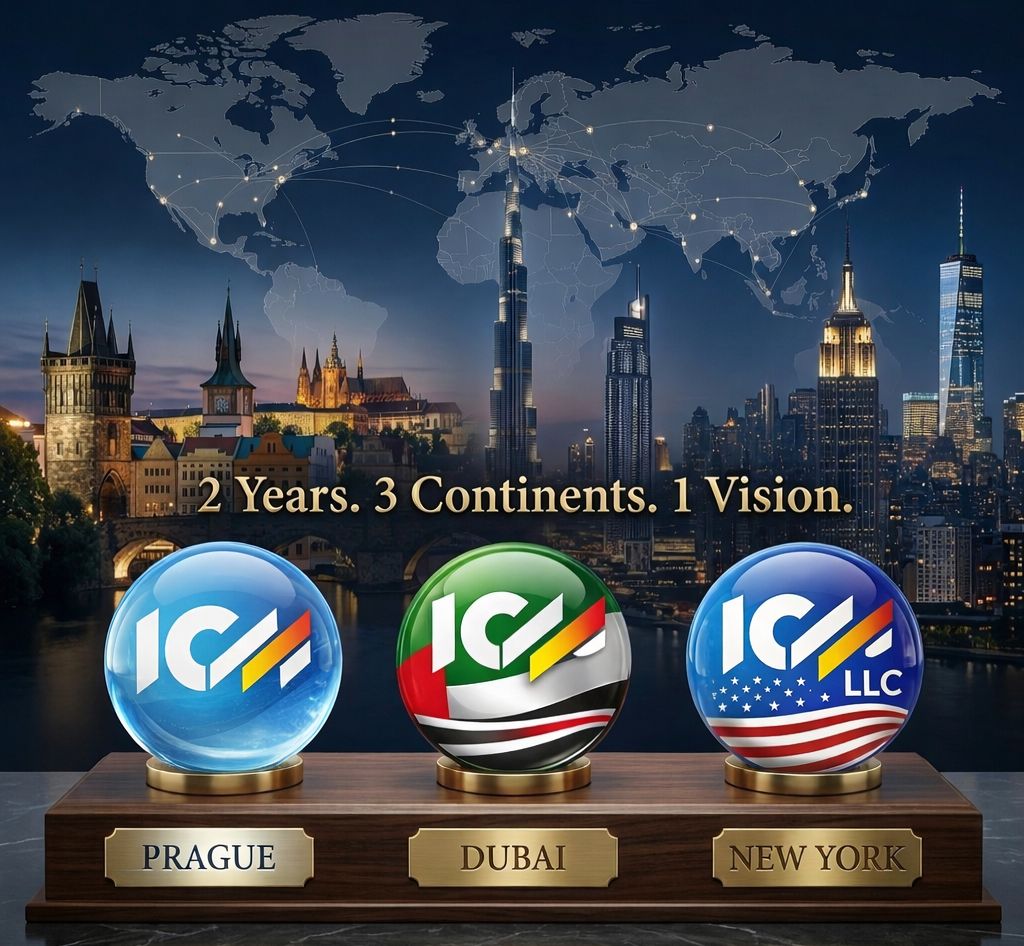
24 Months Journey: Building an Independent Asset Management Platform In the world of finance, two years can feel like a very short period of time. Markets move quickly, opportunities evolve, and competition is constant. Yet, when a project is built with clarity, discipline and long-term vision, even a relatively short timeframe can represent a meaningful transformation. Two years ago, Income Capital Management was not a structured platform, not an international footprint, and not a growing client base across multiple jurisdictions. It was an idea. A simple but ambitious idea: to build an independent asset management platform focused on performance, discipline and long-term relationships. Today, on April 1st, that idea marks its second anniversary. From Concept to Platform Every investment firm starts with a vision. However, vision alone is not sufficient. Execution, adaptability and consistency are what transform a concept into a functioning platform. In the early stages, the challenge is not only technical or financial. It is structural. Building an asset management firm requires: Defining a clear investment philosophy Designing disciplined portfolio strategies Establishing operational processes Building trust with early clients Navigating regulatory environments Each of these elements must evolve simultaneously. Progress in one area without alignment in others creates instability. Over the past 24 months, the focus has been on building this structure step by step, ensuring that growth is supported by solid foundations. A Growing Client Base One of the most significant milestones in this journey has been the expansion of the client base. In just two years, Income Capital Management has reached more than 450 clients across different segments of the investment landscape: High Net Worth Individuals (HNWI) Family Offices Institutional investors Each of these client categories brings different expectations, constraints and objectives. HNWI clients often seek a balance between growth and capital protection, combined with clarity and accessibility. Family Offices typically require a more structured approach, focusing on wealth preservation, intergenerational planning and diversification. Institutional investors demand rigorous processes, transparency, and consistency in execution. Serving such a diverse client base requires flexibility, but also discipline. Strategies must be adaptable without losing coherence. International Presence: Prague and Dubai Geographical expansion has been another key element of growth. Establishing a presence in both Prague and Dubai reflects a strategic decision to operate across different financial ecosystems. Each location offers unique advantages: Prague provides access to European markets and regulatory frameworks Dubai offers connectivity to Middle Eastern and international investors Operating in multiple regions also introduces complexity. Different jurisdictions imply different regulatory requirements, client expectations and operational challenges. However, this complexity is also a source of strength. It enables diversification not only at the portfolio level, but also at the business level. From Local to Global The evolution from a local initiative to an international platform is not simply a matter of opening new offices. It involves: Adapting communication to global audiences Structuring investment solutions for cross-border clients Managing multi-currency exposure Aligning strategies with different economic environments This transition requires both operational capability and strategic clarity. Growth without structure creates fragility. Structure without growth creates stagnation. The objective has always been to balance both. The Next Step: New York After building a presence in Europe and the Middle East, the next natural step is expansion into the United States. The launch of Income Capital Management LLC in New York represents a significant milestone in this journey. The United States is one of the most competitive and sophisticated financial markets in the world. Entering this market requires not only ambition, but also readiness. The objective is clear: to expand business development and strengthen the firm’s international positioning. This expansion is not simply geographical. It is strategic. It reflects the intention to operate within a truly global investment framework. Not a Finish Line, but a Transition Milestones can be misleading. They may appear as points of arrival, but in reality they are often points of transition. The second anniversary of Income Capital Management is not a conclusion. It is a moment to evaluate progress, refine strategy and prepare for the next phase of growth. In asset management, sustainability matters more than speed. Rapid growth without discipline can create vulnerabilities. Controlled growth, supported by consistent processes, creates long-term resilience. What Has Driven This Journey Looking back at the past 24 months, several principles have consistently guided the development of the platform: Independence: maintaining objectivity in investment decisions Discipline: applying structured processes across strategies Client focus: prioritizing long-term relationships over short-term gains Adaptability: adjusting to changing market conditions These principles are not theoretical. They are operational. They influence how portfolios are constructed, how risks are managed, and how decisions are communicated. Delivering Consistent Value In financial markets, performance is often measured in short-term results. However, long-term value creation requires consistency. Clients do not only evaluate returns. They evaluate: Stability Transparency Risk management Communication Delivering consistent value means balancing these elements over time. It means avoiding unnecessary risk while still capturing opportunities. It means building trust not through promises, but through execution. Looking Forward The next phase of growth will likely bring new challenges. Markets will continue to evolve. Regulatory environments will change. Client expectations will increase. However, the core objective remains unchanged: to build a resilient, disciplined and globally relevant asset management platform. Growth will continue. Scaling will continue. But focus will remain on what truly matters: delivering value to clients over the long term. Conclusion Every journey in finance is built over time. The first 24 months of Income Capital Management represent the foundation of a broader vision. From a simple idea to an international platform, the process has been defined by execution, discipline and continuous development. The next chapters are still to be written. And the journey continues. LinkedIn Post: Read the original post on LinkedIn
Non-Discretionary Advisory: You Decide, We Empower

Non-Discretionary Advisory: You Decide, We Empower In the modern landscape of wealth management, investors are increasingly faced with a fundamental choice: delegate decisions entirely to a manager, or maintain control while navigating complex financial markets independently. Between these two extremes lies a model that is often underestimated but highly effective for sophisticated investors: non-discretionary advisory. At Income Capital Management, this approach is built around a simple but powerful principle: we provide the expertise, you retain the decision-making power. The Evolution of Investment Advisory Traditional wealth management models have historically been divided into two categories. On one side, discretionary management allows portfolio managers to make decisions on behalf of clients. This model offers convenience but often reduces transparency and client involvement. On the other side, self-directed investing gives clients full control, but requires significant time, knowledge and emotional discipline. Non-discretionary advisory represents a third path. It combines professional expertise with client control, creating a collaborative framework where decisions are informed, structured and aligned with long-term objectives. How the Non-Discretionary Model Works In a non-discretionary advisory model, the roles are clearly defined. The advisor provides research, analysis and strategic recommendations The client evaluates and approves each decision This structure ensures that every investment aligns with the client’s objectives, risk tolerance and personal preferences. Rather than delegating responsibility entirely, clients remain actively involved in shaping their financial journey. From Complexity to Clarity Financial markets today are more complex than ever. Investors must navigate multiple asset classes, global economic dynamics, currency exposure, regulatory environments and evolving risk factors. Without a structured framework, this complexity can lead to confusion, hesitation or reactive decision-making. The role of the advisor in a non-discretionary model is to simplify this complexity. At Income Capital Management, we provide: In-depth research across asset classes Scenario analysis based on macroeconomic conditions Clear investment recommendations Risk assessment and portfolio impact analysis This allows clients to make decisions with clarity rather than uncertainty. Maintaining Control Without Losing Depth One of the key advantages of non-discretionary advisory is that it preserves client independence without sacrificing analytical depth. Clients benefit from the same level of research and strategic thinking used in professional portfolio management, while retaining full authority over their capital. This is particularly valuable for: Entrepreneurs accustomed to making strategic decisions Professionals seeking transparency and control Family offices managing multi-generational wealth For these clients, investing is not just about returns. It is about alignment with broader financial and personal objectives. A Strategic Partnership, Not a Black Box Many traditional investment solutions operate as “black boxes.” Clients allocate capital, but have limited visibility into how decisions are made or how strategies evolve. Non-discretionary advisory takes a different approach. It creates a strategic partnership between advisor and client. Decisions are discussed, explained and evaluated collaboratively. This transparency builds trust and strengthens the investment process. Clients understand not only what is being done, but why it is being done. The Role of Scenario Analysis A central component of our advisory process is scenario analysis. Rather than relying on a single forecast, we evaluate how different market conditions could impact portfolio performance. This includes scenarios such as: Interest rate changes Economic slowdowns Geopolitical events Currency fluctuations By presenting these scenarios to clients, we provide a structured framework for decision-making. Clients are not reacting to uncertainty. They are prepared for it. Decision Support, Not Decision Replacement The objective of non-discretionary advisory is not to replace the client’s judgment. It is to support it. We provide the tools, data and insights necessary for informed decisions, but the final choice always remains with the client. This approach encourages responsibility, awareness and long-term thinking. It transforms investing from a passive experience into an active, informed process. Global Clients, Local Understanding Our advisory model is designed for international clients operating across multiple jurisdictions, including Europe, the United States and the UAE. These clients often face additional layers of complexity: Multiple currencies Different tax environments Cross-border investment structures Diverse regulatory frameworks Non-discretionary advisory allows us to tailor strategies to these specific contexts while maintaining a consistent global framework. The Psychological Advantage of Empowerment One of the most underestimated benefits of this model is psychological. Investors who are actively involved in decision-making tend to feel more confident and less reactive during market volatility. They understand the rationale behind their portfolio structure and are therefore more likely to maintain discipline during challenging periods. Empowered clients make better decisions. And over time, they build stronger financial outcomes. Transparency as a Competitive Advantage In an industry often characterized by complexity and opacity, transparency becomes a key differentiator. Non-discretionary advisory ensures that: All recommendations are clearly explained All risks are explicitly identified All decisions are documented and understood This level of transparency strengthens trust and improves long-term client relationships. Conclusion Non-discretionary advisory is not simply an alternative investment model. It is a philosophy. It reflects the belief that clients should remain at the center of their financial decisions, supported by professional expertise rather than replaced by it. In a world of increasing complexity, this approach offers clarity, structure and empowerment. You decide. We empower. And together, we build stronger investment journeys. LinkedIn Post: Read the original post on LinkedIn

