ESG Beyond the Label: How Professional Investors Evaluate Sustainable Companies

ESG Beyond the Label: What I Really Look At Environmental, Social and Governance investing—commonly referred to as ESG—has become one of the most widely discussed topics in modern finance. Over the past decade, asset managers, institutional investors and financial advisors have increasingly incorporated ESG considerations into portfolio construction. For many investors, ESG represents the possibility of combining financial performance with responsible capital allocation. However, as ESG investing has gained popularity, another phenomenon has emerged alongside it: the rapid proliferation of labels, certifications and marketing claims. Many companies and financial products now highlight their ESG credentials prominently, often through logos, ratings or sustainability statements. At first glance, these labels may appear reassuring. They suggest that environmental responsibility, social impact and governance standards have already been evaluated. For investors seeking sustainable opportunities, such indicators seem to simplify the decision-making process. Yet the reality is more complex. Not all ESG labels are created equal. In fact, one of the greatest risks in ESG investing is the assumption that a label automatically guarantees meaningful sustainability practices. In many cases, the visible symbols attached to financial products represent only a partial assessment of how a company truly operates. This is why professional investors must go far beyond surface-level classifications. ESG is not a sticker placed on a company. It is a framework for understanding how businesses create long-term value while managing environmental, social and governance risks. The Rise of ESG Investing The growth of ESG investing reflects a broader transformation in how investors think about capital allocation. Financial markets are increasingly aware that long-term performance cannot be separated from environmental responsibility, ethical governance and social stability. Companies operate within complex ecosystems that include employees, suppliers, communities and regulators. Decisions made within these ecosystems influence not only financial outcomes but also broader societal and environmental conditions. Investors have therefore begun to recognize that sustainable business practices are often closely linked to long-term financial resilience. Organizations that manage environmental risks responsibly, maintain transparent governance structures and foster positive relationships with stakeholders tend to demonstrate stronger operational stability over time. This insight has driven the rapid expansion of ESG-focused funds and investment strategies across global financial markets. The Problem with ESG Labels Despite its positive intentions, the ESG movement has also created challenges. One of the most widely discussed concerns is the risk of “greenwashing.” Greenwashing occurs when companies or financial products promote sustainability claims that are not fully supported by their actual business practices. Marketing materials may emphasize isolated initiatives while overlooking broader operational realities. For example, a company may highlight its use of renewable energy in certain facilities while maintaining environmentally harmful practices elsewhere within its supply chain. Similarly, an investment product may receive an ESG rating based on limited criteria that do not fully capture governance risks or social impact. These inconsistencies illustrate why labels alone cannot serve as the foundation for responsible investment decisions. Going Deeper: Real ESG Analysis Professional ESG evaluation requires a far more comprehensive approach. Rather than relying solely on external ratings, investors must examine how companies operate internally and how their practices influence long-term value creation. This analysis typically involves several key dimensions. Employee Treatment and Corporate Culture The social dimension of ESG begins with how companies treat their employees. Workplace conditions, employee engagement and organizational culture influence productivity, innovation and long-term business sustainability. Companies that invest in workforce development, promote fair labor practices and maintain transparent internal communication tend to demonstrate stronger resilience during economic challenges. Conversely, organizations that neglect employee well-being often experience higher turnover rates, reputational damage and operational instability. Supply Chain Responsibility Another critical factor in ESG analysis is supply chain management. Global companies frequently depend on complex supplier networks that span multiple countries and regulatory environments. Responsible supply chain governance ensures that environmental standards, labor rights and ethical sourcing practices are respected throughout the production process. Investors must therefore evaluate not only the company itself but also the behavior of its partners and suppliers. This broader perspective helps identify risks that may not be visible in corporate sustainability reports. Governance and Risk Oversight Corporate governance represents one of the most important components of ESG analysis. Strong governance structures provide oversight, accountability and transparency in corporate decision-making. Investors examine factors such as board independence, executive compensation alignment, shareholder rights and risk management procedures. Companies with robust governance frameworks are more likely to maintain financial discipline and respond effectively to emerging challenges. Weak governance, on the other hand, can expose investors to strategic mismanagement and reputational risks. Transparency and Reporting Quality Transparency is another key indicator of ESG credibility. Companies that provide detailed, verifiable disclosures regarding environmental impact, social policies and governance practices allow investors to conduct meaningful analysis. Transparent reporting demonstrates confidence and accountability. In contrast, vague sustainability statements or incomplete disclosures may indicate that ESG commitments are more symbolic than operational. ESG as a Driver of Value Creation Perhaps the most important question in ESG analysis is whether sustainability initiatives genuinely contribute to long-term value creation. Responsible business practices should not be viewed merely as ethical obligations. When implemented effectively, they often enhance financial performance. For example, energy efficiency improvements can reduce operational costs. Strong governance structures can prevent costly legal disputes. Positive employee relations can improve productivity and innovation. In these cases, ESG considerations align naturally with investor interests. The objective is not to choose between impact and returns. The objective is to identify businesses where responsible practices strengthen both. Integrating ESG into Investment Strategy At Income Capital Management, ESG analysis forms part of a broader investment framework designed to evaluate long-term resilience. This framework combines fundamental analysis, macroeconomic evaluation and sector-level research to identify companies capable of sustainable growth. Rather than excluding entire industries based on simplified classifications, the focus remains on understanding how individual companies operate within their environments. This approach allows investors to identify organizations that genuinely integrate sustainability into their business models. Impact and Returns: Not a Trade-Off One of the most persistent misconceptions about ESG investing is the
How to Turn Market Noise into Actionable Investment Signals
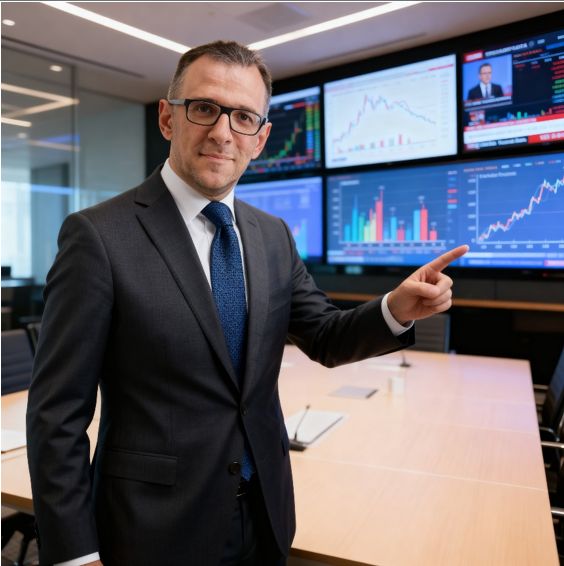
How I Turn Market Noise into Actionable Signals Modern investors live in an era of unprecedented information abundance. Financial news travels instantly across global networks, analysts publish opinions around the clock, and social media constantly amplifies market commentary. Every day, investors are exposed to thousands of headlines, forecasts, predictions, and so-called “hot takes” about financial markets. At first glance, this may appear beneficial. After all, access to information has historically been considered an advantage in investing. However, the reality is more complex. The modern challenge is not the scarcity of information, but the overwhelming volume of it. For many investors, the constant flow of financial news becomes more confusing than helpful. Contradictory opinions appear within minutes of each other. One analyst predicts a recession while another forecasts rapid economic expansion. Headlines highlight market volatility while long-term data may tell a completely different story. In this environment, the real skill in investing is not simply collecting information. It is the ability to filter it. Transforming noise into clear, actionable signals is one of the most important tasks of professional portfolio management. The Problem with Financial News Overload Information overload affects both individual investors and institutional professionals. Markets react instantly to breaking news, central bank speeches, geopolitical developments, economic indicators, and corporate earnings announcements. Yet most of these events are short-term signals that can distract from long-term strategy. When investors attempt to react to every piece of news, they often end up making impulsive decisions that undermine disciplined portfolio construction. Markets move quickly, and reacting emotionally to daily headlines can result in unnecessary trading, increased transaction costs, and poor timing. This is why professional investors must build structured frameworks for interpreting information. The objective is not to follow every news cycle. The objective is to identify which signals genuinely matter. From Noise to Strategy The process of turning market noise into actionable investment signals begins with filtering. Not every headline deserves equal attention. Professional investment analysis relies on structured frameworks that prioritize data over opinion. At Income Capital Management, the decision-making process combines multiple layers of analysis. Each layer helps transform fragmented information into a coherent strategy. These layers include: Macroeconomic indicators Sector and market trends Quantitative models ESG and structural data Risk management metrics By integrating these perspectives, investors can move beyond short-term market commentary and focus instead on meaningful signals. Macroeconomic Indicators as Strategic Anchors Macroeconomic data forms the foundation of long-term investment decisions. Indicators such as inflation rates, interest rate expectations, employment data, and economic growth projections provide essential context for market movements. For example, central bank policies often drive major asset class performance. When inflation rises above central bank targets, monetary authorities typically tighten policy by raising interest rates. Higher interest rates can influence currency valuations, credit spreads, and equity market dynamics. Similarly, economic slowdown signals can affect corporate earnings expectations and investor risk appetite. Understanding these macroeconomic dynamics allows investors to interpret financial news within a broader framework. Rather than reacting to isolated headlines, macro indicators help investors identify structural trends shaping market behavior. Sector Trends and Structural Shifts Beyond macroeconomic indicators, sector-level trends play an important role in identifying investment opportunities. Global economies continuously evolve as technology, demographics, and policy changes reshape industries. For instance, renewable energy investments have gained momentum due to climate policies and technological advances. Meanwhile, artificial intelligence and digital infrastructure have created new opportunities within technology and data sectors. By tracking sector-level developments, investors can position portfolios to benefit from structural economic changes rather than temporary market sentiment. This strategic perspective helps investors capture long-term growth opportunities while maintaining diversification. The Role of Quantitative Models Quantitative analysis adds another layer of discipline to investment decision-making. Data-driven models help remove emotional bias and provide objective signals for portfolio adjustments. Quantitative frameworks can analyze market volatility, momentum trends, correlation structures, and statistical relationships between asset classes. For example, in Forex trading strategies, quantitative models may evaluate currency momentum, macroeconomic differentials, and volatility patterns. These models help determine when to rebalance positions, adjust exposure, or reduce risk. While quantitative models do not eliminate uncertainty, they provide structured guidance that improves consistency in portfolio management. Integrating ESG Data into Investment Analysis Environmental, social, and governance (ESG) data has become increasingly relevant in global investment strategies. ESG indicators provide insights into corporate governance quality, environmental sustainability practices, and long-term operational resilience. For institutional investors and wealth managers, ESG data can help identify companies and sectors that are better positioned for regulatory changes and evolving market expectations. Integrating ESG considerations into investment analysis allows portfolios to incorporate broader structural trends beyond traditional financial metrics. This perspective enhances risk assessment and supports long-term portfolio sustainability. Risk Management as a Central Discipline Transforming information into signals is only useful if it leads to effective risk management. Professional portfolio construction always prioritizes capital preservation alongside growth opportunities. Markets inevitably experience periods of volatility. Economic cycles fluctuate, geopolitical tensions arise, and unexpected events can influence asset prices. Risk management frameworks help ensure that portfolios remain resilient across different scenarios. This may involve diversification across asset classes such as currencies, real estate investments, credit instruments, equities, and physical assets like gold. By maintaining balanced exposure, portfolios can withstand short-term disruptions while remaining positioned for long-term growth. Applying Signals Across Multiple Asset Classes Once filtered signals are identified, the next step involves translating them into portfolio actions. These actions may include: Rebalancing asset allocations Reducing exposure to overvalued sectors Increasing allocation to defensive assets Capturing opportunities in currency markets Adjusting credit or real asset exposure Each portfolio decision must align with the investor’s long-term objectives and risk tolerance. Short-term signals should support, not override, strategic portfolio design. Helping Investors Navigate Information Overload Many investors feel overwhelmed by the constant flow of financial news. This is understandable. The modern information environment rewards speed and attention-grabbing headlines rather than thoughtful analysis. However, successful investing rarely depends on reacting to every piece of news. Instead, it requires patience, discipline, and structured interpretation of information. With the
The Future of ESG Investing: Key Trends to Watch in 2026

The Future of ESG Investing: Key Trends to Watch in 2026 Environmental, Social, and Governance (ESG) investing has moved well beyond its early definition as a niche or values-driven approach. As we approach 2026, ESG considerations are increasingly shaping how capital is allocated, risks are assessed, and long-term strategies are constructed. What was once viewed primarily as an ethical overlay is now becoming an integral component of investment analysis and portfolio management. From Principles to Integration Early ESG strategies often focused on exclusion—avoiding certain sectors or activities. While exclusions remain relevant in specific contexts, ESG investing today is increasingly about integration. This means incorporating environmental impact, social responsibility, and governance quality directly into financial analysis, risk assessment, and decision-making processes. As data quality improves and regulatory frameworks evolve, ESG metrics are becoming more comparable, actionable, and relevant. Regulation as a Structural Driver One of the most significant forces shaping the future of ESG investing is regulation. Across jurisdictions, regulatory bodies are introducing clearer disclosure requirements and reporting standards. This regulatory evolution is reducing ambiguity and helping distinguish between genuine ESG integration and superficial labeling. For investors, this shift enhances transparency and supports more informed allocation decisions. Risk Management and Long-Term Resilience ESG factors are increasingly recognized as material risk indicators. Environmental exposure, governance quality, and social practices can directly affect business sustainability, reputation, and financial performance. Incorporating ESG considerations allows investors to identify structural risks that may not be immediately visible through traditional financial metrics. Over the long term, this contributes to more resilient portfolio construction. Technology and ESG Data Advancements in data analytics and technology are playing a critical role in the evolution of ESG investing. Improved data collection, monitoring tools, and reporting platforms enable more accurate assessment of ESG factors across asset classes. This progress supports deeper integration rather than surface-level compliance. Looking Ahead to 2026 As ESG investing continues to mature, the focus is shifting from broad narratives to measurable impact and accountability. The future of ESG lies not in labels, but in disciplined integration, transparency, and long-term alignment between capital and sustainable value creation. Originally published on LinkedIn: Read the original post on LinkedIn This content is provided for informational purposes only and does not constitute investment advice or a solicitation to the public. Past performance is not indicative of future results.
From ESG to AI: Hype Cycle or Structural Shift in Investing?
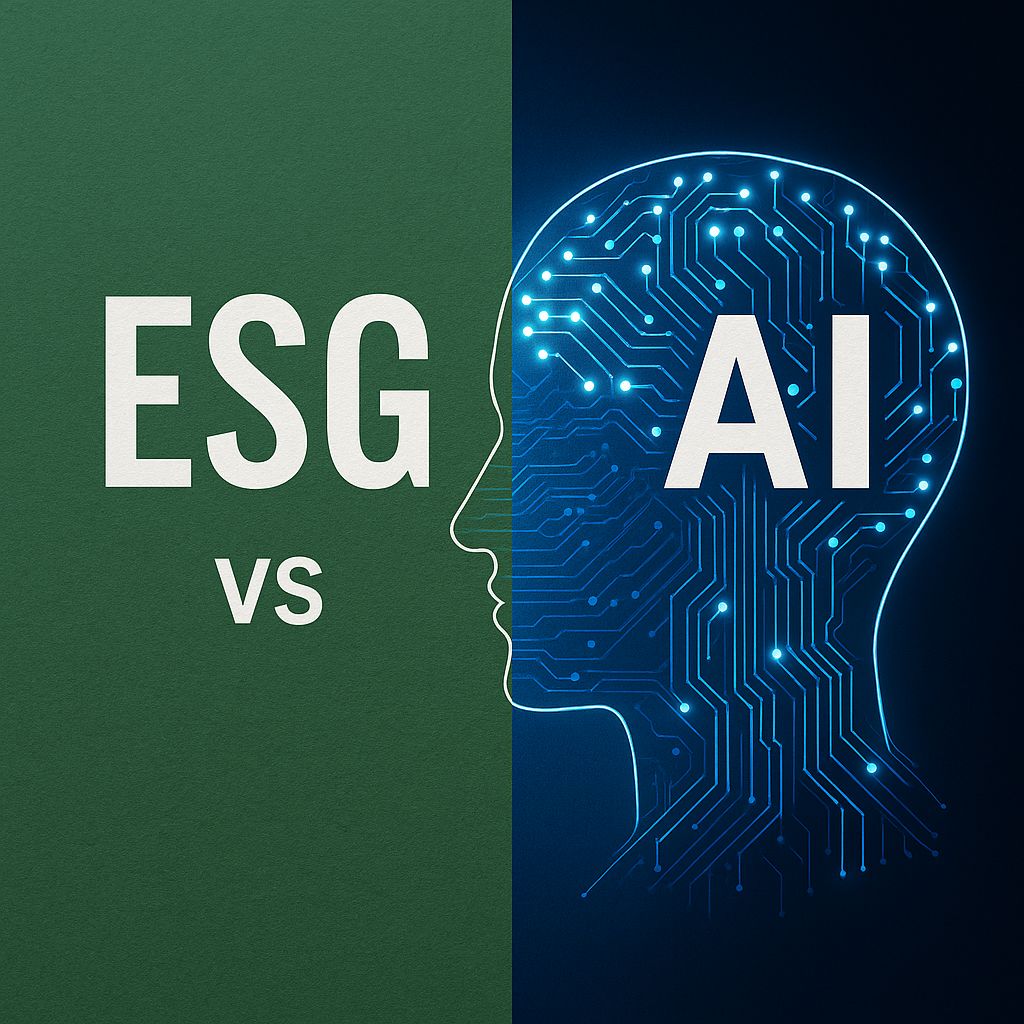
From ESG to AI: Hype Cycle or Structural Shift in Investing? Financial markets have always been fertile ground for narratives. Over the years, entire investment frameworks have risen, peaked, and faded—often driven as much by storytelling as by substance. Few examples illustrate this better than the recent trajectory of ESG investing. A few years ago, ESG was everywhere. Asset managers, funds, and advisory firms rushed to demonstrate alignment with environmental, social, and governance principles. New products were launched, reporting frameworks multiplied, and ESG quickly became a commercial and marketing standard. Then, almost as quickly, the momentum faded. The Rise and Cooling of ESG Today, much of the ESG hype has dissipated. Many ESG-labelled products have been rebranded, consolidated, or quietly discontinued. Investors have shifted their focus, becoming more selective and increasingly sceptical of surface-level claims that lack measurable impact. This evolution does not mean sustainability has lost relevance. Rather, it highlights a familiar pattern in finance: when a concept becomes primarily a narrative tool instead of an operational discipline, disillusionment follows. AI Takes Centre Stage Now, a new theme dominates the conversation: Artificial Intelligence. From asset managers to analysts and technology providers, AI is being embraced across the investment industry. The enthusiasm is unmistakable. Yet this raises a critical question: is AI simply the next ESG—another hype cycle destined to fade? Where AI Is Already Changing the Game Unlike ESG narratives, AI is already delivering tangible applications—particularly in trading and, even more so, in the foreign exchange market. Machine learning models are increasingly used to: Optimize signal detection across complex market environments Adapt execution strategies dynamically Manage risk exposure in real time Process vast volumes of macroeconomic data, news flow, and central bank communications Some investment strategies now rely on AI-driven systems to interpret market sentiment and anticipate currency movements with a speed and depth that traditional models cannot replicate. Why AI Is Not a Shortcut That said, AI is not magic. Its effectiveness depends on data quality, model governance, and disciplined human oversight. Without these elements, AI risks becoming little more than a sophisticated buzzword—much like ESG did at its peak. Technology alone does not eliminate risk. It reshapes how risk is identified, measured, and managed. The Key Difference Between ESG and AI The crucial distinction lies in utility. While ESG often struggled to move beyond narrative alignment, AI offers concrete tools that directly influence decision-making processes. It enhances speed, consistency, and analytical depth—but only when embedded within a robust investment framework. Still, it is too early to declare AI a definitive structural shift. Finance has a long history of turning innovation into storytelling cycles: enthusiasm, saturation, disillusionment, and eventual correction. A Measured Perspective AI may indeed reshape how investments are managed—but only if applied with discipline, transparency, and accountability. Otherwise, it risks following the same arc as previous trends. In investing, technology should serve process—not replace judgment. Understanding this distinction is what separates durable innovation from temporary hype. This article is based on a recent market commentary originally published on LinkedIn. 👉 Read the original LinkedIn post here Paolo Volpicelli INCOME CAPITAL MANAGEMENT s.r.o.

