Cryptocurrency and Digital Assets: Income Capital Management’s Measured Approach

Cryptocurrency and Digital Assets: Income Capital Management’s Measured Approach Cryptocurrencies and digital assets continue to attract global attention, oscillating between innovation-driven enthusiasm and periods of extreme volatility. While the sector remains highly speculative, the underlying blockchain technology is undeniably reshaping financial infrastructure, asset ownership models, and transaction efficiency. At Income Capital Management, we approach cryptocurrencies and digital assets with a clear distinction between technological innovation and investable opportunity. Our philosophy is not driven by hype or short-term price movements, but by a disciplined risk–return framework designed to protect capital while selectively capturing long-term value. Volatility and Speculation: Understanding the Risk Profile Digital assets are characterized by sharp price fluctuations, regulatory uncertainty, and evolving market structures. These factors make cryptocurrencies unsuitable as core holdings for many portfolios, particularly when risk tolerance and capital preservation are primary objectives. For this reason, Income Capital Management avoids excessive or unstructured exposure to cryptocurrencies. Instead, we analyze digital assets within the broader context of portfolio construction, assessing their impact on volatility, correlation, liquidity, and drawdown risk. Blockchain Beyond Cryptocurrencies While cryptocurrencies themselves remain speculative, blockchain technology represents a structural innovation with tangible applications. Tokenized securities, decentralized settlement systems, and distributed ledger infrastructure are already influencing how financial markets operate. Our focus extends beyond individual digital currencies to the ecosystem that supports them. This includes evaluating opportunities linked to blockchain infrastructure, regulated tokenization frameworks, and institutional-grade digital asset solutions where transparency, governance, and compliance are clearly defined. A Selective and Disciplined Allocation Income Capital Management integrates digital assets only where they enhance diversification without compromising portfolio stability. Any exposure is carefully sized, continuously monitored, and aligned with each client’s risk profile and long-term objectives. This measured approach allows us to remain engaged with innovation while maintaining strict control over downside risk. Innovation is valuable only when it is supported by structure, discipline, and clear investment rationale. Innovation with Responsibility The future of finance will undoubtedly include digital assets and blockchain-based solutions. However, sustainable wealth creation requires more than technological enthusiasm. It demands robust risk management, regulatory awareness, and a long-term perspective. At Income Capital Management, we believe that innovation and prudence are not opposites — they are complementary pillars of responsible asset management. LinkedIn post: https://www.linkedin.com/feed/update/urn:li:activity:7420389889122193408
Cross-Border Investment Tax Optimization: A Strategic Framework for Global Investors

Cross-Border Investment Tax Optimization: A Strategic Framework for Global Investors Investing across borders has become increasingly common for private investors, entrepreneurs, and internationally mobile families. While global diversification offers broader opportunity sets, it also introduces a layer of complexity that extends beyond markets and asset classes: taxation. Cross-border investment taxation is not simply a technical detail. It is a structural component of portfolio efficiency. When unmanaged, tax friction can significantly erode long-term returns, even in well-performing strategies. When addressed correctly, however, it becomes a powerful lever for optimizing outcomes while remaining fully compliant with applicable regulations. The Challenge of Cross-Border Investing International investors are often exposed to multiple tax jurisdictions simultaneously. This may include the country of residence, the country where assets are held, and the country where income is generated. Each layer can introduce withholding taxes, reporting obligations, and regulatory constraints. Without proper structuring, investors may face: Double taxation on dividends, interest, or capital gains Inefficient withholding tax rates Limited access to treaty benefits Increased administrative and compliance burden These factors can materially impact net performance, particularly over long investment horizons. The Role of Tax Treaties and Withholding Structures Double taxation treaties play a central role in cross-border tax optimization. When correctly applied, they allow investors to reduce or reclaim withholding taxes on income streams such as dividends and interest. However, treaty benefits are not automatic. Eligibility depends on several factors, including investor residency, investment vehicle structure, and the legal form of the underlying assets. Strategic planning is therefore essential to ensure that treaty advantages are effectively captured rather than lost through suboptimal structuring. Fund Domiciliation as a Strategic Tool Another critical element in international tax optimization is fund domiciliation. The jurisdiction in which a fund or investment vehicle is established influences both taxation and regulatory treatment. Appropriate domiciliation can help: Reduce withholding tax leakage Improve access to international tax treaties Enhance legal certainty and investor protection Simplify reporting and compliance processes Fund structure should always be aligned with the investor’s residency, investment objectives, and regulatory profile. There is no universal solution; optimization is inherently case-specific. Optimization Without Compromising Compliance Tax optimization is often misunderstood as aggressive tax avoidance. In professional wealth management, the opposite is true. Sustainable optimization is achieved by working within established legal frameworks, ensuring transparency and regulatory compliance at every stage. International investors must balance efficiency with substance. Proper documentation, reporting discipline, and regulatory awareness are essential to avoid unnecessary risk exposure, reputational damage, or future disputes with tax authorities. A Long-Term Perspective Cross-border tax optimization is not a one-off exercise. Changes in tax law, treaty interpretation, and regulatory standards require ongoing monitoring and periodic review of investment structures. For global investors, a coordinated approach that integrates tax planning, asset allocation, and jurisdictional awareness is key to preserving capital and enhancing long-term performance. When properly designed, cross-border investment structures allow investors to focus on strategy and growth, confident that tax efficiency and compliance are embedded into the investment process. Original LinkedIn post: https://www.linkedin.com/posts/incomecapital_investment-optimization-investing-activity-7422292422941978624
Portfolio Discipline, Diversification and Market Cycles: A Framework for Long-Term Investing

Portfolio Discipline, Diversification and Market Cycles: A Framework for Long-Term Investing Successful investing is rarely the result of a single tactical decision. Over time, consistent results tend to emerge from a disciplined framework that combines portfolio structure, diversification across asset classes, and an informed understanding of market cycles. Three elements in particular play a central role in this process: portfolio rebalancing, multi-asset diversification, and strategic positioning across fixed income markets. While often discussed separately, these components are deeply interconnected and should be approached as parts of a unified investment methodology. Portfolio Rebalancing as a Strategic Discipline Portfolio rebalancing is frequently misunderstood as a purely mechanical adjustment of weights. In reality, it represents a disciplined governance process designed to keep risk exposure aligned with long-term objectives. As markets evolve, assets that perform well naturally increase their weight within a portfolio, while others decline. Without periodic intervention, this drift can lead to unintended concentration risk and a gradual departure from the original investment strategy. A structured rebalancing process is based on predefined allocation ranges, review frequency, and tolerance thresholds. The goal is not to predict markets, but to maintain coherence between strategy and execution, removing emotional bias from decision-making and reinforcing long-term discipline. Diversification in Practice: Lessons from 2025 The year 2025 offered a clear illustration of why diversification remains essential. Asset classes moved in very different directions, creating outcomes that varied significantly depending on portfolio construction. Within a diversified framework, different instruments played complementary roles: Gold acted as a defensive anchor, delivering a return of +65.87%. Forex strategies provided high return potential through active management, closing the year at +34.98%. Real Estate investments contributed stability and income, with a performance of +7.71%. This dispersion of returns highlights an important principle: diversification is not about maximizing performance in every market environment, but about ensuring resilience across changing conditions. A portfolio built on multiple, uncorrelated sources of return is better positioned to absorb volatility and protect capital over time. Understanding Bond Market Cycles and Strategic Positioning Fixed income markets have undergone profound changes in recent years, shaped by inflation dynamics, monetary policy shifts, and evolving yield structures. As yields stabilize, strategic positioning becomes increasingly important for income-focused portfolios. Bond market cycles require investors to balance yield opportunities with duration risk, credit quality, and inflation sensitivity. Government bonds, corporate debt, and emerging market bonds each serve distinct roles depending on the phase of the cycle. Rather than chasing headline yields, effective bond allocation focuses on sustainability, diversification, and alignment with broader portfolio objectives. When integrated thoughtfully, fixed income can once again serve as a stabilizing element within multi-asset portfolios. A Unified Investment Framework Portfolio rebalancing, diversification, and cycle-aware asset allocation should not be treated as isolated concepts. Together, they form a coherent framework that emphasizes structure over speculation and process over prediction. In an increasingly complex global environment, this disciplined approach allows investors to navigate uncertainty while maintaining clarity, control, and long-term strategic alignment. Original LinkedIn posts: Portfolio Rebalancing Insight: https://www.linkedin.com/feed/update/urn:li:activity:7350399901672833024 Diversification and 2025 Portfolio Results: https://www.linkedin.com/posts/incomecapital_confidence-emergingmarkets-debtinvestment-activity-7416403617785577472 Bond Market Cycles and 2026 Outlook: https://www.linkedin.com/feed/update/urn:li:activity:7353302800539205634
Confidence, Emerging Markets and Debt Investment: Navigating Opportunity Through Structure

Confidence, Emerging Markets and Debt Investment: Navigating Opportunity Through Structure In a global financial environment shaped by uncertainty, confidence is not a sentiment — it is the result of structure, discipline, and informed decision-making. Emerging markets continue to attract investor attention, not because they are simple, but because they offer opportunities that are often uncorrelated with traditional developed markets. Within this context, debt investments play a strategic role, combining yield potential with structured risk management when approached correctly. Why Confidence Matters in Emerging Markets Emerging markets are frequently associated with volatility, political risk, and uneven growth cycles. While these factors are real, they also create inefficiencies — and inefficiencies are precisely where disciplined investors can find value. Confidence in this space does not come from speculation. It comes from: Careful jurisdiction and counterparty selection Clear legal and regulatory frameworks Defined risk parameters and exit strategies Continuous monitoring of macroeconomic and geopolitical dynamics When these elements are in place, emerging market exposure becomes a calculated allocation rather than a leap of faith. The Strategic Role of Debt Investment Debt investment represents a different approach compared to pure equity exposure. Instead of relying solely on growth narratives, debt strategies focus on contractual cash flows, capital structure positioning, and downside protection. In emerging markets, this approach can be particularly effective. Well-structured debt instruments may offer: Predictable income streams Priority positioning in the capital structure Lower volatility compared to equity investments Improved portfolio diversification The key lies in rigorous due diligence and conservative structuring — elements that transform complexity into opportunity. From Perceived Risk to Managed Exposure Risk in emerging markets is often misunderstood. The real risk is not volatility itself, but the absence of controls, transparency, and governance. By focusing on structured debt solutions, investors can access emerging market opportunities while maintaining alignment with capital preservation objectives. This approach shifts the narrative from speculative exposure to intentional allocation. Confidence as a Competitive Advantage In periods where global markets oscillate between optimism and fear, confidence becomes a differentiating factor. Not blind confidence, but informed confidence — built on data, structure, and experience. At INCOME CAPITAL MANAGEMENT, confidence is the outcome of method. Our investment philosophy emphasizes clarity over complexity and structure over narratives, particularly when operating in less conventional markets. A Measured Path Forward Emerging markets and debt investments are not designed for short-term speculation. They are components of a broader strategy aimed at diversification, income generation, and long-term resilience. By combining disciplined risk management with selective exposure, it is possible to navigate complexity without compromising on control. INCOME CAPITAL MANAGEMENT s.r.o. 🔗 Related LinkedIn post: Confidence, Emerging Markets and Debt Investment
Lessons in Crisis Management from 2025 Markets

Lessons in Crisis Management from 2025 Markets Periods of market stress are often remembered for their volatility, but their true value lies in the lessons they reveal. The market dynamics experienced throughout 2025 once again demonstrated how crises test not only portfolios, but also decision-making frameworks, risk discipline, and investor behavior. While every market cycle has its own characteristics, the underlying principles of effective crisis management remain remarkably consistent. Volatility as a Stress Test Market volatility is not an anomaly, it is an intrinsic feature of financial systems. During calmer phases, structural weaknesses may remain hidden. In contrast, periods of stress expose how portfolios are constructed and how risk is truly managed. The volatility observed in 2025 served as a real-time stress test, highlighting the importance of diversification, liquidity awareness, and predefined risk controls. Discipline Over Reaction One of the most common challenges during market turbulence is the temptation to react emotionally. Sudden price movements can lead to decisions driven by fear or urgency rather than analysis. Effective crisis management relies on discipline: the ability to adhere to established frameworks even when market signals appear contradictory or unsettling. Portfolios guided by structured allocation rules and risk parameters are better positioned to absorb shocks without compromising long-term objectives. Preparation Happens Before the Crisis Crises are rarely managed successfully in real time without prior preparation. Portfolio resilience is built during stable periods, through thoughtful asset allocation, scenario analysis, and continuous monitoring. Risk management tools, diversification strategies, and liquidity planning play a critical role long before volatility materializes. When uncertainty rises, preparation allows investors to respond with clarity rather than urgency. The Role of Communication During market stress, communication becomes as important as portfolio construction. Transparent and timely dialogue helps align expectations and reduce the risk of reactive decisions. Clear explanations of portfolio positioning, risk exposure, and strategic intent support investor confidence, even in challenging conditions. Adaptability Within a Framework Discipline does not imply rigidity. Effective crisis management balances adherence to core principles with the flexibility to adapt when structural conditions change. Adjustments made within a coherent framework—rather than impulsive shifts—allow portfolios to remain aligned with long-term goals while responding to evolving market dynamics. Conclusion The lessons from the 2025 markets reinforce a fundamental truth: crisis management is not about predicting the next disruption, but about being prepared when it occurs. Structure, discipline, and clear communication remain the cornerstones of resilient investment management across market cycles. Originally published on LinkedIn: Read the original post on LinkedIn This content is provided for informational purposes only and does not constitute investment advice or a solicitation to the public. Past performance is not indicative of future results.
Artificial Intelligence in Finance: Practical Use Cases

Artificial Intelligence in Finance: Practical Use Cases Artificial intelligence has moved beyond theoretical discussion and marketing narratives—it is now actively shaping how financial decisions are supported, risks are monitored, and portfolios are managed. In finance, the value of AI does not lie in replacing human judgment, but in enhancing it. When applied with discipline, artificial intelligence becomes a powerful tool for improving analytical depth, efficiency, and transparency. From Buzzword to Operational Tool For many years, artificial intelligence was discussed primarily as a future promise. Today, it is increasingly embedded within operational workflows across financial services. AI systems can process vast amounts of data, identify patterns, and surface insights that would be difficult to detect through traditional analysis alone. This capability is particularly relevant in environments characterized by complexity, speed, and information overload. AI in Portfolio Analytics One of the most tangible applications of AI in finance lies in portfolio analytics. Advanced algorithms support the analysis of correlations, risk exposure, and scenario behavior across asset classes. By continuously evaluating data streams, AI tools enhance the ability to identify emerging risks and opportunities in a timely manner. This allows portfolio managers and advisors to make more informed decisions while maintaining a structured framework. Risk Management and Monitoring Risk management is a natural area for AI application. Continuous monitoring systems can flag anomalies, stress indicators, or deviations from predefined parameters in real time. Rather than reacting after risks materialize, AI-supported systems help anticipate potential issues and support proactive management. This does not eliminate risk, but it improves awareness and response quality. Transparency and Client Communication Artificial intelligence also contributes to improved transparency. By supporting clearer reporting and data visualization, AI enhances communication between advisors and clients. When clients understand how portfolios behave under different scenarios, trust and alignment are strengthened—particularly during periods of volatility. Human Expertise Remains Central Despite technological progress, financial decision-making cannot be fully automated. Context, experience, and responsibility remain essential. AI is most effective when used as a decision-support tool, complementing professional judgment rather than replacing it. The strongest outcomes emerge when technology and human expertise operate together within a disciplined process. Conclusion Artificial intelligence is reshaping finance not by removing people from the process, but by enabling better-informed decisions. As adoption continues, the focus should remain on practical use cases, transparency, and responsible integration within established investment frameworks. Originally published on LinkedIn: Read the original post on LinkedIn This content is provided for informational purposes only and does not constitute investment advice or a solicitation to the public.
The New Gold Rush: Performance, Protection, and the Role of Gold in Modern Portfolios

The New Gold Rush: Performance, Protection, and the Role of Gold in Modern Portfolios Between April and August 2025, gold once again demonstrated why it has served as a store of value for thousands of years. In a market environment characterized by uncertainty, geopolitical tension, and fluctuating monetary expectations, the precious metal delivered solid and measurable returns while many investors remained hesitant. Gold Performance: April–August 2025 From April 1st to August 8th, 2025, gold prices increased from $100.74 to $109.11 per ounce. Price increase: +8.31% Timeframe: 4 months This performance was achieved during a period in which financial markets were grappling with elevated volatility, geopolitical risks, and ongoing debates around inflation and monetary policy. To put this into perspective, an investment of $10,000 in gold at the beginning of April would have grown to approximately $10,831 by early August—reflecting tangible wealth creation over a relatively short period. More Than a Commodity Cycle Gold’s recent performance should not be viewed as a short-term anomaly or a speculative rally. Historically, gold has fulfilled a consistent role across economic cycles: preserving purchasing power when confidence in financial systems or paper currencies weakens. This role is once again evident as: Central banks continue to accumulate gold reserves at a sustained pace Institutional investors increase allocations to precious metals Gold reasserts its function as a portfolio stabilizer during uncertainty These dynamics reinforce gold’s position not merely as a commodity, but as a strategic asset within diversified portfolios. Opportunity Cost and Investor Hesitation One of the most common investor challenges during periods of market uncertainty is indecision. Waiting for a “perfect” entry point often results in missed opportunities. The +8.31% return achieved over the past four months represents real gains that were accessible to investors willing to act within a disciplined allocation framework. Opportunity cost, while less visible than market losses, can be equally damaging to long-term portfolio outcomes. Gold’s Strategic Role in Portfolio Construction Beyond recent performance, gold continues to play a fundamental role in investment strategy: Inflation hedge: preserving value as purchasing power erodes Diversification tool: reducing correlation with traditional financial assets Tangible asset: offering resilience during currency and systemic stress With ongoing geopolitical tensions, monetary uncertainty, and inflationary pressures, the structural case for gold remains intact. Looking Ahead The question for investors is not whether gold has historically proven its value—history has already answered that. The more relevant consideration is whether portfolios are adequately positioned to benefit from its stabilizing and protective characteristics. As recent months have shown, gold continues to perform its role quietly and consistently, often while broader markets remain distracted by short-term noise. LinkedIn Source This article is based on the original LinkedIn update published here: Read the original LinkedIn post → INCOME CAPITAL MANAGEMENT
July 2025: Extreme Volatility and Forex Fund Performance Under Unprecedented Market Stress

July 2025: Extreme Volatility and Forex Fund Performance Under Unprecedented Market Stress July 2025 proved to be one of the most challenging months in recent financial market history, particularly during its final two weeks. A period that is typically characterized by low volatility and reduced trading activity instead delivered extreme and unpredictable market movements, driven by a combination of political tension, speculative positioning, and fragile liquidity conditions. An Unusual Market Environment The month was dominated by escalating tensions over trade tariffs between Europe and the United States. These developments triggered a rapid sequence of events that destabilized the currency markets, particularly the EUR/USD pair. Initially, the European Central Bank intervened to artificially support the Euro, aiming to strengthen the European Commission’s position during ongoing negotiations. This was followed by a swift resurgence of the US Dollar as the dominant global currency. Crucially, these movements occurred against a backdrop of very low trading volumes, amplifying price swings and resulting in levels of volatility that, in certain moments, were unprecedented—even compared to the 2008 financial crisis. EUR/USD: Exceptional Price Swings The EUR/USD exchange rate illustrated the severity of market dislocation: Such rapid reversals within a compressed timeframe underscore the fragility of market sentiment and the risks associated with speculative flows during low-liquidity periods. Geopolitical Escalation and Risk Perception Market instability was further compounded by emerging geopolitical tensions, including the deployment of US submarines. While the prospect of nuclear escalation remains theoretical, even the suggestion of such risk materially affects investor behavior, volatility expectations, and capital allocation decisions. In environments like this, risk perception often outweighs fundamentals, creating conditions where price movements become disconnected from traditional valuation frameworks. Forex Fund Performance Overview Against this exceptionally turbulent backdrop, the Forex Fund (Aggressive Strategy) recorded the following results: While July closed negatively, the broader performance context remains solid, reflecting the strength of the strategy over longer horizons. Capital Protection as a Priority In periods of extreme and irregular volatility, prudence becomes essential. Our primary objective remains capital protection, with profit generation as a secondary goal. While speculative market movements are inherently unpredictable and beyond direct control, our focus is on maintaining vigilance and preserving the ability to act decisively when conditions normalize. This disciplined approach allows us to manage drawdowns while keeping portfolios positioned for recovery when market dynamics become more rational. Transparency and Reporting A detailed monthly return overview is available in the private area: View the full July 2025 performance report → We believe transparent reporting is essential, especially during challenging phases, enabling investors to evaluate performance within its proper market context. Final Considerations July 2025 serves as a reminder that extreme volatility can emerge even during periods traditionally considered stable. In such environments, discipline, risk management, and a long-term perspective remain the most effective tools for navigating uncertainty. INCOME CAPITAL MANAGEMENT
UAE Removed from the EU Blacklist: A Turning Point for Global Investors

UAE Removed from the EU Blacklist: A Turning Point for Global Investors The recent decision by the European Union to officially remove the United Arab Emirates from the EU blacklist of non-cooperative jurisdictions marks a significant milestone for global financial markets. This development reinforces the UAE’s position as a credible, transparent, and internationally aligned financial hub, strengthening confidence among institutional investors, asset managers, and private clients worldwide. A Regulatory Milestone with Concrete Implications The EU decision reflects years of regulatory progress by the UAE in aligning with global financial standards, particularly in areas such as: Anti-money laundering (AML) frameworks Counter-terrorism financing (CTF) controls Transparency and investor protection International regulatory cooperation From an investment perspective, this step materially reduces regulatory friction and jurisdictional risk, making UAE-based structures more accessible and attractive to European and international investors. What This Means for Asset Management and Private Funds For asset managers and fund sponsors, the removal from the EU blacklist has immediate operational and strategic relevance. It simplifies cross-border capital flows, improves banking relationships, and enhances the credibility of UAE-based investment vehicles, particularly in: Alternative investments Private funds Forex-based strategies International portfolio structures Most importantly, it strengthens investor confidence by confirming that the UAE operates within a globally recognized regulatory framework. Income Capital Management’s Perspective At INCOME CAPITAL MANAGEMENT, this decision further validates our long-standing commitment to building secure, compliant, and transparent investment structures rooted in international best practices. Our presence in the region has always been guided by a clear objective: offering investors regulated access to global opportunities, while maintaining rigorous standards of governance, reporting, and risk management. The EU’s decision supports this vision and creates an even stronger foundation for institutional adoption of UAE-based investment strategies. Looking Ahead As global investors increasingly prioritize regulatory clarity and jurisdictional stability, the UAE continues to position itself as a strategic gateway between Europe, the Middle East, and global capital markets. We see this milestone not as an endpoint, but as part of a broader evolution toward a more connected, transparent, and resilient global financial system. For those interested in the original announcements and discussion, the related LinkedIn updates can be viewed here: EU decision on UAE LinkedIn post – Income Capital Management commentary In an environment where regulation and trust increasingly define investment success, developments like this matter — and they matter a lot.
POSITIVE RESULTS DESPITE MARKET WEAKNESS
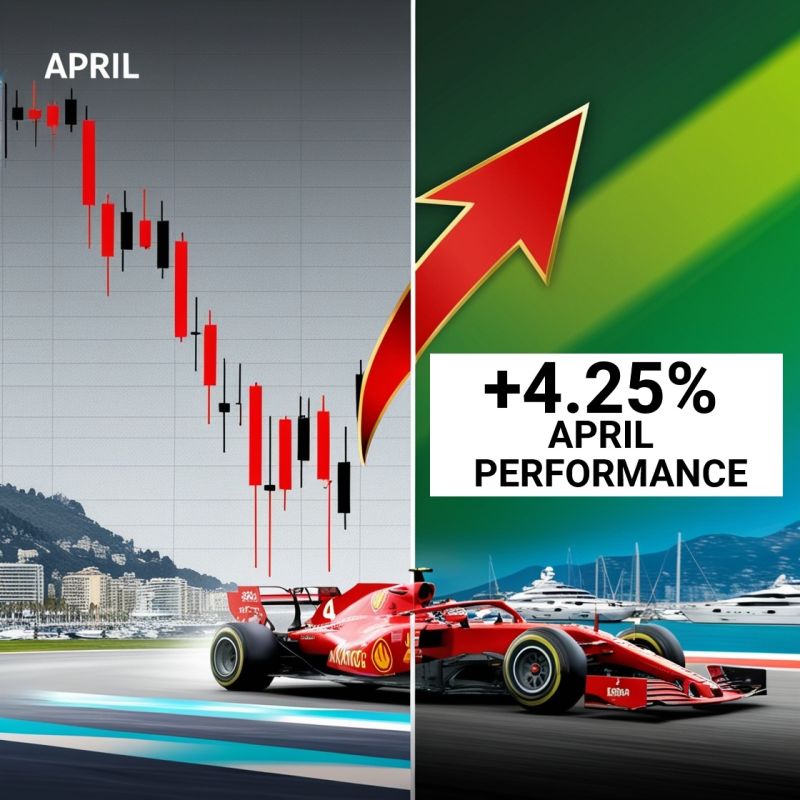
Positive Results Despite Market Weakness April 2025 unfolded in a challenging market environment, characterized by a broad-based correction across global financial markets. Equity indices faced renewed pressure, with the S&P 500 closing lower for the first time since October, while European and emerging markets also showed visible signs of weakness. In a context marked by uncertainty, tightening financial conditions, and cautious investor sentiment, disciplined portfolio construction and robust risk management once again proved essential. Forex Fund Performance – April 2025 Despite the adverse macroeconomic backdrop, the Forex Fund delivered a solid monthly result: April 2025 performance: +4.25% This performance confirms the effectiveness of the strategic framework implemented since the launch of the fund and highlights the importance of adaptability during volatile market phases. Key Drivers Behind the Performance The April result reflects a combination of structural discipline and tactical flexibility embedded in the investment process: Active selection of resilient instruments and market segments, prioritizing liquidity and risk-adjusted returns Dynamic exposure management, adapting positioning as market conditions evolved Continuous focus on risk management, aimed at preserving capital during periods of heightened volatility Rather than relying on short-term directional bets, the strategy emphasized consistency, adaptability, and disciplined execution. Strategy Over Market Noise Periods like April reinforce a fundamental investment principle: sustainable results are driven by structure, discipline, and execution—not by reactive decision-making. In complex and unstable environments, maintaining a clear framework and a flexible approach often makes the difference between protecting capital and amplifying risk. Client Experience – Monaco Grand Prix 2025 April was also a meaningful month beyond portfolio performance. Following the April 8th webinar, selected clients confirmed their participation in the Formula 1 Monaco Grand Prix, scheduled for May 24–25, 2025. This exclusive event represents an opportunity to share a unique experience together, strengthening long-term relationships built on trust, transparency, and shared vision. Photos and highlights from the event will be shared in our upcoming newsletter. Conclusion April 2025 once again demonstrated that well-structured strategies, disciplined risk control, and adaptability remain essential pillars for navigating uncertain financial markets. We are pleased to share both performance results and meaningful moments with clients who continue to place long-term trust in our investment approach. Related LinkedIn Post For a concise market update and additional context, you can view the original LinkedIn post here:Positive Results Despite Market Weakness – LinkedIn

