Position Sizing: The Decision That Comes Before the Trade
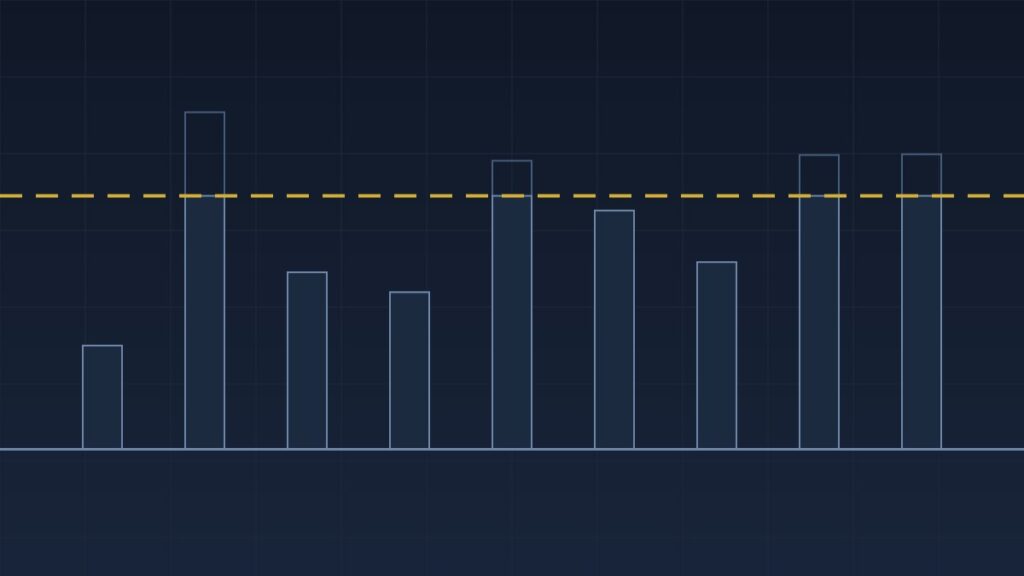
Position Sizing: The Decision That Comes Before the Trade Ask ten investors what makes a good trade and nine will talk about direction: where the market is going, and why. It is the glamorous half of investing, the part that fills interviews and headlines. Yet when portfolios fail, the autopsy rarely points to a wrong opinion about direction. It points to a defensible opinion held in indefensible size. Position sizing is the decision that comes before the trade: how much capital a single idea is allowed to put at risk, defined before the position exists and independent of how confident the idea feels. In professional currency management it is not an afterthought of the analysis. It is a policy, and in our experience it separates portfolios that survive their mistakes from portfolios that are defined by them. Why sizing errors hurt more than direction errors Every manager is wrong about direction regularly. That is not a flaw in the process; it is a property of markets. Decades of evidence show that even excellent currency strategies are wrong on a large share of their individual positions, and we have built our entire approach around that fact, as we described in why process beats prediction. Being wrong is survivable when the loss is bounded. What is not survivable is the combination of a wrong view and an oversized position, because losses do not scale linearly with recovery effort. A portfolio that loses ten percent needs roughly eleven percent to recover. One that loses forty percent needs sixty-seven. The arithmetic of drawdowns, which we examined in detail in our article on drawdown management, is the reason sizing is a survival discipline rather than an optimization exercise: the damage of being wrong grows faster than the benefit of being right. This is also why sizing cannot be left to conviction. Conviction is highest exactly where caution matters most, at the moments when a view feels obvious, the evidence seems overwhelming and the temptation to scale up is strongest. A sizing rule written in calm conditions exists precisely to overrule that feeling, because the feeling is not information about the future. It is information about the trader. What a sizing framework actually decides A disciplined framework answers three questions before any position is opened. The first is the maximum loss a single idea may inflict on the portfolio. Not the expected loss, and not the loss if things go mildly wrong: the loss if the position is stopped out at its predefined exit. That number is set as a fraction of capital small enough that no individual mistake, or short sequence of mistakes, threatens the portfolio’s ability to keep operating. The second is how positions combine. Two trades that look independent on a screen can be the same bet wearing different clothes: long one dollar pair and short another may both be, in substance, a single view on the dollar. Sizing limits that ignore correlation are limits in name only, which is why we treat this as part of the same discipline we described in our work on correlation risk: the unit being sized is the exposure, not the ticket. The third is how size responds to conditions. Volatility changes what a position of a given notional actually risks: the same size that is conservative in a quiet market is aggressive in a stressed one. A framework that holds risk constant must therefore let notional vary, trimming positions as volatility expands rather than discovering, after the fact, that the portfolio had grown without anyone adding a trade. Size as policy, not opinion The common thread in all three answers is that none of them depends on how good the idea looks. That is deliberate. Direction is an opinion, and opinions should compete, be challenged and sometimes be wrong. Size is a policy, and policies exist to be applied uniformly, especially when applying them is uncomfortable. In practice this means the sizing rule is decided at the level of the investment process, documented, and applied to every position without exception: not renegotiated trade by trade, not suspended for high-conviction ideas, not loosened after a good run. The moments when a manager most wants to make an exception are reliably the moments when the exception is most expensive, because overconfidence and risk concentration arrive together. There is a quieter benefit as well. When size is fixed by rule, the quality of decisions becomes measurable. A portfolio where every idea risks a comparable fraction of capital produces a track record that reflects judgment rather than courage, and errors become data instead of events. Over the many decisions that make up a year of currency management, that feedback loop is worth more than any single trade. The question that protects the next hundred decisions The practical test of a sizing discipline is a single question, asked before every trade: how much is this position allowed to lose if it is wrong? Not how much it should make, and not how likely it is to work. If the answer is a number fixed in advance by policy, sizing is doing its job. If the answer depends on how the idea feels, the portfolio is one streak of confidence away from a problem. Direction decides whether a trade makes money. Size decides whether the portfolio survives being wrong long enough for the process to work. Of the two decisions, only one can be fully controlled in advance, and professional management is, above all, the discipline of controlling what can be controlled. This article is provided for informational and educational purposes only. It does not constitute investment advice, an offer, or a solicitation to invest in any product or service. Income Capital Management s.r.o. is registered under §15 of the Czech Act on Investment Companies and Investment Funds (ZISIF). Past performance is not indicative of future results. Investing involves risk, including the possible loss of capital.
Inside Our Forex Fund: Discipline Over Speculation
Inside Our Forex Fund: Discipline Over Speculation The foreign exchange market is often misunderstood. For many observers, Forex trading is associated with speculation, high leverage, and short-term bets driven by market sentiment. Media coverage and retail trading platforms have reinforced this perception, presenting currency markets as environments where rapid gains and equally rapid losses dominate the narrative. However, this simplified view fails to capture how professional investors actually approach currency markets. In institutional portfolio management, Forex is not merely a speculative arena. Instead, it can become a powerful strategic tool for diversification, risk control, and portfolio efficiency. At Income Capital Management, our Forex Fund is designed around a fundamentally different philosophy. Rather than chasing volatility or reacting emotionally to short-term movements, the strategy focuses on discipline, risk management, and systematic decision-making. In this framework, currency markets are not a casino. They are a structured financial environment where disciplined strategies can create stable opportunities while supporting broader portfolio objectives. Why Forex Markets Matter in Global Portfolios The foreign exchange market is the largest and most liquid financial market in the world. Every day, trillions of dollars are exchanged between currencies as governments, corporations, financial institutions, and investors conduct international transactions. This massive scale creates a unique investment landscape. Unlike equity markets, which depend on corporate performance, or bond markets, which are tied closely to interest rates and credit conditions, currency markets are influenced by a complex combination of macroeconomic forces. Interest rate differentials, monetary policy decisions, economic growth expectations, geopolitical developments, and trade balances all contribute to currency movements. For global investors with exposure to multiple currencies such as the euro, US dollar, or other major international currencies, these fluctuations can have a meaningful impact on overall portfolio performance. Rather than ignoring currency risk, professional investors seek to manage it. Moving Beyond the Speculation Narrative The idea that Forex trading is inherently speculative often arises from the behavior of retail market participants. High leverage, emotional trading decisions, and a lack of structured risk management frequently result in unpredictable outcomes. Professional Forex strategies operate very differently. Institutional approaches prioritize discipline, risk limits, and systematic processes. The objective is not to predict every short-term market movement, but to capture opportunities while maintaining strict control over potential losses. This disciplined structure is what transforms Forex from speculation into a legitimate portfolio management tool. The Core Principles of a Disciplined Forex Strategy The Forex Fund at Income Capital Management operates according to several fundamental principles that guide every trading decision. These principles are designed to ensure that the strategy remains aligned with long-term portfolio stability rather than short-term speculation. The key elements include: Strict risk management frameworks Carefully calibrated position sizing Continuous monitoring of market exposure Drawdown control mechanisms Scenario-based portfolio analysis Each of these components plays a specific role in maintaining the overall stability of the strategy. Position Sizing: Controlling Exposure Position sizing is one of the most important elements of professional trading. Rather than placing large bets on individual market views, disciplined Forex strategies distribute exposure across multiple positions with carefully calculated size limits. This approach ensures that no single trade can significantly damage portfolio performance. Even when market conditions become volatile, controlled position sizing allows the strategy to remain stable and resilient. Drawdown Control and Capital Preservation Another critical element of institutional trading is drawdown control. Every investment strategy will experience periods of underperformance. Markets move unpredictably, and even well-structured strategies cannot avoid temporary losses. However, the key to long-term success lies in limiting those losses. Drawdown control mechanisms establish predefined thresholds that restrict how much capital can be exposed to risk at any given time. When these thresholds are reached, exposure is reduced automatically. This systematic discipline helps ensure that temporary volatility does not evolve into structural portfolio damage. Continuous Monitoring of Currency Markets The global currency market operates twenty-four hours a day, five days a week. Economic events in one region can influence currency movements across the entire world. For this reason, professional Forex strategies rely on continuous monitoring. Market conditions are analyzed constantly, incorporating macroeconomic developments, central bank communications, and geopolitical changes. This ongoing evaluation allows portfolio managers to adapt positioning when necessary while maintaining strict adherence to risk frameworks. Scenario Analysis and Strategic Preparation Another essential component of disciplined Forex management is scenario analysis. Rather than focusing solely on the most likely market outcome, professional investors prepare portfolios for multiple potential scenarios. These scenarios may include changes in interest rate policies, shifts in global growth expectations, currency interventions by central banks, or geopolitical disruptions. By stress-testing portfolios against different environments, investors can better understand how currency exposures may behave under varying conditions. This preparation significantly reduces the risk of unexpected market shocks. Forex as a Diversification Tool One of the most valuable characteristics of Forex strategies is their potential diversification benefit. Currency markets often behave differently from traditional asset classes such as equities or real estate investments. Because currencies respond primarily to macroeconomic forces, they can provide portfolio exposure to different risk factors. This diversification effect can help smooth overall portfolio volatility. For investors with international financial exposure, currency management becomes an essential element of overall portfolio stability. Supporting International Investors Many global investors hold assets denominated in multiple currencies. European investors may hold US dollar investments, while American investors may maintain exposure to European or emerging market currencies. These currency exposures create additional layers of risk that must be managed carefully. Our Forex Fund helps address this challenge by providing a structured approach to currency management. By actively managing currency exposure, investors can reduce volatility while maintaining access to international investment opportunities. From Volatility to Opportunity Currency fluctuations often create uncertainty for investors. Rapid movements in exchange rates can influence international investment returns and introduce unexpected volatility. However, when approached with discipline and professional risk management, currency volatility can also create opportunity. A structured Forex strategy can convert market fluctuations into potential return sources while maintaining strict control over risk exposure. The Importance of Discipline in

