International Asset Management in New York: Inside Income Capital Management’s Expansion to Wall Street
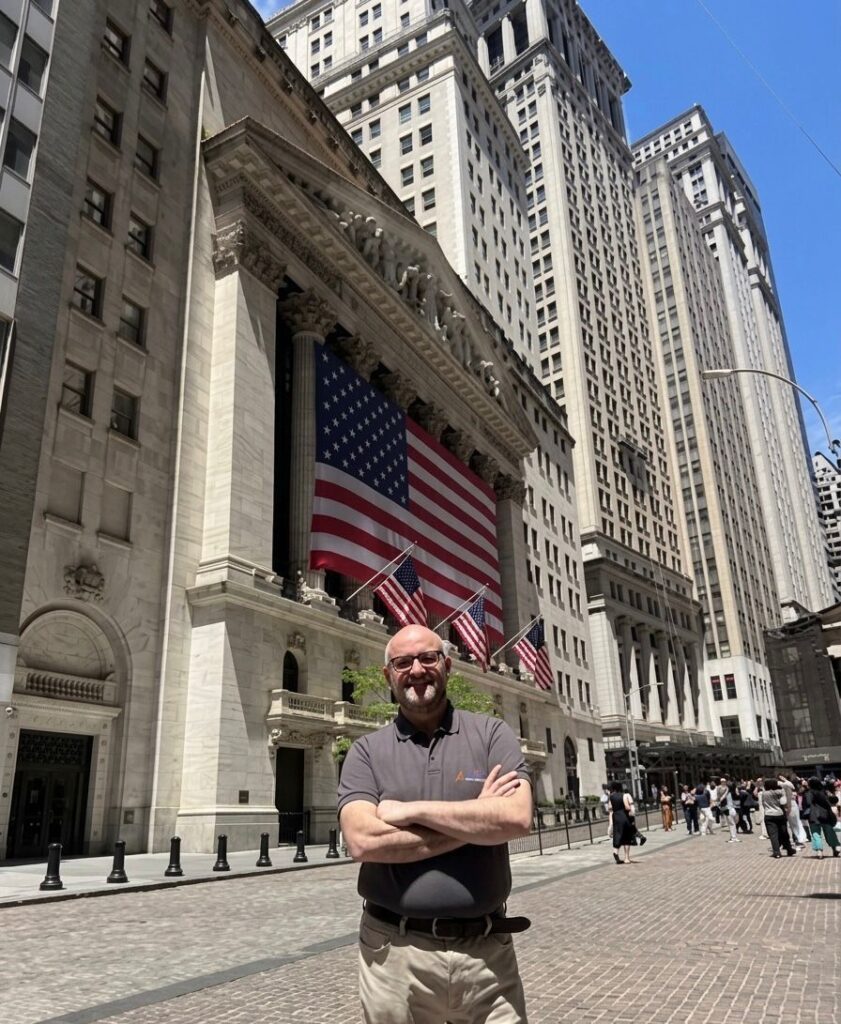
There is a particular kind of clarity that comes from standing in Lower Manhattan on a Tuesday morning, watching the financial district come alive. The streets around Wall Street and Broad Street fill early, the conversations are focused, and the density of financial knowledge per square meter is probably higher here than anywhere else on earth. For anyone who has spent years managing capital across international markets, this environment is not just symbolic. It is genuinely useful. It is why Income Capital Management’s decision to establish a New York presence was not an act of ambition for its own sake but a deliberate response to what our clients need and what the evolution of international asset management requires. This article is about that decision and the broader forces that make New York an indispensable hub for international portfolio management in 2025. But it is also, more fundamentally, about the nature of international asset management itself: what it means to build portfolios that function across borders and currencies, why proximity to global financial networks matters for the quality of investment decisions, and how the specific combination of access, relationships, and market intelligence available in New York changes what is possible for international investors. We will examine all of this in detail, because the opening of a new office is only interesting if it reflects something real about how investment management is evolving and what clients stand to gain from it. Why New York Remains the Center of Global Finance The argument that New York’s financial dominance is in decline has been made repeatedly over the past two decades, and it has been repeatedly wrong. London’s post-Brexit reconfiguration, the rise of Asian financial centers, and the geographic diversification of technology companies that have disrupted financial services have all prompted speculation that New York might lose its singular position. The evidence, however, tells a different story. New York remains home to the largest concentration of capital markets activity in the world. The New York Stock Exchange and NASDAQ together list more companies by market capitalization than any other exchange or combination of exchanges globally. The US Treasury market, centered on relationships and infrastructure located in New York, is the deepest and most liquid government bond market in existence, serving as the reference point for risk-free rates worldwide. The New York Federal Reserve plays a unique role in implementing monetary policy and maintaining financial stability, and its relationships with global central banks run through New York in ways that have no equivalent elsewhere. Beyond these structural facts, New York’s position as a financial hub is reinforced by the sheer concentration of talent and knowledge that has accumulated there over more than a century of market development. The largest global investment banks, asset managers, hedge funds, private equity firms, law firms, and accounting practices all maintain their most important offices in New York. This concentration creates network effects that are self-reinforcing: the best investment professionals want to be where the most interesting opportunities are, and the most interesting opportunities are where the best professionals are. For an alternative investment manager with international clients and a focus on multi-asset portfolio construction across Forex, real estate, fixed income, and global equities, New York provides access to counterparties, market intelligence, and professional relationships that are simply not available at the same depth or quality elsewhere. The practical advantage of being able to meet face-to-face with bank trading desks, fund managers, real estate advisors, and industry specialists in a single city, rather than dispersing these interactions across multiple markets, is significant and measurable. The Geography of Financial Trust Investment management is fundamentally a trust-based business. Clients entrust their capital to managers who have demonstrated the competence, integrity, and alignment of interests necessary to manage it responsibly. Building this trust takes time, consistency, and the kind of relationship depth that is difficult to create remotely. The geographic dimension of trust-building in finance is real and persistent, even in an age of video calls and digital communications. For international investors, particularly those based in Europe, Asia, or the Middle East, the decision to entrust capital to a manager requires a level of confidence that goes beyond reviewing performance records and marketing materials. It requires understanding the manager’s culture, meeting their team, observing how they handle difficult questions, and assessing whether their values and approach align with the investor’s own principles. These assessments are far more reliably made in person than through any form of remote interaction. A New York presence does not replace the importance of meeting clients in their home markets. But it creates a second important node in the relationship network: a location where clients who travel to New York for other purposes can meet the Income Capital Management team in a setting that reflects the firm’s positioning in the international financial community. It also creates opportunities to engage with the broader investment ecosystem in New York, including other asset managers, family offices, allocators, and industry groups, in ways that build the firm’s visibility and reputation among sophisticated international investors. The geography of trust also matters for the quality of information that investment managers receive. In a world where much financial information is commoditized and publicly available, the edge comes from relationships with people who have relevant expertise, direct market access, or proprietary perspectives. These relationships are built through repeated personal interaction over time, and they cluster geographically in financial centers where the relevant professionals are concentrated. A team that can walk into a meeting with a major bank’s trading desk, visit a potential real estate investment in person, or attend an industry dinner where informal conversations reveal market dynamics that are not yet public is better informed than one operating purely remotely. What Proximity to Wall Street Actually Delivers For those unfamiliar with the practical workings of institutional investment management, the appeal of being located near Wall Street might seem abstract. In practice, it translates into a series of concrete advantages that compound over time into
From Banking Halls to Fintech Boardrooms: A Career Journey
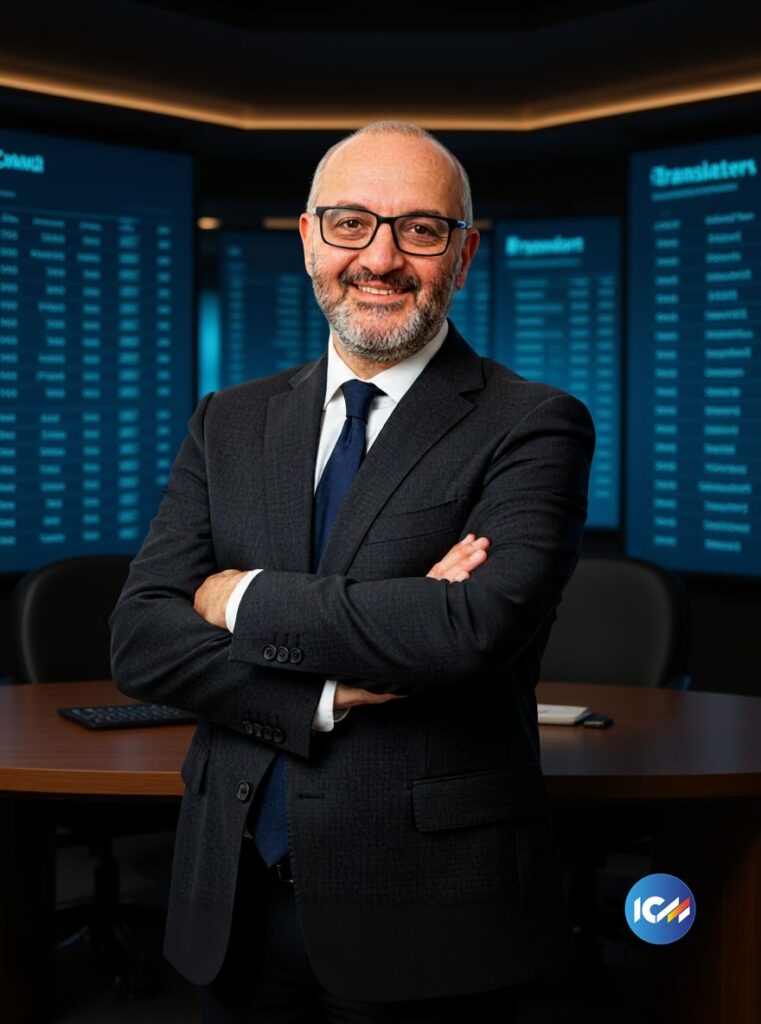
From Banking Halls to Fintech Boardrooms: A Career Journey A career in finance is rarely a straight line. It is more often a sequence of transitions, challenges, and decisions shaped by changing markets, evolving technologies, and personal growth. My professional journey began in traditional banking environments, where structure, processes, and client relationships formed the foundation of daily work. Over time, as financial services evolved, so did the context in which these skills were applied. Learning the Foundations in Traditional Banking Early experiences in banking provided a rigorous understanding of risk, compliance, and the importance of trust in financial relationships. Understanding client needs, managing expectations, and operating within well-defined regulatory frameworks were central to every transaction. These foundations continue to shape how I approach financial decision-making today. Embracing Change and Digital Transformation As digital innovation began to reshape financial services, the industry entered a period of rapid transformation. Technology altered how data was processed, how products were delivered, and how clients interacted with financial institutions. Transitioning from traditional banking environments to more technology-driven contexts required adaptability and continuous learning. Rather than resisting change, embracing it became a source of professional growth. From Execution to Strategy With digital tools automating many operational processes, the focus of financial roles increasingly shifted toward strategy, interpretation, and oversight. The ability to translate complexity into clarity became a critical skill—particularly for families, entrepreneurs, and corporates navigating increasingly sophisticated financial landscapes. The Role of Curiosity and Resilience Throughout this journey, curiosity proved to be one of the most valuable professional assets. Asking questions, challenging assumptions, and exploring new perspectives helped foster resilience in the face of change. Careers in finance demand continuous evolution, and resilience often emerges from a willingness to adapt rather than from rigid planning. Building a Career with Intention Every career is a story shaped by decisions, risks, and learning moments. Building that story with intention—combining courage, strategy, and adaptability—allows professionals to navigate change while staying aligned with their values and long-term objectives. Conclusion From banking halls to fintech boardrooms, the journey reflects the broader evolution of financial services. As the industry continues to transform, the ability to bridge experience with innovation remains a defining strength. Originally published on LinkedIn: Read the original post on LinkedIn This content is provided for informational purposes only.

