Portfolio Risk Management: A Complete Guide to Protecting Capital in Volatile Markets

Portfolio Risk Management: A Complete Guide to Protecting Capital in Volatile Markets Every investor eventually learns the same lesson, usually the hard way. Returns attract attention, but risk decides outcomes. A portfolio that grows steadily for five years can lose half of that progress in five weeks if the risk behind it was never properly understood. This is why portfolio risk management sits at the center of everything we do at Income Capital Management. It is not a department, a report or a compliance requirement. It is the discipline that determines whether a strategy survives contact with real markets. The past several weeks have offered a vivid reminder of how quickly conditions can change. A stronger than expected US jobs report pushed bond yields sharply higher, equity indexes fell across Europe and the United States, technology names that had led the market for months suffered heavy profit taking, and the dollar reasserted its role as a safe haven. Investors who had built their portfolios on the assumption of calm conditions discovered, once again, that calm is temporary. Investors who had built their portfolios around a serious risk framework were able to watch the same events with composure. This guide brings together the principles, tools and habits that define professional portfolio risk management. It draws on the themes we have been discussing with clients and partners throughout recent months: the difference between risk and noise, the central role of correlation, the value of stress testing, the strategic importance of liquidity, the stabilizing function of real assets, and the growing contribution of technology and artificial intelligence to the way risk is measured and managed. It is a long read by design. Risk is a subject that rewards depth, and shortcuts in understanding tend to become losses in practice. What Portfolio Risk Management Really Means Ask ten investors to define portfolio risk management and you will receive ten different answers. Some will talk about stop losses. Some will mention diversification. Some will describe insurance products or hedging strategies. All of these answers touch a piece of the truth, but none of them captures the whole picture. At its core, portfolio risk management is the process of deciding, in advance and with full awareness, how much uncertainty a portfolio should carry, where that uncertainty should come from, and what should happen when reality tests those decisions. It is a framework, not a product. It begins before the first investment is made and it never stops operating as long as capital remains at work. A useful way to think about it is to reverse the usual order of questions. Most investors start by asking what they can earn. Professional investors start by asking what they can lose, under which circumstances, and whether that loss would be survivable, both financially and psychologically. Only after those questions have honest answers does the conversation move to expected returns. This ordering is not pessimism. It is the foundation of durability. In our own work across Forex, Real Estate, Physical Gold, Global Growth and High Yield strategies, every allocation decision passes through the same filter. What does this position add to total portfolio risk? How does it behave when markets are stressed? What is the realistic worst case over a meaningful horizon? How quickly could it be reduced or closed if conditions demanded it? A position that cannot answer these questions clearly does not enter the portfolio, no matter how attractive its potential return appears. Risk Is Multidimensional One of the most common mistakes in portfolio risk management is treating risk as a single number. Volatility is the measure most investors know, and it is useful, but it describes only one dimension of risk: how much prices move around their average. A portfolio can have low volatility and still carry enormous risk if that risk is hidden in illiquidity, leverage, concentration or credit exposure. Professional risk management considers at least five distinct dimensions. Market risk describes how a portfolio responds to broad movements in equities, rates, currencies and commodities. Credit risk measures the possibility that borrowers or counterparties fail to meet their obligations. Liquidity risk captures how difficult and costly it would be to convert positions into cash when needed. Concentration risk reflects dependence on a single asset, sector, region or theme. Operational and structural risk covers everything from custody arrangements to the legal structure of the vehicles used. Each of these dimensions can be managed, but only if it is first measured and acknowledged. A portfolio review that looks only at performance and volatility is like a medical checkup that measures only height and weight. It produces a number, but it misses most of what matters. The Goal Is Not Zero Risk It is worth being explicit about something that experienced investors understand instinctively. The goal of portfolio risk management is not to eliminate risk. A portfolio with no risk has no return beyond cash, and over time inflation quietly converts that apparent safety into a guaranteed loss of purchasing power. Risk is the raw material of return. The question is never whether to take risk, but which risks to take, in what size, and with what compensation. This is why we describe our approach as risk budgeting rather than risk avoidance. Every portfolio has a total amount of risk that is appropriate for its owner, defined by objectives, time horizon, liquidity needs and emotional tolerance. That budget is then spent deliberately, allocated to the exposures that offer the best compensation per unit of risk. Spending the budget on a concentrated bet in a single overheated sector is one choice. Spreading it across genuinely independent sources of return is another. The budget is the same. The outcomes, over time, are radically different. Risk Versus Noise: The Distinction That Protects Both Capital and Composure Markets produce movement every day. Prices rise and fall, headlines compete for attention, and commentary fills every available channel. Most of this movement is noise: temporary fluctuation that carries no lasting information about the value
Portfolio Liquidity Management: Why Liquidity Is the Most Overlooked Strategic Asset

Ask most investors what their biggest portfolio risks are and they will describe equity market volatility, credit spreads, interest rate movements, or geopolitical events. Very few will mention liquidity. Yet time and again, across market cycles and financial crises, it is liquidity failure, not adverse price movements, that turns manageable difficulties into permanent losses. Portfolio liquidity management is one of the least glamorous and most important disciplines in investment practice, and its systematic neglect is one of the most consistent sources of avoidable financial damage. This article examines liquidity not as an afterthought or a residual balance but as a strategic asset that, when managed with intention, changes the character of a portfolio in fundamental ways. We will explore what liquidity actually means across different asset classes, how it behaves during market stress, why it creates optionality that has measurable economic value, and how to build a liquidity framework that serves both financial objectives and real-life needs. The argument throughout is not that investors should hold excessive cash but that liquidity should be a deliberate choice rather than whatever is left over after allocating to more exciting assets. What Portfolio Liquidity Actually Means Liquidity in investment portfolios refers to the ability to convert assets into cash quickly, at low cost, and at a price close to their current market value. This sounds straightforward, but each of those three conditions carries hidden complexity that becomes visible at precisely the moments when liquidity matters most. Speed matters because cash needs rarely arrive with advance notice. A business opportunity that requires capital deployment within days, a family emergency that demands immediate funds, a margin call that must be met by close of business: these are not exotic scenarios. They are routine features of complex financial lives. An investor who can only meet such needs over a period of weeks or months faces a genuine disadvantage relative to one who can act the same day. Cost matters because selling assets to raise cash is rarely free. Even in public markets, bid-ask spreads, market impact costs, and transaction fees erode the proceeds of forced liquidation. In private markets and illiquid asset classes, discount-to-appraisal sales can cost far more. An investor who must sell real estate, private equity, or hedge fund positions to raise cash may face discounts of ten to twenty percent or more from estimated fair value, particularly if the sale is time-sensitive. The true cost of illiquidity is not merely the inconvenience of waiting for proceeds but the capital destroyed when assets must be sold at unfavorable prices. Price stability matters because assets that appear liquid under normal conditions can become effectively illiquid when everyone wants to sell simultaneously. The bid-ask spread on high-yield bonds, for instance, might be thirty basis points in normal markets and three hundred basis points during a credit crisis. The number of buyers willing to purchase a secondary market stake in a private equity fund might be substantial in a benign environment and near-zero when credit is tightening and risk appetite has collapsed. Market liquidity, meaning the ability to transact at reasonable prices in reasonable size, is a conditional property that depends on broader financial conditions, not an inherent characteristic of the asset itself. The Strategic Value of Liquidity: Why It Is an Asset, Not a Cost The conventional view of liquidity treats it as a cost: you accept lower returns on liquid assets in exchange for the safety and flexibility they provide. This framing is not wrong, but it is incomplete. Liquidity has a positive, active value that goes beyond risk management. It creates optionality that can be converted into superior returns by investors who manage it with skill and discipline. Consider the investor who enters a market downturn with substantial liquidity. While less-prepared competitors are forced to sell assets to meet redemptions, cover margin calls, or fund operating needs, the liquidity-rich investor faces no such compulsion. Better: they can act as a buyer when asset prices have fallen to levels that offer exceptional value. History shows that the best buying opportunities in both public and private markets arise precisely when most investors are sellers, not buyers, which means they arise when liquidity is scarce. The investor who preserved liquidity specifically for this purpose can acquire assets at prices that generate above-average long-term returns, with the hindsight clarity that is only available to those who did not need to sell. This optionality has a precise economic value that can be estimated. Studies of market returns following severe drawdowns consistently show that investors who were able to increase equity allocation by twenty to thirty percent during major market bottoms earned returns over the subsequent three to five years that were ten to twenty percentage points higher than those who maintained static allocations. The liquidity that enabled these increases was not idle cash earning nothing: it was a call option on exceptional buying opportunities, exercisable at the investor’s discretion. Beyond market timing, liquidity creates flexibility to respond to real-life events that are entirely outside the financial markets. A family business facing an unexpected acquisition opportunity needs capital quickly. A family member developing a promising startup requires funding. A real estate acquisition at a compelling price emerges without warning. These opportunities are not available to investors who have no deployable capital. They accrue disproportionately to those who maintain liquidity not just as risk management but as active positioning. The framing of liquidity as a strategic asset also changes the way investors think about opportunity cost. When liquidity is viewed as a drag on returns, the natural tendency is to minimize it, always seeking ways to put the last increment of cash to work in higher-yielding investments. When liquidity is viewed as an asset with its own return characteristics, deriving from optionality and flexibility, the calculus changes. Holding thirty percent of a portfolio in liquid assets is not necessarily a decision to sacrifice return. It may be a decision to acquire a different kind of return: one that is
What I Learned from My First Market Crash
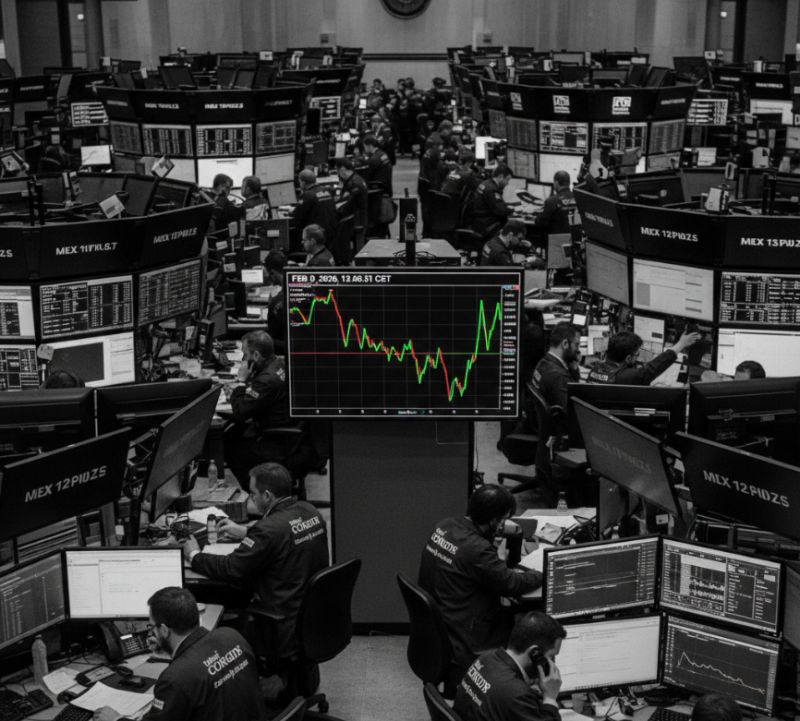
What I Learned from My First Market Crash By Paolo Volpicelli — Income Capital Management There are moments in a professional career that divide time cleanly into before and after. For investment managers, the first real market crash is one of them. Not the crashes you study in textbooks, not the drawdowns you model in spreadsheets — but the real thing. The one where client phones ring at all hours, where liquidity evaporates overnight, and where even the most carefully constructed portfolio feels suddenly fragile. My first market crash changed the way I design every strategy. Not because it destroyed everything we had built — it did not — but because it exposed every assumption I had not questioned hard enough. Here are the three lessons that have stayed with me ever since, and that now sit at the foundation of every portfolio we manage at Income Capital Management. Lesson One: Never Ignore Liquidity In calm markets, liquidity feels like a given. Assets trade freely, bid-ask spreads are tight, and the idea of not being able to exit a position seems almost abstract. The crash cured me of that illusion permanently. When fear takes hold of a market, the first thing that disappears is not price — it is the buyer on the other side of the trade. Positions that looked perfectly liquid on a Tuesday morning can become impossible to exit by Thursday afternoon. The investors who suffer most in a crash are rarely those with bad assets; they are often those with good assets held in illiquid structures, unable to rebalance, meet margin calls, or seize the opportunities that dislocated markets inevitably create. Since that experience, liquidity management has been a non-negotiable feature of everything we build. We size positions with exit conditions in mind — not just entry conditions. We maintain cash or near-cash buffers at the portfolio level. And we run regular liquidity stress tests: not just “what is the mark-to-market today?” but “what can we actually sell in the next 48 hours if we need to?” The answer to that second question is the one that matters when a crash arrives. Lesson Two: Never Underestimate Emotions The second lesson was more humbling, because it was not about the market — it was about people. Including, at times, myself. The behavioral finance literature has documented for decades what any practitioner learns quickly in a real crisis: human beings are not rational optimizers when money is on the line and uncertainty is high. Fear of loss is roughly twice as powerful as the pleasure of an equivalent gain. When portfolios are falling and headlines are screaming, the emotional pressure to sell — to “do something” — becomes almost unbearable, even for experienced professionals. I watched clients who had explicitly agreed to a long-term strategy demand to liquidate everything at the worst possible moment. I watched myself second-guess decisions that were perfectly sound simply because the noise around them had become deafening. The lesson was clear: emotions are not a sign of weakness. They are a structural feature of how human beings process risk under uncertainty. If you do not account for them in advance, they will override your strategy at the moment it matters most. This is why at Income Capital Management we invest significant time in what happens before a crisis, not during it. We have detailed conversations with every client about their real risk tolerance — not the theoretical number on a questionnaire, but the visceral answer to “how would you feel if this portfolio fell 20% in three months?” We build portfolios that clients can hold through volatility, not just portfolios that look optimal in a spreadsheet. And we establish clear communication protocols so that when markets deteriorate, the response is prepared, not improvised. Lesson Three: Never Assume “This Time Is Different” The most dangerous phrase in finance has not changed in a century: this time is different. Every speculative excess, every credit bubble, every irrational rally eventually produces a cohort of intelligent, well-credentialed people arguing that the old rules no longer apply — that structural changes in the economy, in technology, or in monetary policy have permanently altered the relationship between risk and return. They are always wrong. Not because markets cannot evolve, but because the underlying human dynamics — greed, fear, herding behavior, the compression of risk premiums in good times and the violent repricing that follows — repeat with remarkable consistency across decades and asset classes. The crash I lived through was unique in its specific triggers. It was not unique in its fundamental mechanics. Studying market history is not an academic exercise. It is one of the most practical risk management tools available. Knowing how previous credit cycles unwound, how liquidity crises have propagated, how long recoveries have historically taken — this knowledge does not predict the future, but it builds the mental resilience to avoid being surprised by it. At Income Capital Management, market history informs every scenario analysis we run and every stress test we apply to our strategies. From Lessons to Practice: Stress Tests, Contingency Plans, and Honest Conversations The three lessons above are not simply philosophical reflections. They translate directly into how we operate. Stress tests are now a standard part of every strategy we design. Before any portfolio goes live, we model what happens under a range of adverse scenarios: sharp equity drawdowns, credit spread widening, currency dislocations, liquidity freezes. The goal is not to predict which scenario will occur — it is to ensure that no single scenario produces an outcome that would force a client to abandon their strategy at the worst possible moment. Contingency plans are the operational response layer. For each stress scenario, we pre-define the actions we would take: which positions would be reduced first, which hedges would be activated, how client communication would be structured. Having these plans in place before a crisis means that when volatility arrives, we are executing a prepared response — not making high-stakes

