The Hidden Strength of Patience in Investing

The Hidden Strength of Patience in Investing Of all the qualities that separate successful investors from the rest, patience is the least glamorous and the most consistently underestimated. It produces no stories worth telling. It generates no activity to point at. For long stretches it looks, from the outside, exactly like doing nothing, and that resemblance is precisely why so few investors manage it. But patience in investing is not inactivity. It is discipline extended through time: the willingness to let a strategy work through its full cycle instead of interrupting it every time the market produces a reason to. And the evidence suggests it matters more than most of the decisions investors agonize over. The action bias Markets create a permanent illusion of urgency. Prices move every second, headlines demand responses, and every week delivers a development that seems to require repositioning. Against that backdrop, holding steady feels negligent, and acting feels responsible, regardless of whether the action improves anything. Psychologists call this the action bias: in uncertain situations, doing something feels safer than doing nothing, even when doing nothing is objectively the better choice. Professional environments amplify it, because activity is visible and defensible while patience looks like inattention. A manager who trades constantly appears engaged; one who holds a well-built position through noise has to explain the silence. The financial cost of this bias has been measured for decades. Studies of brokerage accounts consistently find that the most active traders earn the worst net returns, with the gap explained almost entirely by the trading itself: transaction costs, poorly timed entries and exits, and the systematic tendency to sell what is about to recover and buy what is about to cool. Most underperformance does not come from acting too slowly. It comes from acting too often. What impatience actually costs The damage of impatience arrives through channels that rarely appear on any statement, which is why it goes unnoticed for so long. The first channel is interruption. Every strategy, including excellent ones, spends meaningful time behind its benchmark or under water. An investor who abandons the approach during those stretches converts a normal phase of the cycle into a realized loss, then typically re-enters something else just in time for its own difficult phase. Repeated across years, this cycle of switching is one of the most reliable destroyers of long-term results. The second channel is compounding denied. Returns compound only on capital that stays invested through the process that generates them. Money that is constantly redeployed spends a surprising share of its life in transition: out of the market, in the wrong position, or paying the costs of moving. Time in a working strategy is not the passive part of investing. It is the mechanism through which everything else pays off. The third channel is decision fatigue. Every unnecessary decision is another opportunity for a behavioral mistake, another moment where fear or overconfidence can enter the process. Reducing the number of decisions, by making fewer and better ones, mechanically reduces the number of errors. This is the quiet logic behind the argument we made in our article on investment discipline: consistency beats brilliance, and consistency requires the discipline to not act. Patience is a component of process, not a substitute for it There is an important distinction here, because patience without structure is just stubbornness with better branding. Holding a position through a difficult period is rational only when the original thesis still stands and the risk framework confirms the exposure remains within limits. Holding it because selling would admit a mistake is not patience; it is denial, and it produces the deep drawdowns that patience is supposed to prevent. The difference between the two is not a feeling. It is a process: defined review dates, written criteria for what would invalidate the position, and risk limits that act independently of anyone’s attachment to the trade. Inside such a process, patience becomes precise. The strategy is given time because time is what the strategy was designed to use, and it is interrupted only by its own rules, never by the market’s noise or the investor’s discomfort. This is the framing we developed in our article on why process beats prediction: judgment operates on the process, on schedule, while the positions themselves are protected from the mood of the moment. Time as part of the strategy Seen this way, time stops being the passive backdrop of investing and becomes an input, as deliberate as position sizing or diversification. A strategy has a natural horizon over which its edge expresses itself, and running it for less than that horizon means paying its costs without collecting its returns. Committing to the horizon in advance, and building the liquidity and risk structure that makes the commitment survivable, is what allows patience to be a plan rather than a hope. It is the same argument, from a different angle, that we made about long-term investing: simplicity, discipline, and time do most of the work that complexity keeps promising. Markets reward many things unreliably. Patience, applied inside a sound process, is one of the few they reward with consistency, precisely because it is so rare. Everyone can buy the same instruments. Not everyone can hold them through the part of the cycle that pays. This article expands on a recent LinkedIn post by Paolo Volpicelli on the hidden strength of patience in investing. This article is provided for informational and educational purposes only. It does not constitute investment advice, an offer, or a solicitation to invest in any product or service. Income Capital Management s.r.o. is registered under §15 of the Czech Act on Investment Companies and Investment Funds (ZISIF). Past performance is not indicative of future results. Investing involves risk, including the possible loss of capital.
Long Term Investing in 2026: Why Simplicity, Diversification and Risk Discipline Matter More Than Ever

Long Term Investing in 2026: Why Discipline and Simplicity Matter More Than Ever One of the easiest mistakes investors can make is believing that good investing should feel exciting all the time. Financial markets today move inside a constant flow of information where every inflation release, political statement, central bank meeting or geopolitical tension immediately becomes urgent news. The speed of information creates the impression that portfolios constantly need to be adjusted and that successful investing depends on reacting faster than everyone else. In reality, long term investing usually works very differently. Most of the time, strong results do not come from dramatic decisions. They come from consistency, discipline and the ability to remain rational while markets become emotional. That sounds simple in theory, but in practice it becomes surprisingly difficult when volatility increases and uncertainty dominates headlines for weeks or months. This has been particularly visible throughout 2026. Inflation concerns, changing interest rate expectations, geopolitical instability and uneven global growth have created an environment where many investors feel permanently uncomfortable. Markets continue moving between optimism and caution, often reacting aggressively even to relatively small economic surprises. In this type of environment, investors naturally begin asking themselves difficult questions. Should exposure be reduced. Should more cash be held. Is diversification still working. Are markets becoming too risky. Is this temporary volatility or the beginning of a larger structural shift. These are legitimate concerns. But they also highlight an important reality about investing. The biggest challenge is often not the market itself. The biggest challenge is how investors behave while markets become uncertain. Why Investors Often Overreact to Macro Data Modern markets react instantly to economic information. Inflation numbers, employment data, GDP revisions and central bank comments are immediately reflected across bonds, currencies and equities. The problem is that investors sometimes interpret every data release as if it completely changes the long term outlook. Good macro analysis does not work that way. A single inflation report rarely tells the full story. A single weak economic number does not automatically signal recession. Strong markets are not built on isolated data points. They are built on trends, consistency and broader economic conditions. One of the most dangerous habits in investing is emotional interpretation of short term information. Investors see a negative headline and immediately feel pressure to act. The reality is that markets frequently overreact before finding balance again once more context becomes available. This is why serious macro analysis focuses less on isolated numbers and more on direction. The real objective is understanding whether the broader environment is improving, deteriorating or simply moving through temporary noise. When investors lose that perspective, portfolios become reactive instead of strategic. Diversification Is More Important Than Most Investors Realize Diversification is one of the most repeated concepts in finance, but it is also one of the least understood. Many people think diversification simply means owning more positions. In reality, owning many assets that all react the same way during stress is not true diversification. It only creates the illusion of safety. Real diversification comes from combining exposures that behave differently under changing market conditions. Currencies react differently to inflation and rates compared to equities. Real assets respond differently to liquidity conditions compared to credit markets. Gold behaves differently during geopolitical uncertainty than growth-oriented sectors. The objective is not to own more things. The objective is to avoid depending too heavily on one single outcome. This is particularly important during periods like 2026 where markets continue shifting rapidly between different macro narratives. Some weeks inflation dominates attention. Other weeks investors focus on growth concerns, geopolitical risk or liquidity expectations. A concentrated portfolio becomes vulnerable very quickly when the dominant narrative changes unexpectedly. A diversified portfolio does not eliminate volatility completely. That would be impossible. What it does is create resilience. It reduces fragility and gives investors more flexibility to navigate uncertainty without making emotional decisions every time conditions change. Why Simplicity Often Leads to Better Decisions One of the more interesting patterns in wealth management is that investors often associate complexity with sophistication. There is a tendency to believe that a complicated portfolio must automatically be more advanced or more intelligent. In practice, complexity often creates confusion rather than quality. Portfolios overloaded with unnecessary structures, excessive overlapping exposures or products that investors do not fully understand usually become difficult to manage emotionally during volatile periods. This matters much more than people realize. When markets become unstable, investors naturally search for clarity. If a portfolio feels confusing, every market movement starts generating anxiety. Investors become more vulnerable to impulsive decisions because they are no longer fully confident about what they own or why they own it. The strongest portfolios are often surprisingly simple. Not simplistic, but simple. Every exposure has a purpose. Every asset class plays a role. The investor understands how different components behave and why they are present inside the allocation. That clarity becomes extremely valuable during stressful environments because it supports discipline when emotions begin dominating the market narrative. Risk Management Is About Preparation, Not Prediction Many investors think risk management means predicting market crashes before they happen. In reality, prediction is only a very small part of effective portfolio management. Good risk management is mostly about preparation. Market stress rarely appears all at once. It usually develops gradually through smaller signals that become visible beneath the surface before volatility fully explodes. Credit conditions begin tightening. Market breadth weakens. Liquidity becomes less abundant. Leadership narrows. Prices start disconnecting from fundamentals. These signals matter because they help investors understand whether fragility inside the market is increasing. The objective is not to predict every correction perfectly. Nobody can do that consistently. The objective is to avoid being completely surprised when conditions deteriorate meaningfully. This approach changes the way portfolios are managed. Instead of reacting emotionally after volatility becomes obvious to everyone, disciplined investors gradually adjust exposure when evidence starts accumulating. Sometimes that means reducing concentration. Sometimes it means increasing liquidity. Sometimes it simply means becoming more
Political Risk Investing: How to Build a Disciplined Portfolio Strategy in an Uncertain World

Political Risk Investing: How Discipline Helps Investors Navigate Uncertainty Political risk is one of the most visible and emotionally charged forces in financial markets. Elections, policy changes, geopolitical tensions and unexpected government decisions can quickly dominate headlines and create the feeling that investors should react immediately. But not every political event deserves a portfolio adjustment. This is one of the most important lessons in political risk investing. The real issue is not whether something political has happened. Something is always happening. The real question is whether that event changes the economic conditions that matter for investors. At Income Capital Management, we believe political risk should be analysed through a disciplined framework rather than through emotion. Headlines can create anxiety, but portfolios should not be managed by anxiety. They should be managed through process, clarity and long term thinking. What Political Risk Really Means for Investors Political risk is often misunderstood because investors tend to focus on the event itself. An election result, a geopolitical escalation, a new regulation or a government announcement can all feel important in the moment. However, markets are not affected by events simply because they are visible. Markets are affected when events change expectations around growth, inflation, liquidity or capital flows. This distinction is essential. A political event may generate volatility for a few days without changing the long term direction of asset prices. Another event, less dramatic in the media, may change taxation, regulation, trade relationships or investor confidence in a way that has more durable consequences. Good political risk investing is not about reacting faster than everyone else. It is about understanding what actually matters. The Three Questions We Ask When we evaluate political risk, we do not start from the headline. We start from three practical questions. Does this event affect economic growth? Does it affect inflation? Does it affect capital flows? If the answer to these questions is no, the event may still create short term market noise, but it is less likely to justify a structural change in portfolio strategy. If the answer is yes, then the event deserves deeper analysis. Growth: The First Layer of Analysis Economic growth remains one of the key drivers of long term investment performance. Political decisions can influence growth through public spending, taxation, regulation, trade policy and business confidence. For example, a government that introduces investment incentives may support corporate activity. A policy shift that increases uncertainty for businesses may reduce capital expenditure. Trade restrictions can affect supply chains and corporate margins. The important point is not whether the policy is popular or unpopular. The important point is whether it changes the growth outlook in a meaningful way. If growth expectations change, asset allocation may need to be reviewed. Equities, credit, real estate and currencies may all respond differently depending on the direction and persistence of the change. Inflation: The Second Layer Inflation is often where political risk becomes more persistent. Energy policy, fiscal expansion, tariffs, public subsidies and trade restrictions can all influence inflation dynamics. This matters because inflation affects central bank decisions, and central bank decisions affect liquidity, rates, bonds, currencies and equity valuations. A temporary political shock may not change much. But a political decision that increases inflation pressure can have a much deeper effect. When inflation expectations move, portfolios often need to be reassessed. Duration risk, currency exposure, real assets and liquidity positioning all become more relevant. Capital Flows: The Signal Investors Should Not Ignore The third lens is capital flows. Markets ultimately move because capital moves. Investors allocate money where they see credibility, stability, opportunity and acceptable risk. When political uncertainty increases, capital may move away from a region, a currency or an asset class. This is why capital flows are often more useful than commentary. Opinions can be loud. Capital movement is more concrete. If investors begin reducing exposure to a market because political credibility is weakening, that matters. If a currency starts reflecting persistent capital outflows, that matters. If bond spreads widen because investors are demanding higher compensation for risk, that matters. Political risk becomes relevant when it begins to change where capital wants to go. Why Investors Often Overreact Most investors do not make mistakes because they lack information. They make mistakes because they react to information under pressure. A drawdown feels uncomfortable. A negative headline feels urgent. A geopolitical event creates fear. Someone else’s portfolio seems to be doing better. Suddenly, changing strategy feels like the responsible thing to do. Sometimes it is. Often it is not. Before changing strategy, the right question is simple: has your life changed, or only the market mood? If your objectives, time horizon, liquidity needs and risk capacity remain the same, a drastic change may do more harm than good. This does not mean portfolios should never change. They should. But changes should be based on structural reasons, not emotional triggers. Clarity, Discipline and Partnership In uncertain markets, investors need a framework they can trust. At Income Capital Management, we summarise our approach through three commitments: clarity, discipline and partnership. Clarity means investors should understand what they own and why they own it. A portfolio should not feel like a black box. Every allocation should have a purpose. Discipline means investment decisions should follow a documented process, not emotion. The market will always create pressure. A process helps prevent that pressure from becoming impulsive action. Partnership means the relationship with investors is not transactional. Wealth management is a journey that requires communication, context and trust over time. These principles guide how we think about Forex, Real Estate, Gold, Global Growth, High Yield and non-discretionary advisory. Different strategies have different roles, but the framework remains the same. Strategy Should Follow Life, Not Fear One of the most common reasons investors change strategy is discomfort. A market correction creates discomfort. A bad headline creates discomfort. A period of underperformance creates discomfort. But discomfort is not always a signal that something is wrong. Sometimes it is simply part of investing. The real
Love Your Investments: Building Lasting Relationships with Your Portfolio

Love Your Investments: Building Lasting Relationships with Your Portfolio Valentine’s Day is often associated with romantic symbolism — flowers, promises, and grand gestures. In finance, the word “love” may seem misplaced. Yet the concept of lasting commitment, patience, and mutual understanding has surprising relevance in the world of long-term investing. Portfolios, like relationships, thrive not because of intensity, but because of consistency. The Myth of Instant Attraction in Investing Many investment decisions begin with excitement. A new fund, a promising sector, an emerging market opportunity — each carries the appeal of novelty. Just as in relationships, initial enthusiasm can create a powerful emotional pull. However, history repeatedly shows that sustainable wealth is not built on short-term excitement. It is built on structured commitment. Markets reward patience more reliably than impulsiveness. A portfolio that constantly changes direction in pursuit of the next opportunity rarely develops depth or resilience. Commitment as Strategic Discipline Commitment in investing does not mean blind loyalty to underperforming assets. It means adhering to a structured allocation framework through market cycles. At Income Capital Management, disciplined commitment manifests in: Defined asset allocation ranges. Regular review processes. Transparent communication during volatility. Measured rebalancing rather than emotional repositioning. This approach mirrors a long-term partnership. Both sides understand that fluctuations occur, but structure provides stability. Trust Between Advisor and Client In relationships, trust is cumulative. It develops through transparency and shared expectations. The same principle governs advisor-client dynamics. Clients who understand the purpose of each allocation — Forex, Real Estate, Physical Gold, Global Growth, High Yield — are less vulnerable to fear-driven decisions. Trust reduces reactive behavior. It creates psychological resilience. Regular Engagement Prevents Drift Relationships deteriorate when communication fades. Portfolios suffer similarly when left unattended. Periodic portfolio reviews serve multiple purposes: Reaffirming long-term goals. Adjusting for life changes. Rebalancing allocations to maintain strategic alignment. Reassessing risk tolerance. Without engagement, portfolios drift from original objectives — not because markets fail, but because circumstances evolve. Understanding Volatility as Emotional Testing Volatility is the emotional test of every investor. Market drawdowns feel personal. Headlines amplify uncertainty. Yet volatility is not betrayal. It is a structural feature of capital markets. When investors internalize this reality, they stop perceiving temporary underperformance as failure. Instead, they evaluate whether the original thesis remains intact. Mutual Responsibility Successful advisory relationships are collaborative. Advisors provide structure, analysis, and risk frameworks. Clients provide clarity regarding goals, time horizon, and liquidity needs. When both roles are respected, outcomes improve. Long-Term Wealth Is Emotional Stability Beyond financial metrics, disciplined portfolio relationships cultivate psychological stability. Investors who trust their framework experience less anxiety during market turbulence. Emotional stability enhances decision quality. Love the Process, Not the Outcome Focusing exclusively on short-term performance is analogous to evaluating a relationship solely on daily mood fluctuations. Long-term investing requires appreciation of process — risk management, diversification, scenario analysis — rather than obsession with quarterly returns. The Role of Patience Compounding requires time. Time requires patience. Patience requires conviction. Conviction arises from understanding. When investors fully understand their portfolio structure, patience becomes rational rather than forced. Conclusion: Stability Through Commitment Lasting wealth is built through sustained engagement, structured discipline, and trusted partnership. Just as enduring relationships are grounded in respect and shared values, enduring portfolios are grounded in clarity, risk awareness, and long-term alignment. In investing, as in life, love is not intensity. It is commitment sustained over time. LinkedIn Post: https://www.linkedin.com/posts/incomecapital_portfolio-commitment-investments-activity-7427985167228579840-Pg5d
Risk Management and Consistency: The Foundations of Sustainable Investment Results

Risk Management and Consistency: The Foundations of Sustainable Investment Results Investment performance is often judged by returns alone. However, over full market cycles, it is risk management—not return maximization—that ultimately determines the sustainability of results. In an environment characterized by frequent volatility, rapid sentiment shifts, and geopolitical uncertainty, the ability to control downside exposure becomes a decisive competitive advantage. Why Risk Management Comes First Every investment strategy operates within uncertainty. The difference between durable performance and capital erosion lies in how risk is identified, measured, and managed. Effective risk management is not reactive. It is embedded into portfolio construction and execution through: Defined exposure limits aligned with volatility Diversification across instruments and risk drivers Continuous monitoring and adjustment of positions This framework allows portfolios to remain operational even when market conditions deteriorate. Consistency Across Market Cycles Short-term results can be influenced by favorable market phases. Consistency, however, is achieved only through disciplined execution across multiple cycles. Strategies that prioritize repeatability over opportunistic risk-taking are better positioned to deliver stable outcomes over time. Capital Preservation as a Strategic Objective Preserving capital during adverse phases is not a defensive stance—it is a strategic choice that enables long-term participation. By limiting drawdowns and avoiding forced decisions, portfolios maintain the flexibility required to reallocate capital when opportunities emerge. Risk Management and Investor Alignment Transparent risk frameworks also strengthen alignment between investors and portfolio managers. When risk parameters are clearly defined and consistently applied, investors can evaluate performance with a full understanding of the trade-offs involved. Final Considerations In uncertain markets, consistency is rarely accidental. It is the outcome of structured processes, disciplined risk controls, and a long-term perspective that prioritizes durability over short-term excitement. Original LinkedIn post: Read the original discussion on LinkedIn INCOME CAPITAL MANAGEMENT
Investment Returns: €10,000 Then vs Now — A 10-Year Comparison
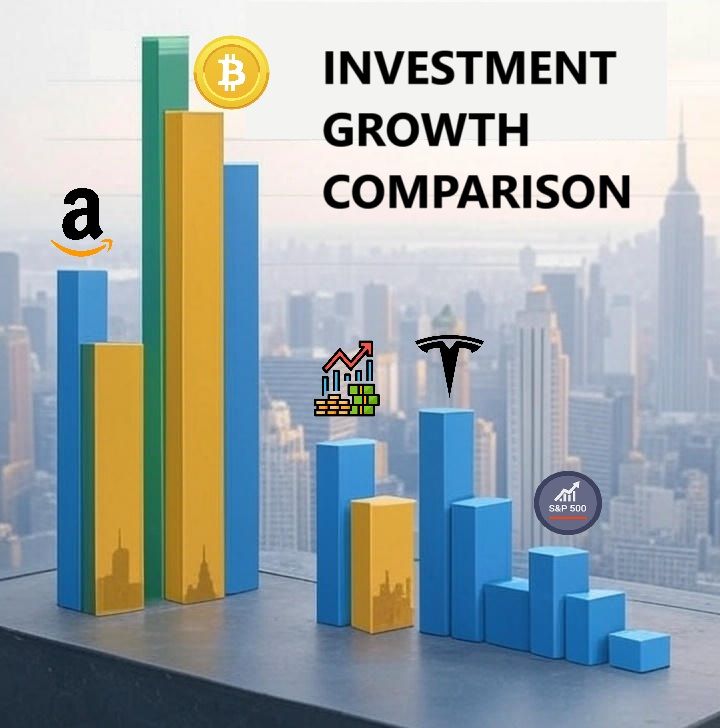
Investment Returns: €10,000 Then vs Now — A 10-Year Comparison Time is one of the most powerful variables in investing. Looking back over the past decade, the difference between asset classes becomes striking when performance is measured over a full market cycle rather than short-term movements. This analysis addresses a simple but fundamental question: What would €10,000 invested ten years ago be worth today? The comparison below highlights how different assets have behaved over time, illustrating the impact of growth, volatility, and risk management. Stock Market Indices Equity markets delivered solid long-term growth, with notable differences between regions. NASDAQ Composite: approximately +261% over 10 years S&P 500: approximately +170% over 10 years FTSE 100 (London): approximately +45% over 10 years FTSE MIB (Milan): approximately +50% over 10 years The data confirms the structural outperformance of U.S. markets, largely driven by technology and innovation-led growth. Individual Stocks Selecting individual equities amplified returns significantly, while also increasing volatility and concentration risk. Amazon: approximately +1,561% over 10 years Apple: approximately +1,193% over 10 years Microsoft: approximately +1,334% over 10 years Alphabet (Google): approximately +872% over 10 years Tesla: approximately +13,895% over 10 years These outcomes highlight the power of innovation — and the importance of managing downside risk when exposure is concentrated. Bitcoin Bitcoin represents the most extreme example of asymmetric risk and return. Bitcoin: approximately +39,800% over 10 years Such performance came with extreme volatility, sharp drawdowns, and regulatory uncertainty — factors that require careful sizing within a diversified portfolio. Gold Gold continued to serve as a long-term store of value and defensive asset. Gold: approximately +126% total return over 10 years While returns were lower than equities, gold provided stability during periods of inflation and market stress. Real Estate (Value Appreciation) Property markets delivered mixed results depending on geography and local fundamentals. New York: approximately +35% over 10 years London: approximately +40% over 10 years Milan: approximately +25% over 10 years Dubai: approximately +90% over 10 years Dubai stands out for its strong appreciation, supported by international capital flows and favorable economic policies. The Income Capital Forex Fund Perspective Based on historical assumptions, a €10,000 investment in the Income Capital Forex Fund over the same ten-year horizon would have generated approximately +500%. This performance would place the strategy: Above traditional equity indices Well ahead of gold and most real estate markets Below high-volatility assets such as Bitcoin The differentiating factor remains a disciplined framework combining active management, structured risk control, and consistent execution. Key Takeaways High Risk, High Reward: Crypto and select equities delivered exceptional returns, but with extreme volatility. Technology Leadership: Innovation-driven companies reshaped long-term equity performance. Stability vs Growth: Gold and real estate offered resilience rather than explosive growth. Diversification Matters: Balanced portfolios reduce volatility while preserving long-term opportunity. Final Consideration Investment success is not about chasing the best-performing asset, but about constructing a portfolio that aligns risk, time horizon, and objectives. Consistency, diversification, and discipline remain the foundations of long-term capital growth. Original LinkedIn post: View the discussion on LinkedIn

