Why Execution Quality Matters in Currency Markets
Why Execution Quality Matters in Currency Markets Take two portfolio managers with the same idea, the same entry level, the same size and the same exit. On paper their trades are identical. In practice their results are not, because between the decision and the account statement sits execution: the spread paid, the slippage absorbed, the moment chosen, the counterparty used. In most markets this difference is treated as rounding. In currency markets, where positions are large, trades are frequent and margins are structural rather than spectacular, it is nothing of the sort. At TradeTech FX Europe 2026 in Amsterdam, which we covered in detail in our conference review, one theme kept surfacing across sessions and conversations: execution quality is becoming a competitive advantage in institutional currency markets, not an operational detail. This article explains what that phrase actually means, why the industry has reached that conclusion, and what disciplined execution looks like in practice. What execution quality actually is Execution quality is the difference between the price a strategy assumes and the price a portfolio actually gets. It is made of components that are individually small and easy to ignore. The first is the spread, the visible cost of crossing from bid to offer. The second is slippage, the drift between the price observed when the decision is made and the price at which the order fills. The third is market impact, the way an order itself moves the price against the trader, which grows with size and shrinks with patience. The fourth is the reliability of the fill: rejection rates, requotes, and the behavior of a counterparty in the seconds when markets move fastest. None of these appears as a line item on a performance report. All of them are paid. That is what makes execution quality unusual among portfolio costs: it is real, recurring and largely invisible unless it is deliberately measured. Why small numbers become large ones The arithmetic is unforgiving. A cost of a fraction of a pip per trade sounds negligible, and on a single transaction it is. But currency portfolios trade continuously: positions are opened, adjusted, hedged and closed through the year, and in leveraged structures the notional traded is a multiple of the capital deployed. Multiply a tiny per-trade cost by thousands of trades on amplified notional and the result is no longer a rounding error. It is a permanent drag that compounds against the portfolio with the same patience that returns compound for it. This is also why execution quality cannot be evaluated by anecdote. A trader remembers the fill that went wrong, not the accumulated centimeters lost on the fills that went slightly worse than they should have. Only systematic measurement, what the industry calls transaction cost analysis, makes the invisible visible: comparing every fill against the prevailing market at the moment of the decision, aggregating the differences, and attributing them to venues, counterparties, times of day and order types. Why institutions now treat it as an edge For years, execution was considered plumbing: necessary, unglamorous, delegated. What changed, and what Amsterdam made explicit, is the recognition that in a market where genuine predictive edges are rare and fragile, the edges that persist are structural. Nobody can guarantee being right about direction more often than competitors. A firm can, however, systematically pay less to implement its decisions than competitors pay to implement theirs, and that advantage does not decay when it becomes known. There is a second reason, and it connects directly to a subject we have examined before: liquidity. Execution quality is where liquidity risk stops being abstract and becomes a number. Our article on what happens when liquidity disappears argued that liquidity measured in calm conditions is a promise rather than a property. Execution data is how that promise is tested. Spreads that widen tenfold in stress, counterparties that reject orders exactly when hedging matters most, depth that evaporates around data releases: these show up first, and sometimes only, in execution records. A firm that measures its execution is also, whether it intends to or not, continuously auditing its access to liquidity. What disciplined execution looks like Good execution is not heroic trading. It is a set of unspectacular habits applied without exception. It starts with measurement, because what is not measured cannot be managed and will quietly deteriorate. It continues with counterparty and venue selection reviewed against evidence rather than relationships: who actually provides depth when conditions tighten, not who provides it when nothing is happening. It includes decisions about order size and timing, trading in a way that respects the market’s capacity to absorb an order instead of forcing it. And it includes knowing when not to trade at all, because the most expensive fills cluster in the moments when liquidity is thinnest and urgency is highest. Readers of this blog will recognize the pattern. This is the same logic we described in why process beats prediction, applied one layer deeper in the machinery: rules designed in calm conditions, applied in all conditions, precisely because discretion is least reliable when pressure is greatest. The quiet part of performance Execution quality will never be the exciting part of currency management. No investor asks about slippage in a first meeting, and no headline is written about a spread paid well. But over any meaningful horizon, the portfolios that endure are the ones that stop leaking, and execution is one of the few places where a manager’s discipline translates into basis points with near certainty rather than probability. That is why we treat execution as part of the investment process itself, measured and reviewed like any other risk, and why we found it significant that the institutional market has publicly arrived at the same view. When an industry’s most sophisticated participants start competing on how well they implement decisions rather than only on which decisions they make, it says something about where durable advantages actually live. This article expands on Nicola Pinchi’s reflections following TradeTech FX Europe 2026. This
What TradeTech FX Europe 2026 Told Us About Institutional Currency Markets
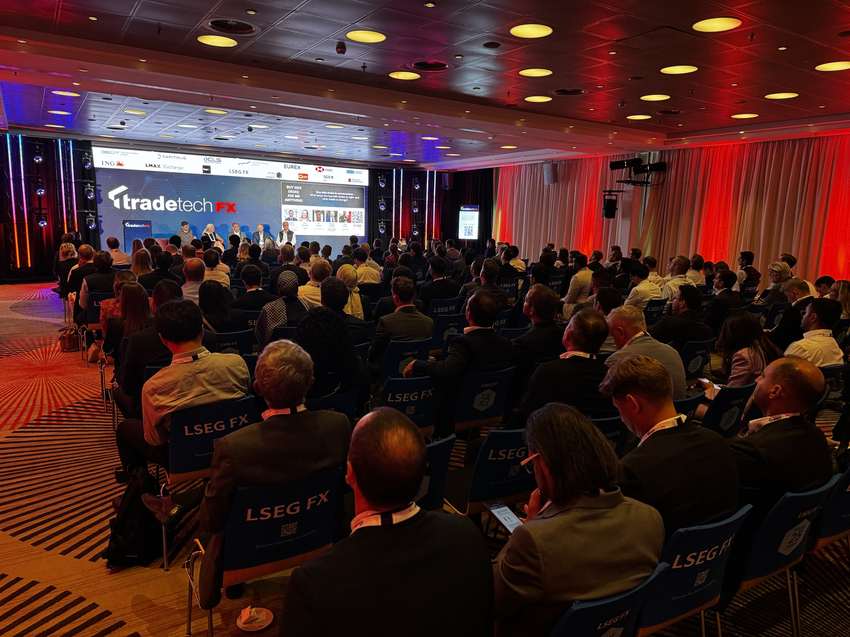
What TradeTech FX Europe 2026 Told Us About Institutional Currency Markets In mid-September, Income Capital Management attended TradeTech FX Europe 2026 in Amsterdam, Europe’s largest gathering of the institutional currency market: three days at the Mövenpick Hotel and ijVENUES, around eight hundred participants, more than thirty sessions and ninety speakers drawn from asset managers, hedge funds, pension funds, banks, corporate treasuries and technology providers. We attend events like this for a simple reason. Currency markets are decentralized by nature; there is no single exchange floor where the industry becomes visible. Once a year, this conference comes close, and three days of sessions and conversations compress more information about where institutional FX is heading than months of reading. This article is what we brought home: the three themes that dominated the event, and what they confirm about how currency portfolios should be run. Liquidity was the center of gravity If the 2026 edition had one center of gravity, it was liquidity: how to access it, what it costs, and how its structure keeps changing. Session after session returned to the same cluster of questions, from liquidity access and credit constraints to the mechanics of FX swaps and the way market structure keeps fragmenting across venues and bilateral relationships. The tone of those discussions is worth reporting, because it has shifted. Liquidity is no longer treated as a background condition that execution desks worry about; it is discussed as a first-order portfolio risk, priced, planned and stress-dependent. That matches the position we have argued on this blog for months, most directly in our article on what happens when liquidity disappears: liquidity measured in calm conditions is a promise, not a property, and the institutions that treat it as a design input rather than an assumption are the ones that keep their options in stressed markets. Our own conversations on the floor, with prime services desks and institutional liquidity providers, pointed the same way. The questions that matter in those relationships are structural: depth under stress, credit terms, what happens to pricing when volatility arrives. The industry is converging on the view that access to robust liquidity is part of a fund’s architecture, as much as its strategy is. AI moved from promise to plumbing The second theme was artificial intelligence, and the interesting part was not its presence, which was expected, but its tone. The conversation has moved from prediction to plumbing: the practical application of AI in pre-trade analytics, workflow automation, execution quality and data infrastructure, rather than grand claims about machines that forecast markets. That evolution deserves to be noticed, because it quietly concedes a point this blog has made repeatedly. The durable edge in currency markets does not come from knowing what happens next; decades of evidence say nobody reliably does, as we documented in our article on why process beats prediction. What AI is actually being deployed to do, in the institutions presenting at Amsterdam, is make the process better: faster analysis before a trade, cleaner execution during it, sharper measurement after it. The technology is upgrading the machinery around decisions, not replacing the discipline that decisions require. A tool that strengthens a process is valuable; a tool sold as a substitute for one is a warning sign, and the institutional market seems to have learned the difference. Geopolitics, and the humility it is teaching The third thread running through the agenda was geopolitical uncertainty and its impact on trading strategies: policy divergence, fragmenting trade relationships, and the recognition that macro regimes are shifting faster than models built on the last decade can track. What struck us was not the analysis itself but the posture behind it. Very few speakers offered confident forecasts. The prevailing question had become the one we consider correct: not “what will happen” but “how do we build portfolios that survive whichever version happens.” Scenario thinking, hedging frameworks and regime-aware risk limits dominated the discussion, which is the institutional vocabulary for something we wrote about recently in preparing portfolios for the final quarter: preparation over prediction, structure over sentiment. When the most sophisticated participants in a market collectively lower their confidence in forecasting and raise their investment in resilience, that is information in itself. What three days in Amsterdam confirm Stepping back, the three themes are one theme. Liquidity as architecture, AI as process infrastructure, geopolitics answered with preparation rather than conviction: each is the institutional market arriving, from a different direction, at the same conclusion. Outcomes in currency markets are decided by structure, and the industry’s best participants are investing in structure. For a firm like ours, the value of being in that room is twofold. The conversations themselves, with the banks, providers and managers who make up the market’s infrastructure, are how operating relationships stay current. And the aggregate signal, what eight hundred professionals collectively choose to discuss for three days, is the closest thing currency markets offer to a statement of direction. This year’s statement was clear, and it happens to describe the way we already work. We left Amsterdam with new contacts, several ideas worth testing, and one conviction reinforced: the fundamentals of professional currency management do not change with the headlines. Structure, liquidity, discipline and process were the agenda in Amsterdam, and they are the agenda every other week of the year as well. This article follows Nicola Pinchi’s participation at TradeTech FX Europe 2026 and expands on his LinkedIn post ahead of the event. This article is provided for informational and educational purposes only. It does not constitute investment advice, an offer, or a solicitation to invest in any product or service. Income Capital Management s.r.o. is registered under §15 of the Czech Act on Investment Companies and Investment Funds (ZISIF). Past performance is not indicative of future results. Investing involves risk, including the possible loss of capital.

