How to Turn Market Noise into Actionable Investment Signals

How I Turn Market Noise into Actionable Signals Modern investors live in an era of unprecedented information abundance. Financial news travels instantly across global networks, analysts publish opinions around the clock, and social media constantly amplifies market commentary. Every day, investors are exposed to thousands of headlines, forecasts, predictions, and so-called “hot takes” about financial markets. At first glance, this may appear beneficial. After all, access to information has historically been considered an advantage in investing. However, the reality is more complex. The modern challenge is not the scarcity of information, but the overwhelming volume of it. For many investors, the constant flow of financial news becomes more confusing than helpful. Contradictory opinions appear within minutes of each other. One analyst predicts a recession while another forecasts rapid economic expansion. Headlines highlight market volatility while long-term data may tell a completely different story. In this environment, the real skill in investing is not simply collecting information. It is the ability to filter it. Transforming noise into clear, actionable signals is one of the most important tasks of professional portfolio management. The Problem with Financial News Overload Information overload affects both individual investors and institutional professionals. Markets react instantly to breaking news, central bank speeches, geopolitical developments, economic indicators, and corporate earnings announcements. Yet most of these events are short-term signals that can distract from long-term strategy. When investors attempt to react to every piece of news, they often end up making impulsive decisions that undermine disciplined portfolio construction. Markets move quickly, and reacting emotionally to daily headlines can result in unnecessary trading, increased transaction costs, and poor timing. This is why professional investors must build structured frameworks for interpreting information. The objective is not to follow every news cycle. The objective is to identify which signals genuinely matter. From Noise to Strategy The process of turning market noise into actionable investment signals begins with filtering. Not every headline deserves equal attention. Professional investment analysis relies on structured frameworks that prioritize data over opinion. At Income Capital Management, the decision-making process combines multiple layers of analysis. Each layer helps transform fragmented information into a coherent strategy. These layers include: Macroeconomic indicators Sector and market trends Quantitative models ESG and structural data Risk management metrics By integrating these perspectives, investors can move beyond short-term market commentary and focus instead on meaningful signals. Macroeconomic Indicators as Strategic Anchors Macroeconomic data forms the foundation of long-term investment decisions. Indicators such as inflation rates, interest rate expectations, employment data, and economic growth projections provide essential context for market movements. For example, central bank policies often drive major asset class performance. When inflation rises above central bank targets, monetary authorities typically tighten policy by raising interest rates. Higher interest rates can influence currency valuations, credit spreads, and equity market dynamics. Similarly, economic slowdown signals can affect corporate earnings expectations and investor risk appetite. Understanding these macroeconomic dynamics allows investors to interpret financial news within a broader framework. Rather than reacting to isolated headlines, macro indicators help investors identify structural trends shaping market behavior. Sector Trends and Structural Shifts Beyond macroeconomic indicators, sector-level trends play an important role in identifying investment opportunities. Global economies continuously evolve as technology, demographics, and policy changes reshape industries. For instance, renewable energy investments have gained momentum due to climate policies and technological advances. Meanwhile, artificial intelligence and digital infrastructure have created new opportunities within technology and data sectors. By tracking sector-level developments, investors can position portfolios to benefit from structural economic changes rather than temporary market sentiment. This strategic perspective helps investors capture long-term growth opportunities while maintaining diversification. The Role of Quantitative Models Quantitative analysis adds another layer of discipline to investment decision-making. Data-driven models help remove emotional bias and provide objective signals for portfolio adjustments. Quantitative frameworks can analyze market volatility, momentum trends, correlation structures, and statistical relationships between asset classes. For example, in Forex trading strategies, quantitative models may evaluate currency momentum, macroeconomic differentials, and volatility patterns. These models help determine when to rebalance positions, adjust exposure, or reduce risk. While quantitative models do not eliminate uncertainty, they provide structured guidance that improves consistency in portfolio management. Integrating ESG Data into Investment Analysis Environmental, social, and governance (ESG) data has become increasingly relevant in global investment strategies. ESG indicators provide insights into corporate governance quality, environmental sustainability practices, and long-term operational resilience. For institutional investors and wealth managers, ESG data can help identify companies and sectors that are better positioned for regulatory changes and evolving market expectations. Integrating ESG considerations into investment analysis allows portfolios to incorporate broader structural trends beyond traditional financial metrics. This perspective enhances risk assessment and supports long-term portfolio sustainability. Risk Management as a Central Discipline Transforming information into signals is only useful if it leads to effective risk management. Professional portfolio construction always prioritizes capital preservation alongside growth opportunities. Markets inevitably experience periods of volatility. Economic cycles fluctuate, geopolitical tensions arise, and unexpected events can influence asset prices. Risk management frameworks help ensure that portfolios remain resilient across different scenarios. This may involve diversification across asset classes such as currencies, real estate investments, credit instruments, equities, and physical assets like gold. By maintaining balanced exposure, portfolios can withstand short-term disruptions while remaining positioned for long-term growth. Applying Signals Across Multiple Asset Classes Once filtered signals are identified, the next step involves translating them into portfolio actions. These actions may include: Rebalancing asset allocations Reducing exposure to overvalued sectors Increasing allocation to defensive assets Capturing opportunities in currency markets Adjusting credit or real asset exposure Each portfolio decision must align with the investor’s long-term objectives and risk tolerance. Short-term signals should support, not override, strategic portfolio design. Helping Investors Navigate Information Overload Many investors feel overwhelmed by the constant flow of financial news. This is understandable. The modern information environment rewards speed and attention-grabbing headlines rather than thoughtful analysis. However, successful investing rarely depends on reacting to every piece of news. Instead, it requires patience, discipline, and structured interpretation of information. With the
Confidence, Emerging Markets and Debt Investment: Navigating Opportunity Through Structure

Confidence, Emerging Markets and Debt Investment: Navigating Opportunity Through Structure In a global financial environment shaped by uncertainty, confidence is not a sentiment — it is the result of structure, discipline, and informed decision-making. Emerging markets continue to attract investor attention, not because they are simple, but because they offer opportunities that are often uncorrelated with traditional developed markets. Within this context, debt investments play a strategic role, combining yield potential with structured risk management when approached correctly. Why Confidence Matters in Emerging Markets Emerging markets are frequently associated with volatility, political risk, and uneven growth cycles. While these factors are real, they also create inefficiencies — and inefficiencies are precisely where disciplined investors can find value. Confidence in this space does not come from speculation. It comes from: Careful jurisdiction and counterparty selection Clear legal and regulatory frameworks Defined risk parameters and exit strategies Continuous monitoring of macroeconomic and geopolitical dynamics When these elements are in place, emerging market exposure becomes a calculated allocation rather than a leap of faith. The Strategic Role of Debt Investment Debt investment represents a different approach compared to pure equity exposure. Instead of relying solely on growth narratives, debt strategies focus on contractual cash flows, capital structure positioning, and downside protection. In emerging markets, this approach can be particularly effective. Well-structured debt instruments may offer: Predictable income streams Priority positioning in the capital structure Lower volatility compared to equity investments Improved portfolio diversification The key lies in rigorous due diligence and conservative structuring — elements that transform complexity into opportunity. From Perceived Risk to Managed Exposure Risk in emerging markets is often misunderstood. The real risk is not volatility itself, but the absence of controls, transparency, and governance. By focusing on structured debt solutions, investors can access emerging market opportunities while maintaining alignment with capital preservation objectives. This approach shifts the narrative from speculative exposure to intentional allocation. Confidence as a Competitive Advantage In periods where global markets oscillate between optimism and fear, confidence becomes a differentiating factor. Not blind confidence, but informed confidence — built on data, structure, and experience. At INCOME CAPITAL MANAGEMENT, confidence is the outcome of method. Our investment philosophy emphasizes clarity over complexity and structure over narratives, particularly when operating in less conventional markets. A Measured Path Forward Emerging markets and debt investments are not designed for short-term speculation. They are components of a broader strategy aimed at diversification, income generation, and long-term resilience. By combining disciplined risk management with selective exposure, it is possible to navigate complexity without compromising on control. INCOME CAPITAL MANAGEMENT s.r.o. 🔗 Related LinkedIn post: Confidence, Emerging Markets and Debt Investment
Managing Volatility in Forex Markets: A Disciplined Investment Framework

Managing Volatility in Forex Markets: A Disciplined Investment Framework Volatility has become a structural feature of global financial markets. In 2025, currency markets in particular have reflected a complex mix of monetary policy divergence, geopolitical tension, and shifting capital flows. For investors, this environment reinforces a simple truth: performance is not driven by prediction, but by process. At INCOME CAPITAL MANAGEMENT, our approach to Forex investing is built around this principle. Rather than reacting to short-term noise, we focus on structured execution, controlled exposure, and continuous risk assessment. The Forex Market in 2025: Complexity, Not Chaos Foreign exchange markets are often perceived as purely speculative. In reality, they are among the most liquid and information-rich markets globally. However, in periods of heightened uncertainty, liquidity alone is not enough. Throughout 2025, FX markets have been influenced by: Diverging interest rate expectations across major economies Persistent geopolitical risk affecting capital allocation Increased correlation between currencies and broader risk assets This backdrop rewards strategies that are adaptive, disciplined, and grounded in measurable risk parameters. A Structured Approach to Forex Exposure Our Forex strategy does not rely on directional bets or discretionary timing. Instead, it is designed to operate through a defined framework that emphasizes: Risk-adjusted positioning, with predefined exposure limits Active management based on evolving market conditions Capital preservation as a core objective, not a secondary consideration Consistency of execution, reducing emotional decision-making This structure allows the strategy to remain operational even when market conditions become less predictable. Why Discipline Matters More Than Direction In volatile markets, attempting to forecast every move often leads to overexposure and inconsistent outcomes. A disciplined framework, by contrast, focuses on managing what can be controlled: risk, position sizing, and execution quality. Our experience confirms that sustainable performance in Forex investing is achieved not by maximizing exposure, but by maintaining flexibility while respecting defined risk constraints. Transparency and Investor Alignment Transparency remains a central pillar of our investment philosophy. Clear reporting, measurable performance, and a well-defined strategy allow investors to understand not only what results are achieved, but how they are generated. In an environment where volatility is likely to persist, clarity and structure become competitive advantages. LinkedIn Source This article is based on the original update published on LinkedIn: View the original LinkedIn post → Looking Forward As global markets continue to evolve, our focus remains unchanged: disciplined execution, robust risk management, and consistent alignment with investor objectives. In Forex markets especially, the ability to navigate volatility with structure—not speculation—will continue to define long-term success. INCOME CAPITAL MANAGEMENT
POSITIVE RESULTS DESPITE MARKET WEAKNESS
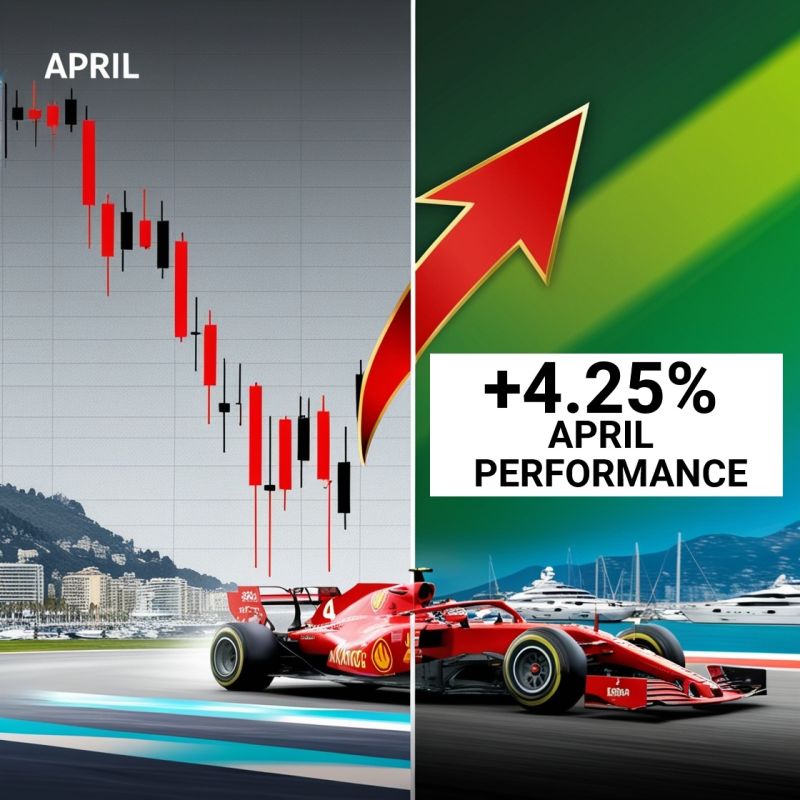
Positive Results Despite Market Weakness April 2025 unfolded in a challenging market environment, characterized by a broad-based correction across global financial markets. Equity indices faced renewed pressure, with the S&P 500 closing lower for the first time since October, while European and emerging markets also showed visible signs of weakness. In a context marked by uncertainty, tightening financial conditions, and cautious investor sentiment, disciplined portfolio construction and robust risk management once again proved essential. Forex Fund Performance – April 2025 Despite the adverse macroeconomic backdrop, the Forex Fund delivered a solid monthly result: April 2025 performance: +4.25% This performance confirms the effectiveness of the strategic framework implemented since the launch of the fund and highlights the importance of adaptability during volatile market phases. Key Drivers Behind the Performance The April result reflects a combination of structural discipline and tactical flexibility embedded in the investment process: Active selection of resilient instruments and market segments, prioritizing liquidity and risk-adjusted returns Dynamic exposure management, adapting positioning as market conditions evolved Continuous focus on risk management, aimed at preserving capital during periods of heightened volatility Rather than relying on short-term directional bets, the strategy emphasized consistency, adaptability, and disciplined execution. Strategy Over Market Noise Periods like April reinforce a fundamental investment principle: sustainable results are driven by structure, discipline, and execution—not by reactive decision-making. In complex and unstable environments, maintaining a clear framework and a flexible approach often makes the difference between protecting capital and amplifying risk. Client Experience – Monaco Grand Prix 2025 April was also a meaningful month beyond portfolio performance. Following the April 8th webinar, selected clients confirmed their participation in the Formula 1 Monaco Grand Prix, scheduled for May 24–25, 2025. This exclusive event represents an opportunity to share a unique experience together, strengthening long-term relationships built on trust, transparency, and shared vision. Photos and highlights from the event will be shared in our upcoming newsletter. Conclusion April 2025 once again demonstrated that well-structured strategies, disciplined risk control, and adaptability remain essential pillars for navigating uncertain financial markets. We are pleased to share both performance results and meaningful moments with clients who continue to place long-term trust in our investment approach. Related LinkedIn Post For a concise market update and additional context, you can view the original LinkedIn post here:Positive Results Despite Market Weakness – LinkedIn

