
From Banking Halls to Fintech Boardrooms: A Career Journey
From Banking Halls to Fintech Boardrooms: A Career Journey A career in finance is rarely a straight line. It is more often a sequence of transitions, challenges, and decisions shaped by changing markets, evolving technologies, and personal growth. My professional journey began in traditional banking environments, where structure, processes, and client relationships formed the foundation of daily work. Over time, as financial services evolved, so did the context in which these skills were applied. Learning the Foundations in Traditional Banking Early experiences in banking provided a rigorous understanding of risk, compliance, and the importance of trust in financial relationships. Understanding client needs, managing expectations, and operating within well-defined regulatory frameworks were central to every transaction. These foundations continue to shape how I approach financial decision-making today. Embracing Change and Digital Transformation As digital innovation began to reshape financial services, the industry entered a period of rapid transformation. Technology altered how data was processed, how products were delivered, and how clients interacted with financial institutions. Transitioning from traditional banking environments to more technology-driven contexts required adaptability and continuous learning. Rather than resisting change, embracing it became a source of professional growth. From Execution to Strategy With digital tools automating many operational processes, the focus of financial roles increasingly shifted toward strategy, interpretation, and oversight. The ability to translate complexity into clarity became a critical skill—particularly for families, entrepreneurs, and corporates navigating increasingly sophisticated financial landscapes. The Role of Curiosity and Resilience Throughout this journey, curiosity proved to be one of the most valuable professional assets. Asking questions, challenging assumptions, and exploring new perspectives helped foster resilience in the face of change. Careers in finance demand continuous evolution, and resilience often emerges from a willingness to adapt rather than from rigid planning. Building a Career with Intention Every career is a story shaped by decisions, risks, and learning moments. Building that story with intention—combining courage, strategy, and adaptability—allows professionals to navigate change while staying aligned with their values and long-term objectives. Conclusion From banking halls to fintech boardrooms, the journey reflects the broader evolution of financial services. As the industry continues to transform, the ability to bridge experience with innovation remains a defining strength. Originally published on LinkedIn: Read the original post on LinkedIn This content is provided for informational purposes only.
From ESG to AI: Hype Cycle or Structural Shift in Investing?
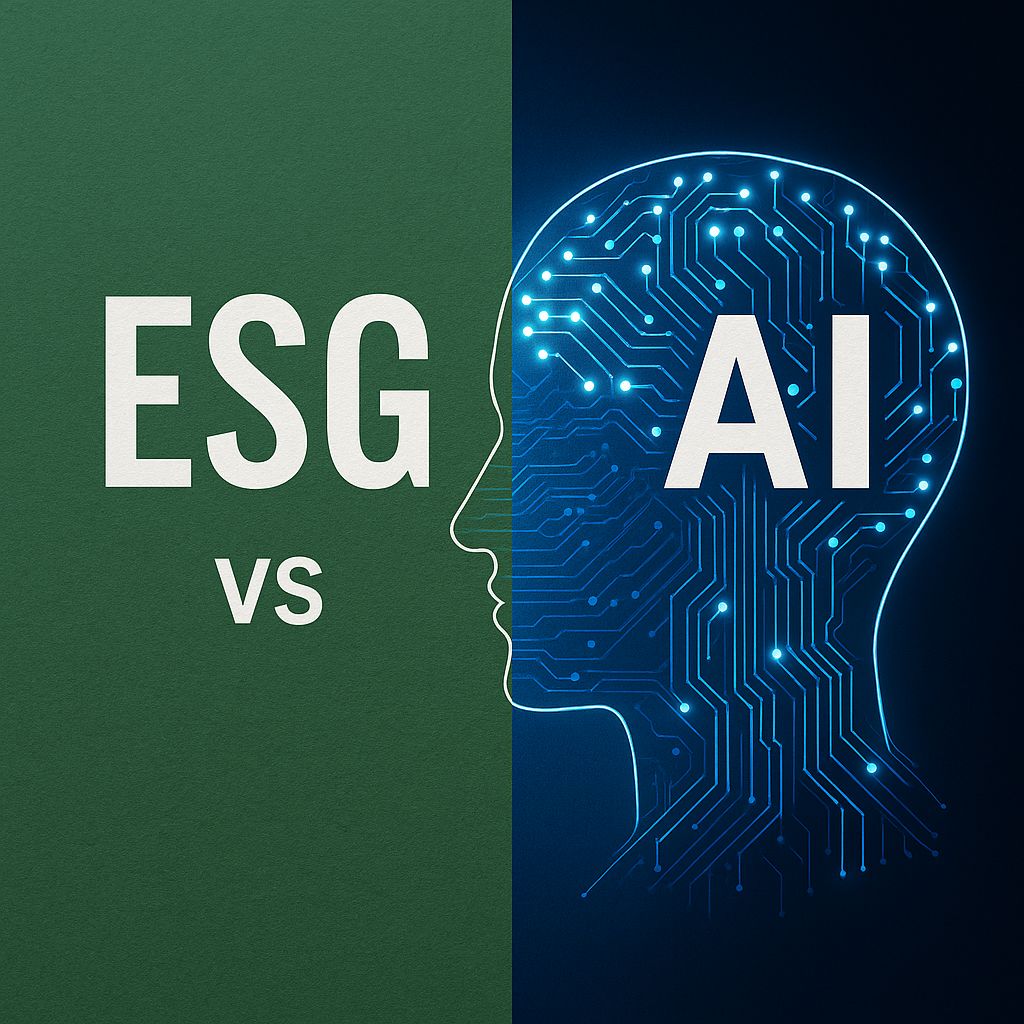
From ESG to AI: Hype Cycle or Structural Shift in Investing? Financial markets have always been fertile ground for narratives. Over the years, entire investment frameworks have risen, peaked, and faded—often driven as much by storytelling as by substance. Few examples illustrate this better than the recent trajectory of ESG investing. A few years ago, ESG was everywhere. Asset managers, funds, and advisory firms rushed to demonstrate alignment with environmental, social, and governance principles. New products were launched, reporting frameworks multiplied, and ESG quickly became a commercial and marketing standard. Then, almost as quickly, the momentum faded. The Rise and Cooling of ESG Today, much of the ESG hype has dissipated. Many ESG-labelled products have been rebranded, consolidated, or quietly discontinued. Investors have shifted their focus, becoming more selective and increasingly sceptical of surface-level claims that lack measurable impact. This evolution does not mean sustainability has lost relevance. Rather, it highlights a familiar pattern in finance: when a concept becomes primarily a narrative tool instead of an operational discipline, disillusionment follows. AI Takes Centre Stage Now, a new theme dominates the conversation: Artificial Intelligence. From asset managers to analysts and technology providers, AI is being embraced across the investment industry. The enthusiasm is unmistakable. Yet this raises a critical question: is AI simply the next ESG—another hype cycle destined to fade? Where AI Is Already Changing the Game Unlike ESG narratives, AI is already delivering tangible applications—particularly in trading and, even more so, in the foreign exchange market. Machine learning models are increasingly used to: Optimize signal detection across complex market environments Adapt execution strategies dynamically Manage risk exposure in real time Process vast volumes of macroeconomic data, news flow, and central bank communications Some investment strategies now rely on AI-driven systems to interpret market sentiment and anticipate currency movements with a speed and depth that traditional models cannot replicate. Why AI Is Not a Shortcut That said, AI is not magic. Its effectiveness depends on data quality, model governance, and disciplined human oversight. Without these elements, AI risks becoming little more than a sophisticated buzzword—much like ESG did at its peak. Technology alone does not eliminate risk. It reshapes how risk is identified, measured, and managed. The Key Difference Between ESG and AI The crucial distinction lies in utility. While ESG often struggled to move beyond narrative alignment, AI offers concrete tools that directly influence decision-making processes. It enhances speed, consistency, and analytical depth—but only when embedded within a robust investment framework. Still, it is too early to declare AI a definitive structural shift. Finance has a long history of turning innovation into storytelling cycles: enthusiasm, saturation, disillusionment, and eventual correction. A Measured Perspective AI may indeed reshape how investments are managed—but only if applied with discipline, transparency, and accountability. Otherwise, it risks following the same arc as previous trends. In investing, technology should serve process—not replace judgment. Understanding this distinction is what separates durable innovation from temporary hype. This article is based on a recent market commentary originally published on LinkedIn. 👉 Read the original LinkedIn post here Paolo Volpicelli INCOME CAPITAL MANAGEMENT s.r.o.

