
Artificial Intelligence in Finance: Practical Use Cases

Artificial Intelligence in Finance: Practical Use Cases Artificial intelligence has moved beyond theoretical discussion and marketing narratives—it is now actively shaping how financial decisions are supported, risks are monitored, and portfolios are managed. In finance, the value of AI does not lie in replacing human judgment, but in enhancing it. When applied with discipline, artificial intelligence becomes a powerful tool for improving analytical depth, efficiency, and transparency. From Buzzword to Operational Tool For many years, artificial intelligence was discussed primarily as a future promise. Today, it is increasingly embedded within operational workflows across financial services. AI systems can process vast amounts of data, identify patterns, and surface insights that would be difficult to detect through traditional analysis alone. This capability is particularly relevant in environments characterized by complexity, speed, and information overload. AI in Portfolio Analytics One of the most tangible applications of AI in finance lies in portfolio analytics. Advanced algorithms support the analysis of correlations, risk exposure, and scenario behavior across asset classes. By continuously evaluating data streams, AI tools enhance the ability to identify emerging risks and opportunities in a timely manner. This allows portfolio managers and advisors to make more informed decisions while maintaining a structured framework. Risk Management and Monitoring Risk management is a natural area for AI application. Continuous monitoring systems can flag anomalies, stress indicators, or deviations from predefined parameters in real time. Rather than reacting after risks materialize, AI-supported systems help anticipate potential issues and support proactive management. This does not eliminate risk, but it improves awareness and response quality. Transparency and Client Communication Artificial intelligence also contributes to improved transparency. By supporting clearer reporting and data visualization, AI enhances communication between advisors and clients. When clients understand how portfolios behave under different scenarios, trust and alignment are strengthened—particularly during periods of volatility. Human Expertise Remains Central Despite technological progress, financial decision-making cannot be fully automated. Context, experience, and responsibility remain essential. AI is most effective when used as a decision-support tool, complementing professional judgment rather than replacing it. The strongest outcomes emerge when technology and human expertise operate together within a disciplined process. Conclusion Artificial intelligence is reshaping finance not by removing people from the process, but by enabling better-informed decisions. As adoption continues, the focus should remain on practical use cases, transparency, and responsible integration within established investment frameworks. Originally published on LinkedIn: Read the original post on LinkedIn This content is provided for informational purposes only and does not constitute investment advice or a solicitation to the public.
From ESG to AI: Hype Cycle or Structural Shift in Investing?
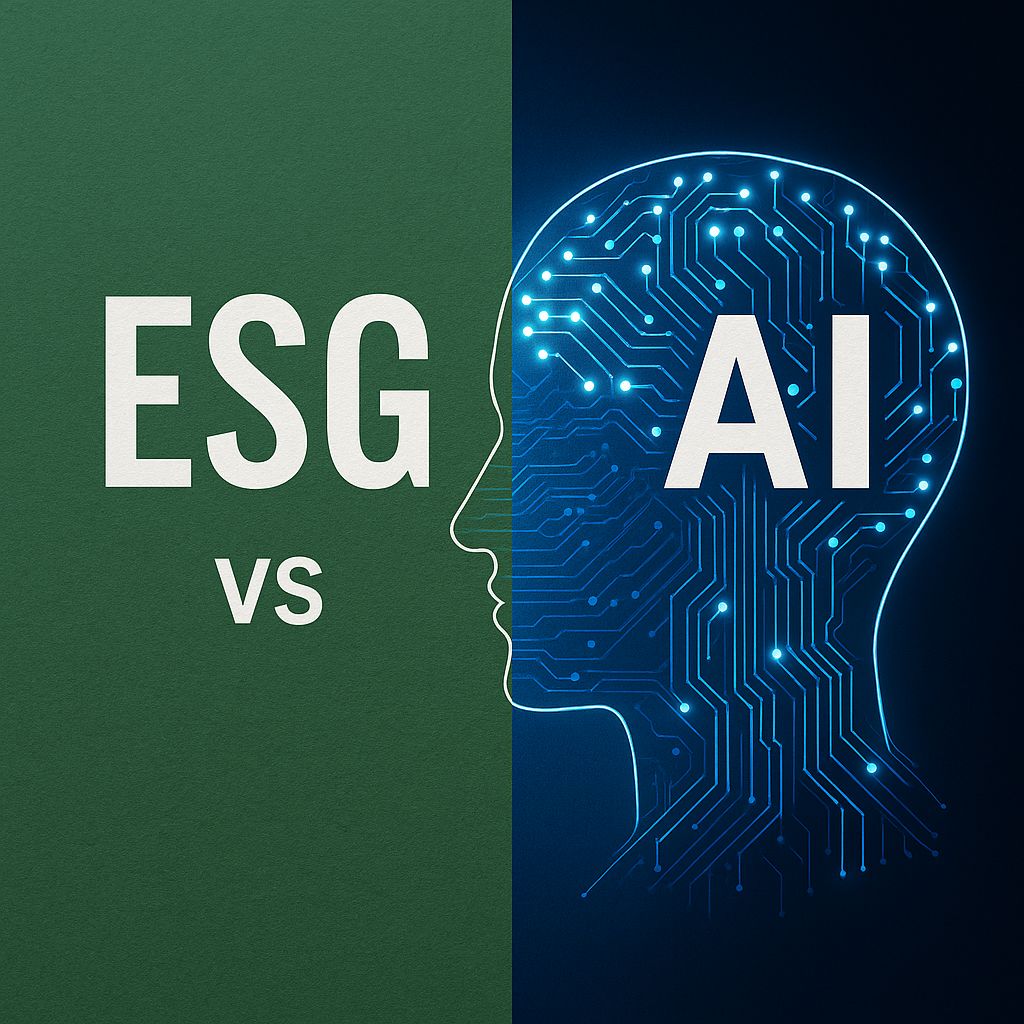
From ESG to AI: Hype Cycle or Structural Shift in Investing? Financial markets have always been fertile ground for narratives. Over the years, entire investment frameworks have risen, peaked, and faded—often driven as much by storytelling as by substance. Few examples illustrate this better than the recent trajectory of ESG investing. A few years ago, ESG was everywhere. Asset managers, funds, and advisory firms rushed to demonstrate alignment with environmental, social, and governance principles. New products were launched, reporting frameworks multiplied, and ESG quickly became a commercial and marketing standard. Then, almost as quickly, the momentum faded. The Rise and Cooling of ESG Today, much of the ESG hype has dissipated. Many ESG-labelled products have been rebranded, consolidated, or quietly discontinued. Investors have shifted their focus, becoming more selective and increasingly sceptical of surface-level claims that lack measurable impact. This evolution does not mean sustainability has lost relevance. Rather, it highlights a familiar pattern in finance: when a concept becomes primarily a narrative tool instead of an operational discipline, disillusionment follows. AI Takes Centre Stage Now, a new theme dominates the conversation: Artificial Intelligence. From asset managers to analysts and technology providers, AI is being embraced across the investment industry. The enthusiasm is unmistakable. Yet this raises a critical question: is AI simply the next ESG—another hype cycle destined to fade? Where AI Is Already Changing the Game Unlike ESG narratives, AI is already delivering tangible applications—particularly in trading and, even more so, in the foreign exchange market. Machine learning models are increasingly used to: Optimize signal detection across complex market environments Adapt execution strategies dynamically Manage risk exposure in real time Process vast volumes of macroeconomic data, news flow, and central bank communications Some investment strategies now rely on AI-driven systems to interpret market sentiment and anticipate currency movements with a speed and depth that traditional models cannot replicate. Why AI Is Not a Shortcut That said, AI is not magic. Its effectiveness depends on data quality, model governance, and disciplined human oversight. Without these elements, AI risks becoming little more than a sophisticated buzzword—much like ESG did at its peak. Technology alone does not eliminate risk. It reshapes how risk is identified, measured, and managed. The Key Difference Between ESG and AI The crucial distinction lies in utility. While ESG often struggled to move beyond narrative alignment, AI offers concrete tools that directly influence decision-making processes. It enhances speed, consistency, and analytical depth—but only when embedded within a robust investment framework. Still, it is too early to declare AI a definitive structural shift. Finance has a long history of turning innovation into storytelling cycles: enthusiasm, saturation, disillusionment, and eventual correction. A Measured Perspective AI may indeed reshape how investments are managed—but only if applied with discipline, transparency, and accountability. Otherwise, it risks following the same arc as previous trends. In investing, technology should serve process—not replace judgment. Understanding this distinction is what separates durable innovation from temporary hype. This article is based on a recent market commentary originally published on LinkedIn. 👉 Read the original LinkedIn post here Paolo Volpicelli INCOME CAPITAL MANAGEMENT s.r.o.

