
High Yield = High Risk? Myth vs. Reality
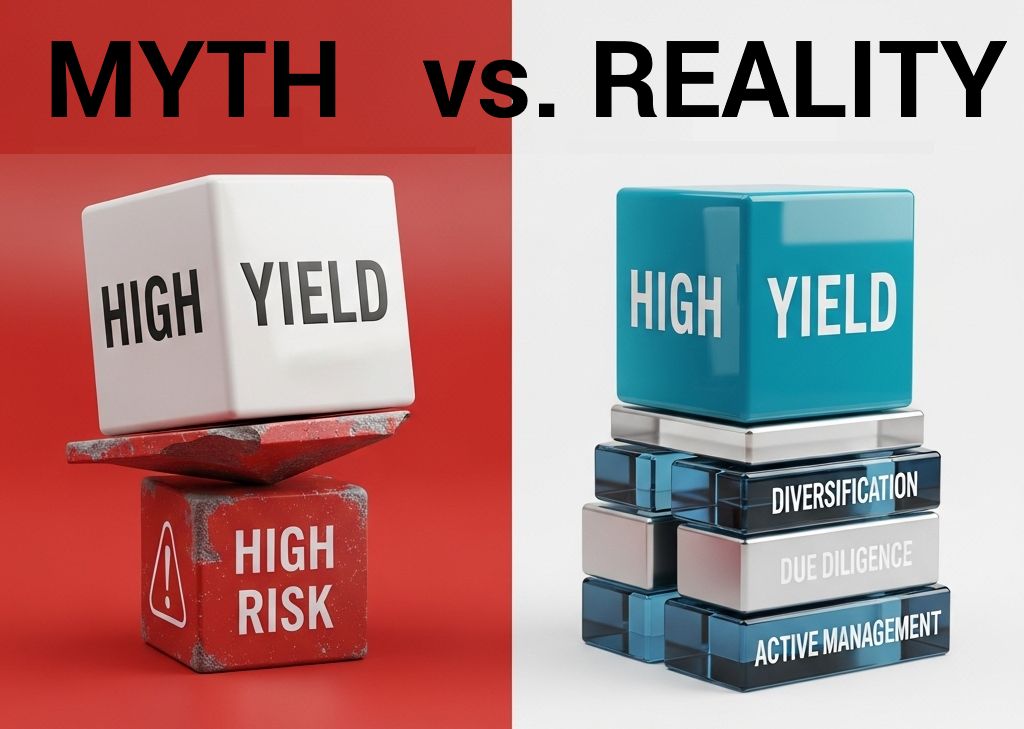
The idea that higher yield automatically implies higher risk is deeply rooted in financial thinking. While this relationship can hold true in certain situations, it is often oversimplified and, in many cases, misleading.
Yield and risk are connected, but not in a linear or absolute way. Understanding how income is generated, how portfolios are constructed, and how risk is managed is far more important than focusing on yield alone.
Where the Myth Comes From
The perception that “high yield equals high risk” typically originates from poorly structured investment strategies. Excessive leverage, lack of diversification, weak due diligence, or speculative positioning can indeed amplify risk.
In such cases, yield becomes a byproduct of fragility rather than a result of disciplined construction.
However, these examples reflect flawed implementation—not an inherent property of income-generating strategies.
Yield as a Component, Not a Strategy
Yield should never be pursued in isolation. In well-designed portfolios, income generation is one component of a broader allocation framework that considers liquidity, diversification, and risk limits.
Professional portfolio construction evaluates the sustainability of cash flows, the quality of underlying assets, and the interaction between income-producing instruments and other portfolio elements.
This approach transforms yield from a risk amplifier into a stabilizing element.
The Role of Risk Management
Risk is not eliminated through income strategies—it is managed. Diversification across instruments, issuers, and structures plays a central role in controlling downside exposure.
Active monitoring, stress testing, and predefined risk parameters further reduce the likelihood that income generation becomes a source of instability.
When these controls are in place, income-oriented allocations can coexist with capital preservation objectives.
Income Across Market Cycles
Different market environments influence how yield behaves. During periods of volatility, structured income strategies may contribute to portfolio resilience, provided risks are properly assessed and controlled.
The distinction lies between disciplined income allocation and uncontrolled yield chasing.
Reframing the Question
The relevant question is not whether high yield is risky, but whether the strategy generating that yield is robust.
Risk emerges from poor structure, not from yield itself.
Conclusion
High yield does not inherently mean high risk. When supported by diversification, due diligence, and active oversight, income strategies can play a constructive role within balanced portfolios.
Understanding the source of yield—and the framework surrounding it—is essential to separating myth from reality.
Originally published on LinkedIn:
Read the original post on LinkedIn
This content is provided for informational purposes only and does not constitute investment advice or a solicitation to the public. Past performance is not indicative of future results.


